
Best Noise Cancelling Earbuds for Sleeping: Deep Rest Without Disruptions
Amazon Affiliate Disclosure
This page contains affiliate links. If you purchase through them, Earbuds.com may earn a small commission at no extra cost to you. This helps maintain unbiased reviews and ongoing research.
Sleep doesn’t fail because of one loud moment—it breaks because of constant small disturbances your brain never fully ignores. A distant motorcycle, a neighbor’s footsteps, a fan humming in the background, or even a ticking clock can keep the nervous system slightly alert through the night. Over time, that “almost silence” becomes the real problem.
This is where noise cancelling earbuds for sleep change the equation. Instead of relying only on physical blocking like traditional earplugs, they combine active noise cancellation and sound shaping to reduce the kind of low-frequency noise that normally slips through. The goal isn’t just silence—it’s a stable acoustic environment where the brain stops scanning for threats and allows deeper rest phases to take over naturally.
Unlike regular earbuds designed for music or calls, sleep-focused models prioritize comfort over hours of lying down, minimal pressure on the ear canal, and sound profiles that don’t overstimulate the brain. Some even add soft masking sounds like rain or white noise to gently guide the mind into slower sleep cycles.
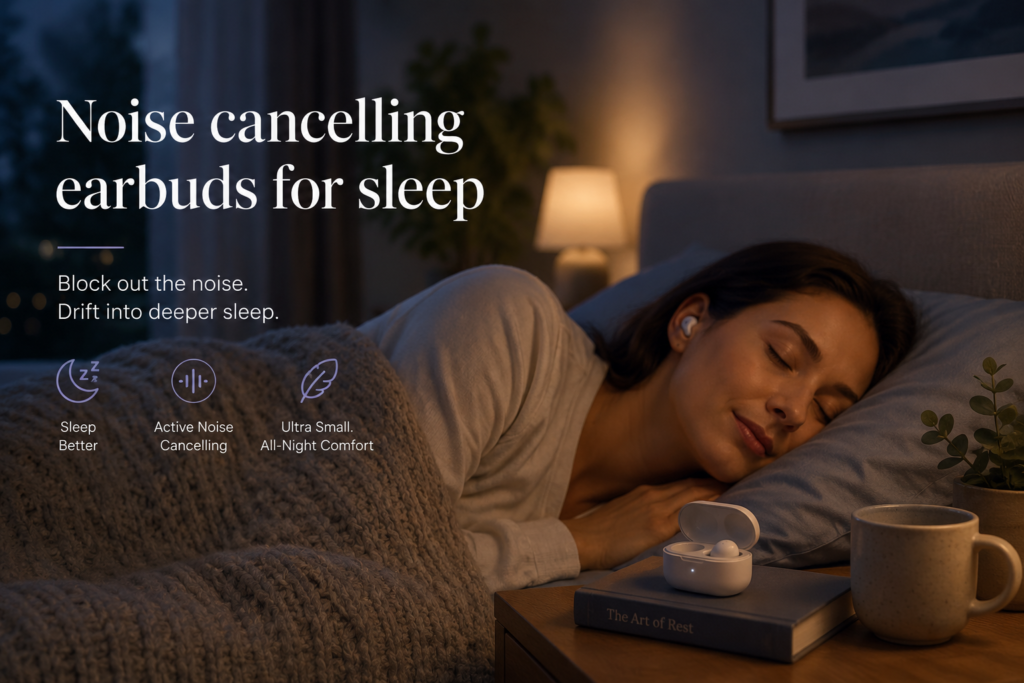
In this guide, we’ll break down how these Noise Cancelling Earbuds actually work in real sleeping conditions, who benefits most from them, where they fail and what separates a useful model from one that becomes uncomfortable after a few nights.
Quick Navigation
What Are Noise Cancelling Earbuds for Sleep? → How they create a stable sleep environment
Do Noise Cancelling Earbuds Help You Sleep Better? → Real impact on sleep quality
How Noise Cancelling Earbuds Work → ANC, passive isolation & sound tuning explained
Who Should Use Sleep Earbuds? → Urban sleepers, light sleepers & shared spaces
Best Sleep Earbuds & Earplugs (2026 Top List) → Top products for every sleep environment & budget 😴
Sleep Earbuds vs Earplugs → Which is better for your environment
ANC vs Passive Sleep Earbuds → Choosing the right type
Benefits of Sleep Earbuds → Deeper sleep, fewer interruptions
Risks & Limitations → Comfort, battery & dependency factors
Technology Trends (2026) → Adaptive ANC, sleep tracking & future innovations
Costs & Price Breakdown → What you get at each price level
What This Guide Is About
Sleep disruption is no longer just a “light sleeper problem”. Urban noise, roommates, traffic hum and even HVAC systems create a constant low-frequency sound layer that traditional earplugs fail to fully block.
This guide breaks down how noise cancelling earbuds for sleep work, what actually matters when choosing them and how to avoid designs that cause discomfort during long wear cycles.
To connect with broader topics in the ecosystem visit Earbuds (Center) or checkout our complete guide on earbuds, fixes, cleaning and multi-connectivity.
What are noise cancelling earbuds for sleep?
Noise cancelling earbuds for sleep are specialized earbuds designed to reduce background noise and create a stable sound environment for uninterrupted rest. They combine active noise cancellation (ANC), passive isolation, and sleep-optimized audio to minimize disruptions like traffic, snoring and ambient hum, helping the brain stay in deeper sleep cycles.
Who Actually Needs Sleep Noise Cancelling Earbuds?
Not everyone needs dedicated sleep-focused earbuds, but for certain environments and sleep patterns, they move from “nice-to-have” to genuinely practical sleep tools. Their value becomes clear when your sleep environment is inconsistent, unpredictable or difficult to control physically.

Below is a more detailed breakdown of who benefits most—and why.
1. Urban sleepers
People living in cities deal with a constant mix of low and mid-frequency noise that rarely fully stops. Even at night, the environment rarely becomes truly quiet.
Traffic movement, late-night delivery vehicles, distant construction, and nightlife activity create a layered sound background that standard earplugs often reduce but do not eliminate.
Sleep noise cancelling earbuds help by targeting these continuous frequencies, especially engine hum and airflow-like sounds, which are the most disruptive during deep sleep transitions. Instead of blocking everything, they smooth out the noise floor so the brain stops reacting to every variation in sound intensity.
2. Light sleepers
Light sleepers are not necessarily sensitive to loud environments—they are sensitive to change. A slight shift in pitch, a door closing in another room or a faint mechanical click can trigger partial wake-ups.
These micro-awakenings often go unnoticed but accumulate into poor sleep quality and morning fatigue.
Noise cancelling earbuds for travel can reduce the brain’s constant scanning behavior by stabilizing the audio environment. When sound becomes more predictable and less “spiky,” the nervous system is less likely to shift into alert mode during sleep cycles.
3. Shift workers
Shift workers face one of the most difficult sleep challenges: trying to sleep when the world is fully active.
Daytime noise is structurally different from nighttime noise—more unpredictable, more frequent, and more human-driven. Conversations, construction, household activity, and outdoor movement all overlap.
Sleep earbuds become especially useful here because they maintain a consistent sound buffer even when external noise spikes unpredictably. Combined with blackout conditions, they help simulate a nighttime-like environment even in the middle of the day.
4. Anxiety-sensitive sleepers
For some individuals, sleep disruption is not purely environmental—it is neurological. Even minimal background noise can increase cognitive alertness, especially when the mind is already in a heightened state of awareness.
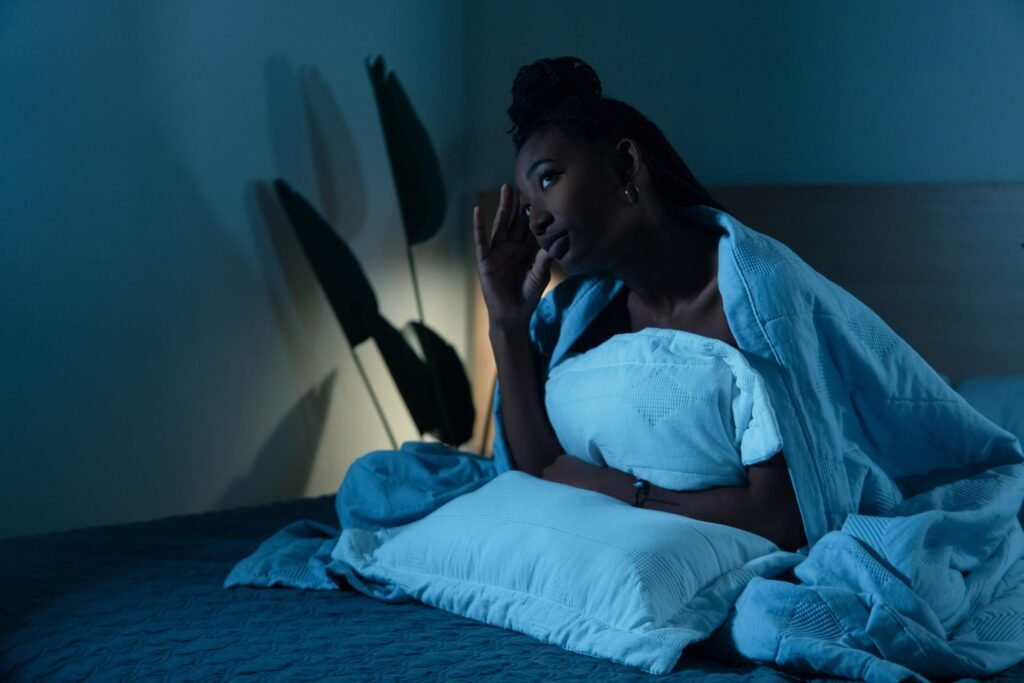
In these cases, sound does not just interrupt sleep; it maintains mental activity loops.
Sleep noise cancelling earbuds help reduce this feedback cycle by introducing controlled, soft auditory masking. White noise or low-level ambient sound can act as a “sound blanket,” reducing the brain’s tendency to interpret silence or random noise as something worth attention.
The result is not sedation—it is reduced sensory vigilance.
5. Shared room environments
Shared living spaces introduce one unavoidable variable: lack of control over timing and noise behavior.
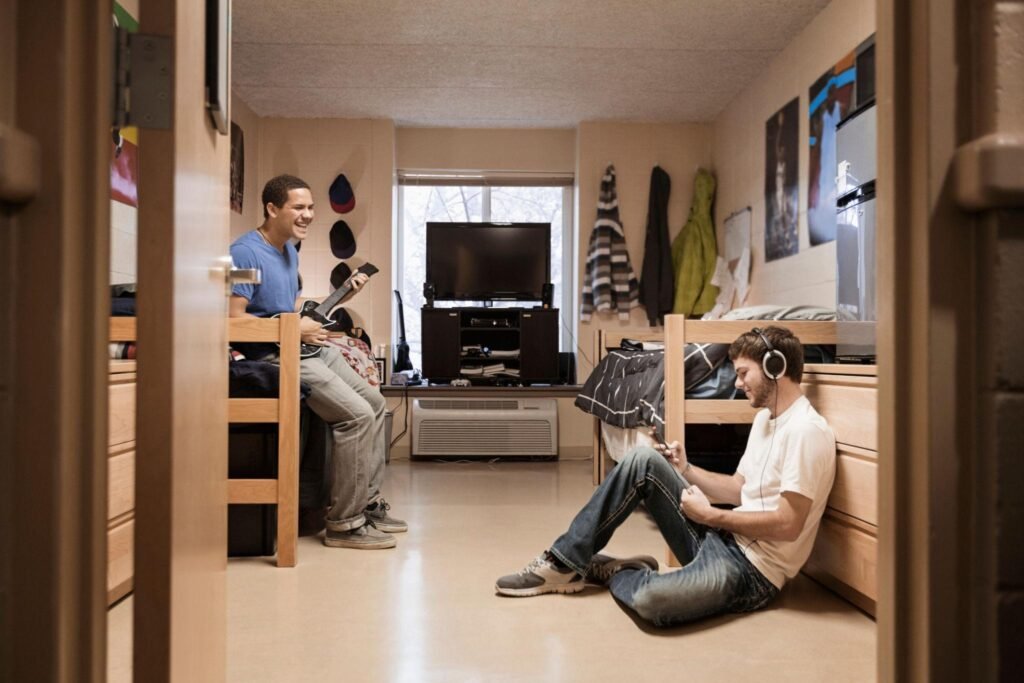
Dorms, hostels, rented rooms, or multi-person households often have overlapping schedules where one person’s routine becomes another’s disturbance. Even small actions—charging devices, moving furniture, watching videos at low volume—create sleep fragmentation for others.
They don’t require negotiating silence with others; instead, they create an individualized sound environment that remains stable regardless of external activity. This makes them especially practical for students and people in temporary living situations. If you are debating whether to invest in a pair to reclaim your peace, it is worth exploring are noise cancelling earbuds worth it guide, for your specific lifestyle and environment.
Best Earbuds for Sleeping (2026)
Not every sleep environment requires the same type of solution. Some people need active noise cancellation to handle constant low-frequency noise, while others benefit more from passive isolation or ultra-soft earplugs that reduce pressure and block sudden disturbances.
Below is a carefully categorized selection of sleep-focused earbuds and earplugs designed for different sleeping environments, comfort preferences and noise sensitivity levels but if you are looking for Best Noise Cancelling Earbuds, you may want to focus on models with active noise cancellation (ANC) built specifically to drown out ambient daytime sounds rather than just blocking nighttime disturbances.
🟢 Best Sleep Earbuds with Active Noise Control (Premium Sleep Experience)
These are designed specifically for sleep or long-duration wear. They combine comfort engineering with noise reduction or masking audio to create a stable sleep environment.
Ozlo Sleepbuds ® – Science-Backed Sleep Audio + Snore Blocking Comfort
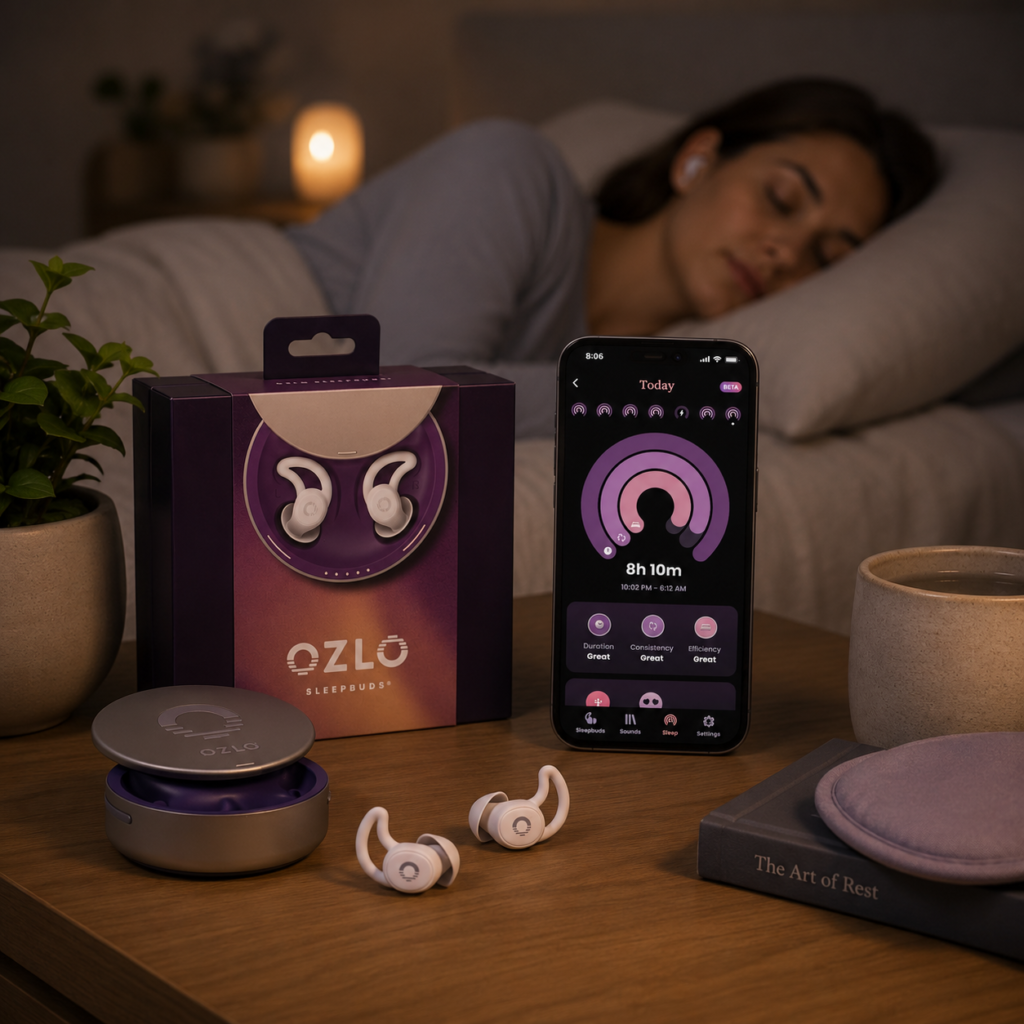
- CLINICALLY PROVEN: Our Sleep Technology is Clinically Proven to Help You Fall Asleep Faster and Stay Asleep Longer, With…
- STREAM ALL NIGHT: Enjoy up to 10 hours of playtime on a single charge, with the Smart Case providing extra power on the …
- SLEEP DETECTION: Sleepbuds’ biometric sensors can seamlessly detect when you fall asleep, auto-magically switching from …
Ozlo Sleepbuds are purpose-built for sleep-first use, focusing on ultra-comfortable side-sleeper design and long overnight playback. Instead of overwhelming audio, they use curated sleep sounds designed to reduce cognitive alertness and mask disturbances like snoring or traffic noise. Their lightweight build makes them suitable for uninterrupted overnight wear without pressure buildup.
🟡 Best Sleep Earbuds (Reusable Noise Sensitivity – No Electronics Needed)
Sleep doesn’t always require electronic solutions. For many individuals, reusable earplugs provide an effective way to reduce everyday noise without batteries, charging, or companion apps. They offer a simple, comfortable option for minimizing distractions from snoring, traffic, roommates, or household activity while remaining easy to use night after night. If you’re comparing reusable earplugs with electronic sleep solutions, explore our comprehensive guide to the best sleep earbuds to find the right option for your sleep environment.
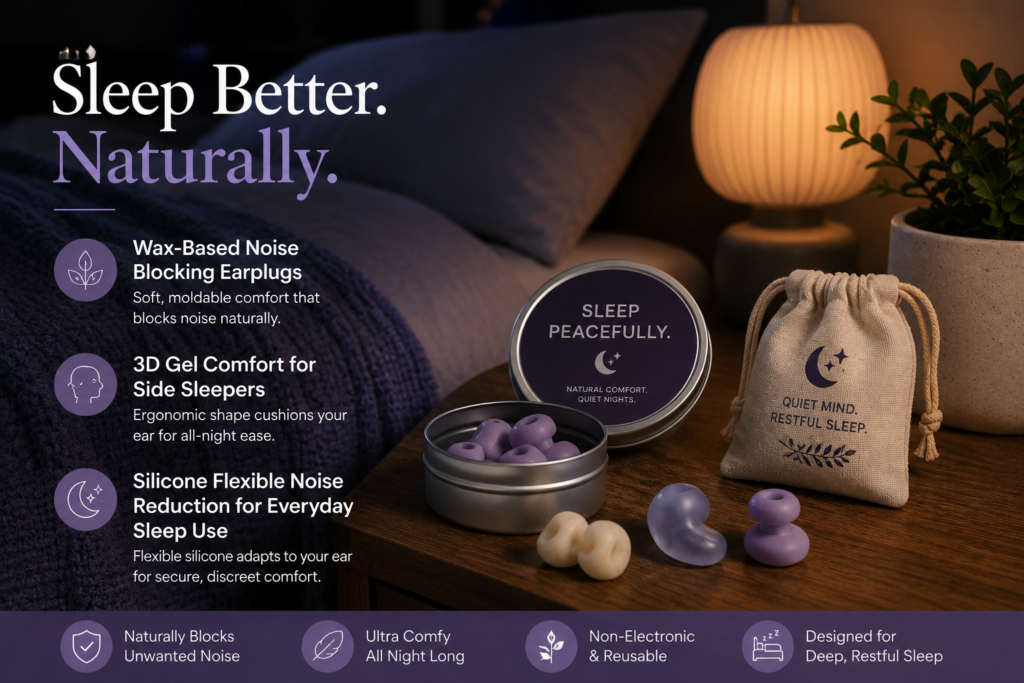
These are ideal for users who prefer zero electronics, zero charging, and maximum simplicity. They are also highly effective for blocking sudden noise spikes.
Loop Quiet 2 – Flexible Noise Reduction for Everyday Sleep Use

- POWERFUL NOISE REDUCTION – Packing up to 24 dB (SNR) of noise reduction into a flexible silicone earplug, Quiet 2 muffle…
- ULTRA-COMFY FIT – Made from lightweight, flexible silicone, these reusable earplugs offer dreamy comfort day and night, …
- GREAT FOR SLEEP, FOCUS AND MORE – Quiet 2 earplugs offer instant noise reduction and protection for all kinds of situati…
Loop Quiet 2 focuses on simplicity and comfort with a flexible fit that adapts to different ear shapes. It provides moderate noise reduction and is especially useful for users who experience general background noise rather than extreme disturbances.
Alpine SleepDeep Multisize – 3D Gel Comfort for Side Sleepers
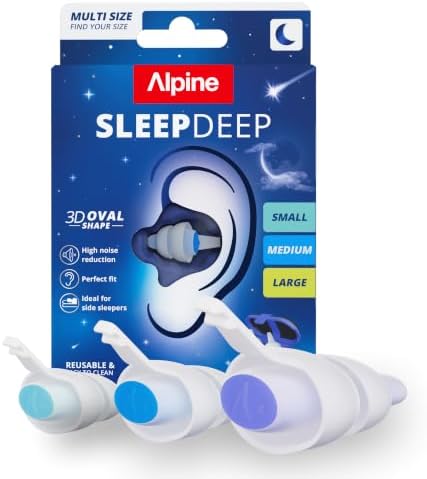
- SIDE SLEEPER COMFORT – Tired of painful earplugs at night? SleepDeep earplugs for sleeping are designed for side sleeper…
- REDUCES SNORING & NIGHTTIME NOISE – Complete silence doesn’t exist—and your ears are built that way. Thanks to its noise…
- PERFECT FIT THAT STAYS IN PLACE ALL NIGHT – No more earplugs falling out. Choose from Small, Medium, or Large for a secu…
Alpine SleepDeep earplugs are engineered with a soft gel-based structure and a low-profile 3D shape, making them suitable for side sleepers who need long-duration comfort. Their design prioritizes pressure reduction while still maintaining strong passive noise attenuation.
Wax-Based Noise Blocking Earplugs – Maximum Seal for Deep Silence
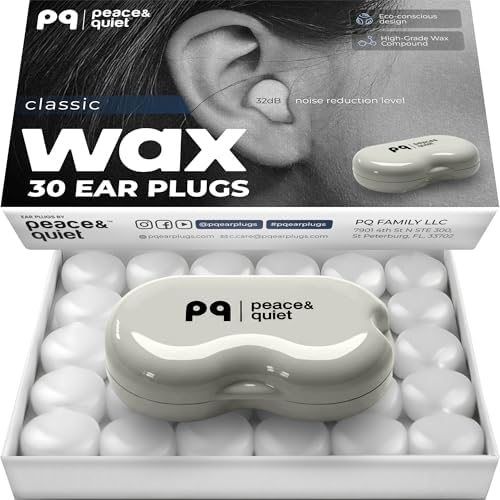
- Premium noise-blocking comfort: Experience the ultimate in noise-blocking comfort with our custom moldable earplugs. Ach…
- 300 uses with bonus carrying case: Each package includes 30 soft pillows, providing you with 300 uses. Break them in hal…
- Waterproof ear protection: Enjoy worry-free swimming or showers with our waterproof wax earplugs. Designed to protect yo…
Wax-style earplugs create a customizable seal inside the ear, making them highly effective for blocking unpredictable or sharp noise. They are especially useful for travel or environments where sound patterns change frequently throughout the night.
🟠 High-Isolation Budget Sleep Earbuds (Maximum Noise Reduction Focus)
These options prioritize raw noise blocking over advanced comfort systems or branding.
IFECCO Sleep Earbuds Bluetooth 6.2
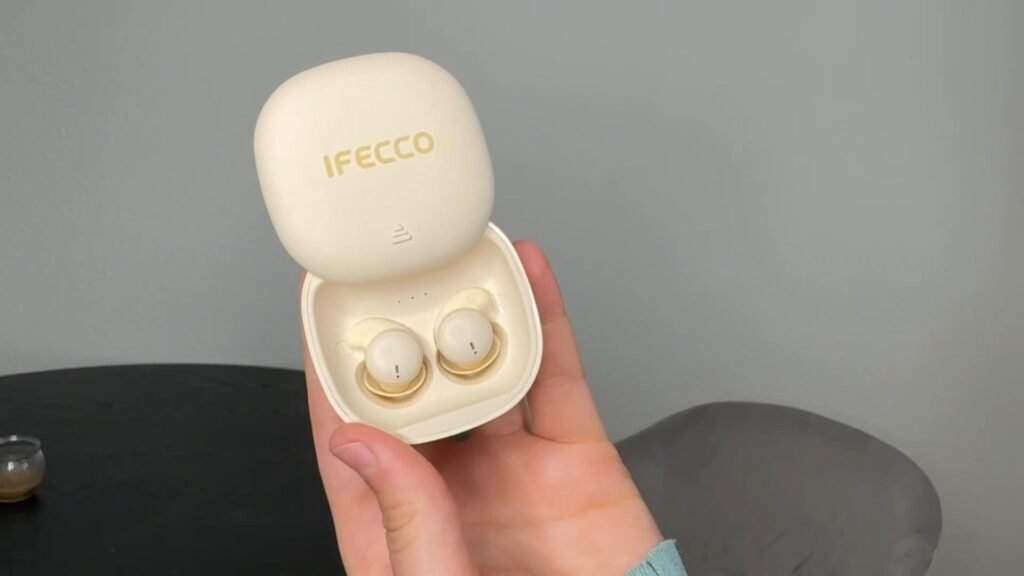
Designed for side sleepers and light sleepers, the IFECCO Sleep Earbuds combine a slim in-ear profile with soft silicone comfort to reduce pressure during overnight use. The Bluetooth 6.2 connection provides stable wireless audio for sleep sounds, white noise, meditation, or late-night music sessions, while the noise-blocking fit helps minimize surrounding distractions. With an IPX6 waterproof rating and lightweight construction, these earbuds are built for comfortable all-night wear at home, during travel, or while relaxing.
45dB High Noise Reduction Silicone Earplugs

- TOAPEX Ear Plugs for Side Sleepers Comfortable, Suitable for Snoring, Concerts & Airplane
- TOAPEX Ear Plugs for Side Sleepers Comfortable, Suitable for Snoring, Concerts & Airplane
- TOAPEX Ear Plugs for Side Sleepers Comfortable, Suitable for Snoring, Concerts & Airplane
These sleep earbuds are designed for maximum passive noise reduction, making them suitable for very loud environments such as urban apartments, shared rooms, or travel situations. While they offer strong isolation, comfort depends heavily on correct fit and usage position.
Do noise cancelling earbuds help you sleep better?
Yes, noise cancelling earbuds help you sleep better by reducing sound variability, which is one of the main causes of sleep disruption. By smoothing out background noise and masking sudden sounds, they prevent micro-awakenings and allow the brain to remain in deeper, more restorative sleep stages throughout the night.
How Sleep Noise Cancelling Earbuds Work
Sleep-focused earbuds are not just smaller versions of music earbuds. They are engineered around a different goal entirely: reducing sleep-disrupting sound variability, not maximizing audio performance. To achieve this, they typically combine multiple noise-control layers that work together rather than relying on a single method.
Active Noise Cancellation (ANC)
ANC is the first layer of protection and is most effective against steady, low-frequency sounds.
This includes:
- Air conditioner hum
- Fan noise
- Distant traffic engine vibration
- Train or airplane cabin drone
The system works by using built-in microphones that detect incoming sound waves. The earbuds then generate an inverse sound wave that partially cancels the incoming noise through destructive interference.
For sleep use, ANC is not about creating “silence,” but about flattening continuous background noise so the brain stops registering it as meaningful stimulation.
Passive Isolation
Passive isolation is the physical barrier component of sleep earbuds.
Unlike ANC, which deals with low-frequency sound, passive isolation targets mid and high-frequency noise, such as:
- Speech from nearby rooms
- Door closing sounds
- Keyboard clicks
- Sudden environmental sounds
This is achieved through:
- Soft silicone or foam ear tips
- Deep but pressure-balanced insertion design
- Low-profile shells that maintain seal without discomfort
In sleep-focused designs, the seal must be strong enough for noise blocking but gentle enough for side sleeping without creating pressure pain.
Sleep-optimized tuning
This is the most overlooked but critical layer in sleep earbuds.
Even with ANC and isolation, poorly tuned audio can introduce sharp frequencies or digital artifacts that keep the brain in a semi-alert state. Sleep-optimized tuning reduces this risk by shaping sound output toward smooth, non-intrusive frequency patterns.
Key characteristics include:
- Reduced high-frequency spikes
- Soft transition audio curves
- Compatibility with white noise, pink noise, or nature soundscapes
- Lower auditory stimulation energy overall
Some advanced models also integrate pre-loaded sleep sound profiles designed to encourage slower cognitive activity and smoother sleep onset.
Working Principle
The real effectiveness of sleep noise cancelling earbuds comes from layering these systems:
- ANC handles low-frequency “drone noise” (air, engines, constant hums)
- Passive isolation blocks sharp environmental interruptions (speech, clicks, sudden sounds)
- Sleep tuning ensures the audio itself doesn’t disturb relaxation
Together, they create a controlled acoustic environment where the brain is no longer forced to constantly evaluate background noise—allowing deeper and more stable sleep cycles.
Benefits of Noise Cancelling Earbuds for Sleep
Sleep disruption rarely comes from one loud event—it’s usually the accumulation of small, irregular sounds that keep the brain in a semi-alert state. Noise cancelling earbuds address this by stabilizing your sound environment, which directly affects how your brain transitions through sleep stages.
Below are the most meaningful benefits, explained in practical, real-world terms.
1. Stable sleep cycles
Sleep isn’t a single continuous state—it moves through cycles of light sleep, deep sleep, and REM. Sudden noise spikes, even if they don’t fully wake you up, can pull you out of deeper stages into lighter ones.
These are called micro-awakenings, and they often go unnoticed while still degrading rest quality.
Noise cancelling earbuds reduce these interruptions by smoothing out unpredictable sound changes. When the auditory environment becomes consistent, the brain is less likely to shift out of deeper sleep phases, leading to more restorative rest overall.
2. Faster sleep onset
Falling asleep is not just about being tired—it’s about reducing sensory input enough for the brain to disengage from external monitoring.
In noisy or inconsistent environments, the brain remains partially alert, delaying the transition into sleep.
By minimizing background noise and introducing stable sound conditions, sleep earbuds reduce the “waiting time” before sleep begins. Many users notice that they stop trying to fall asleep and instead drift off more naturally.
3. Better sleep quality in cities
Urban environments rarely go completely silent. Even late at night, there is a continuous layer of background noise—traffic flow, distant sirens, building systems and human activity.
This constant low-frequency noise is particularly disruptive because it blends into the background while still affecting sleep depth.
Noise cancelling earbuds are especially effective here because they target these persistent frequencies. Instead of reacting to every passing vehicle or distant sound, your brain experiences a more uniform sound field, improving overall sleep continuity.
4. Controlled audio environment
One of the biggest advantages over traditional earplugs is control.
With sleep earbuds, you’re not just blocking sound—you’re replacing it with something predictable and calming. This could include:
- White noise (consistent masking)
- Pink noise (more natural frequency balance)
- Rain or nature sounds
- Guided sleep audio or meditation tracks
This controlled audio layer helps mask sudden external noise while also giving the brain a steady reference point, reducing the tendency to react to unpredictable sounds.
5. Travel adaptability
Sleep quality often drops significantly when you’re away from home. Hotels, airplanes, and unfamiliar environments introduce new and unpredictable sound patterns.
Instead of adjusting to each environment, sleep earbuds allow you to carry a consistent acoustic setup wherever you go.
Whether it’s airplane engine noise, hotel hallway activity, or unfamiliar ambient sounds, the earbuds create a familiar sound layer that makes it easier for the brain to relax—even in completely new surroundings.
Key Takeaway
The real benefit is not just “less noise”—it’s less variability in sound. When the brain no longer needs to constantly evaluate the environment, it naturally shifts into deeper and more stable sleep patterns.
Are sleep earbuds better than earplugs?
Sleep earbuds are generally more effective than earplugs because they combine active noise cancellation with passive sound blocking. While earplugs only reduce noise physically, sleep earbuds create a controlled audio environment that minimizes both continuous background noise and sudden disruptions.
Quick Comparison: Sleep Earbuds vs Traditional Earplugs
| Feature | Sleep Earbuds | Foam Earplugs |
|---|---|---|
| Noise reduction | High (active + passive) | Medium (passive only) |
| Comfort duration | 6–10 hours optimized | 2–5 hours discomfort risk |
| Audio support | Yes (white noise, apps) | No |
| Side sleeping support | Moderate to high (depends on design) | High |
| Smart features | Yes (sleep tracking, ANC modes) | None |
Comparison: ANC Sleep Earbuds vs Passive Sleep Earbuds
Not all “sleep earbuds” solve the same problem. Some are built to cancel noise dynamically, while others simply block it physically. Choosing the wrong type often leads to frustration—either you still hear background hum, or you sacrifice comfort for isolation.
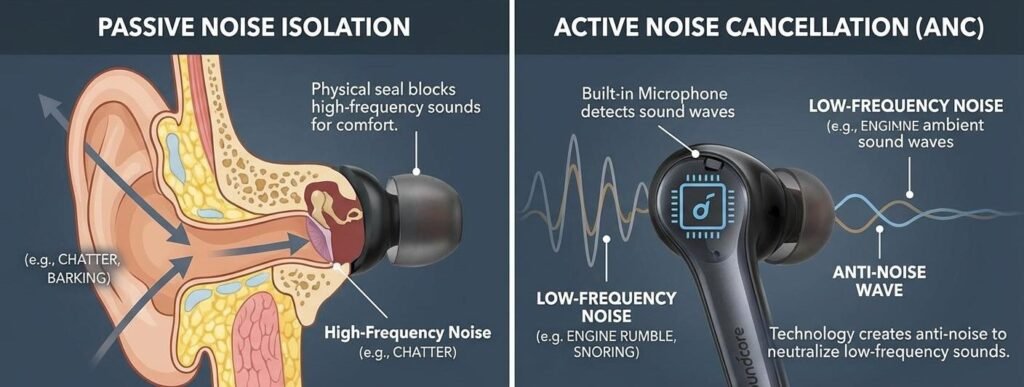
Understanding how these two approaches differ will help you match the right solution to your environment.
| Feature | ANC Sleep Earbuds | Passive Sleep Earbuds |
|---|---|---|
| Noise type handled | Low-frequency (hum, engines) | Mid/high-frequency (voices, clicks) |
| Power requirement | Yes (battery) | No |
| Adaptability | Dynamic (adjusts to noise) | Static (fixed isolation) |
| Comfort (long use) | Moderate to high (design dependent) | High (simpler structure) |
| Cost | Higher | Lower |
| Best use case | Urban, travel, constant noise | Quiet homes, occasional disturbance |
Active Noise Cancelling Sleep Earbuds
ANC sleep earbuds are designed to actively neutralize continuous background noise, especially the kind that traditional earplugs struggle with.
What they do best
- Reduce low-frequency “drone noise” (traffic, AC, engines)
- Adapt to changing environments in real time
- Create a more stable and consistent sound floor
Trade-offs
- Require battery power (limited overnight runtime)
- Typically higher cost due to ANC hardware
- Slightly more complex design (electronics + tuning)
👉 These are ideal for environments where noise is constant and layered, not just occasional.
Passive Sleep Earbuds
Passive sleep earbuds rely entirely on physical sound blocking through materials and fit.
What they do best
- Block mid and high-frequency sounds (voices, clicks, sudden noises)
- No battery or electronics required
- Simpler, often more comfortable for ultra-sensitive users
Trade-offs
- Less effective against low-frequency hum
- No adaptability to changing noise conditions
- Performance depends heavily on fit and seal quality
These work best in environments where noise is intermittent rather than constant.
The Modern Reality: Hybrid Designs
Most modern sleep-focused earbuds combine both approaches.
Instead of choosing between ANC or passive isolation, newer designs layer them:
- ANC handles continuous low-frequency noise
- Passive seal blocks sudden and higher-frequency sounds
This hybrid approach creates a more complete noise control system, covering both predictable background hum and unpredictable interruptions.
Insight
The decision isn’t about which is “better”—it’s about matching the technology to your noise profile:
- Constant, low hum → ANC matters more
- Sudden, sharp sounds → passive isolation matters more
- Mixed environments → hybrid designs perform best
When both systems work together, the result is not total silence—but a stable acoustic environment that supports uninterrupted sleep.
Sleep Tech (2026 Trends)
Sleep earbuds are no longer just “smaller earbuds with ANC”. The category is evolving into bio-adaptive sleep systems—devices that respond to your body, environment, and sleep stage in real time.

Instead of simply blocking noise, newer designs aim to optimize the entire sleep environment, combining hardware, software and physiological data.
Here are the most important sleep tech trends shaping sleep audio in 2026:
1. Adaptive ANC for sleep cycles
Traditional ANC works at a fixed level, but sleep isn’t static—it moves through different stages, each with different sensitivity to noise.
Newer earbuds are beginning to adjust noise cancellation dynamically based on sleep phases:
- Higher suppression during light sleep (more sensitive stage)
- Balanced suppression during deep sleep (less external awareness)
- Adaptive response to sudden environmental changes
This creates a more natural sound environment instead of over-suppressing or underperforming at the wrong times.
2. Pressure-sensitive ultra-flat shells
Comfort has become one of the biggest engineering priorities, especially for side sleepers.
Modern designs now focus on:
- Ultra-low profile shells that sit flush with the ear
- Pressure-distribution materials to reduce pain against pillows
- Flexible outer layers that adapt to ear shape
This shift recognizes a simple reality: even the best noise cancellation is useless if the earbuds become uncomfortable after an hour.
3. Brainwave-aligned soundscapes
Audio is no longer treated as just “background sound”. It’s being engineered to influence brain activity patterns.
New sound profiles are designed to:
- Encourage slower brainwave states (theta, delta)
- Reduce cognitive alertness gradually
- Avoid sudden frequency spikes that disrupt relaxation
This includes:
- Pink noise (more natural frequency balance than white noise)
- Binaural and ambient sound layering
- Gradual fade patterns aligned with sleep onset
The goal is subtle: not to force sleep, but to guide the brain toward it.
4. Sleep tracking integration
Sleep earbuds are increasingly becoming data-driven devices, not just audio tools.
Some models now include sensors that track:
- Movement and restlessness
- Heart rate patterns
- Sleep stage estimates
This data is then used to:
- Adjust ANC behavior
- Modify sound playback automatically
- Provide insights through companion apps
Over time, this creates a feedback loop where the earbuds don’t just block noise—they learn your sleep patterns and adapt accordingly.
Upcoming Models & Direction of Innovation
The evolution of noise cancelling earbuds for sleep is moving beyond simple audio devices into something far more precise—personalized sleep environments that actively maintain rest quality throughout the night.
The Next Phase of Sleep Earbud Technology
Manufacturers are now combining multiple innovations into a single ecosystem:
- AI-driven noise prediction
Instead of reacting to noise, earbuds will anticipate patterns (traffic cycles, environmental rhythms) and adjust cancellation in advance. - Real-time physiological response
Sensors will monitor body signals like movement and heart rate, allowing earbuds to adapt sound and ANC levels based on your current sleep stage. - Fully adaptive sound environments
Audio will continuously evolve—shifting between masking, silence, and calming soundscapes depending on what your brain needs in that moment.
Hardware Evolution Trends
Physical design is also changing to match overnight use:
- Fully flush earbuds (no protrusion)
Built specifically for side sleepers, eliminating pressure points against pillows - Temperature-neutral materials
Reduce heat buildup and ear fatigue during long sleep sessions - Ultra-soft structural engineering
Designs that maintain seal without creating discomfort over hours
Smart Sleep Integration
Beyond noise control, earbuds are becoming part of a broader sleep system:
- Smart alarm synchronization
Wake you during optimal sleep phases instead of fixed times - App-based sleep analytics
Long-term insights into sleep quality and disruption patterns
The Real Shift
The next generation is no longer focused on sound quality in the traditional sense.
It’s about sleep continuity engineering—maintaining a stable, interruption-free environment where the brain can move naturally through deep sleep cycles without disruption.
Instead of simply blocking noise, future sleep earbuds will act as active guardians of your sleep state, continuously adjusting, predicting, and optimizing your environment from the moment you fall asleep to the moment you wake up.
Costs & Price Breakdown
| Category | Price Range | What You Get |
|---|---|---|
| Budget sleep earbuds | $30–$80 | Passive isolation + basic ANC |
| Mid-range | $80–$180 | Hybrid ANC + comfort design |
| Premium | $180–$350+ | Adaptive ANC + sleep tracking |
👉 Cost drivers are mainly ANC chip quality, comfort engineering and battery optimization.
Are noise cancelling earbuds safe for overnight use?
Noise cancelling earbuds are safe for overnight use when designed specifically for sleep. Models with soft materials, low-profile shapes, and proper airflow reduce the risk of ear fatigue or irritation. Maintaining hygiene and avoiding excessive volume further ensures safe long-term use.
Risks & Limitations
Noise cancelling earbuds for sleep can significantly improve rest quality—but they’re not without trade-offs. Understanding these limitations helps you avoid common mistakes and choose a setup that actually works long-term.
1. Ear fatigue risk
Wearing anything in the ear for 6–8 hours introduces mechanical pressure, especially for side sleepers.
If the earbuds:
- Protrude too much
- Use stiff materials
- Apply uneven pressure inside the ear canal
…they can cause soreness, irritation or even disrupt sleep instead of improving it.
👉 This is why low-profile design and soft materials matter more for sleep than for regular listening.
2. Over-reliance on noise masking
While masking noise is helpful, constant reliance on it can create a psychological dependency.
Some users may find:
- Difficulty sleeping without earbuds
- Increased sensitivity to normal environmental sounds
- Reduced ability to adapt to different noise conditions
👉 The goal should be supporting sleep, not replacing natural adaptability entirely.
3. Battery dependency
ANC-based sleep earbuds depend on power. If the battery runs out during the night:
- Active noise cancellation stops
- Audio masking may cut off
- External noise becomes noticeable again
This can lead to mid-sleep disturbance, especially if your environment is noisy.
👉 Reliable battery life (6–10+ hours) is critical for uninterrupted overnight use.
4. Hygiene maintenance
Overnight use increases exposure to:
- Earwax buildup
- Moisture accumulation
- Skin contact over long periods
Without regular cleaning, this can lead to:
- Reduced audio performance
- Skin irritation
- Hygiene-related issues over time
👉 Sleep earbuds require consistent maintenance, more than regular daytime earbuds.
5. Fit variability
No single design fits everyone. Ear shape, canal size, and sleeping position all influence comfort and performance.
Common challenges include:
- Poor seal (reduced noise blocking)
- Pressure discomfort in certain positions
- Earbuds loosening during sleep
👉 Even highly rated models may not work for every user without tip customization and trial.
Do noise cancelling earbuds block snoring?
Noise cancelling earbuds can reduce snoring, especially low-frequency sounds, but may not completely eliminate loud or close-range snoring. Combining ANC with sound masking, such as white noise or ambient sounds, improves effectiveness by covering remaining noise and stabilizing the sound environment.
Key Perspective
These limitations don’t make sleep earbuds ineffective—they highlight that fit, usage habits, and environment matter just as much as technology.
When chosen and used correctly, they can transform sleep quality. When ignored, they can become just another device that doesn’t deliver consistent results.
Are Sleep Noise Cancelling Earbuds Worth It?
The value depends on environment intensity:
- High-noise environments → strong value
- Moderate noise → situational benefit
- Silent environments → unnecessary
They are not luxury gadgets anymore—they are environmental control tools for sleep stability.
FAQs
Do noise cancelling earbuds really work for sleep?
Yes, noise cancelling earbuds for sleep work by reducing continuous background noise like traffic, fans, and air conditioning. They combine active noise cancellation (ANC) with passive isolation to create a stable sound environment, helping the brain stay in deeper sleep cycles without frequent disturbances.
Are noise cancelling earbuds safe to wear all night?
Noise cancelling earbuds are generally safe for overnight use if they are designed for sleep. Look for low-profile designs, soft materials, and proper fit. However, long-term use requires good hygiene and occasional breaks to prevent ear fatigue or irritation.
Can you sleep on your side with noise cancelling earbuds?
Yes, but only if the earbuds are specifically designed for side sleeping. Sleep-focused earbuds use ultra-flat, low-profile designs that reduce pressure against the pillow, making them more comfortable for extended use compared to standard earbuds.
What is the difference between sleep earbuds and regular earbuds?
Sleep earbuds prioritize comfort, low pressure, and stable sound environments, while regular earbuds focus on audio quality and performance. Sleep models also include features like adaptive ANC, soft ear tips, and sleep-optimized sound tuning.
Do noise cancelling earbuds block snoring?
They can significantly reduce snoring noise, especially low-frequency sounds. However, very loud or close-range snoring may not be completely eliminated. Combining ANC with white noise or sound masking improves effectiveness.
How long do sleep noise cancelling earbuds last on battery?
Most sleep earbuds offer between 6 to 10 hours of battery life with ANC enabled. Premium models may extend beyond this, ensuring full-night coverage without interruption.
Are sleep earbuds better than earplugs?
Sleep earbuds are generally more effective than traditional earplugs because they combine active noise cancellation with sound masking. While earplugs only block sound physically, earbuds create a controlled and consistent audio environment.
Which features matter most when choosing the best noise cancelling earbuds for sleeping?
Most people focus on noise cancellation, but sleep comfort is usually the deciding factor. The best noise cancelling earbuds for sleeping combine a low-profile design, soft ear tips, stable battery life, minimal pressure points, and effective passive or active noise reduction.
| Feature | Importance for Sleep | Why It Matters |
|---|---|---|
| Low-profile design | Very High | Prevents discomfort when sleeping on your side |
| Soft ear tips | Very High | Reduces ear fatigue during long wear |
| Passive noise isolation | High | Blocks snoring and environmental noise |
| ANC technology | High | Reduces low-frequency sounds like traffic |
| Battery life | Medium-High | Prevents interruptions during the night |
| Sleep timer | Medium | Conserves battery and improves usability |
| Companion app | Medium | Enables sleep sounds and customization |
Sleepers can generally be divided into three groups:
| Sleeper Type | Recommended Solution |
|---|---|
| Light sleepers | ANC sleep earbuds |
| Side sleepers | Ultra-low-profile sleep earbuds |
| Noise-sensitive sleepers | Foam, wax, or silicone earplugs |
The best sleep earbuds succeed because they balance comfort and noise reduction rather than maximizing either one independently.
Are Ozlo Sleepbuds better than regular wireless earbuds for sleeping?
Ozlo Sleepbuds and Ozlo Sleep Buds are specifically engineered around sleep, while conventional wireless earbuds are usually designed for music, calls, and exercise.
Comparison:
| Category | Ozlo Sleepbuds | Standard Wireless Earbuds |
|---|---|---|
| Side-sleeper comfort | Excellent | Often poor |
| Ear pressure | Minimal | Moderate to high |
| Sleep-focused sounds | Yes | Usually no |
| Overnight wear | Optimized | Not optimized |
| Noise masking | Excellent | Varies |
| Call features | Limited | Strong |
| Sports use | Limited | Strong |
Many people mistakenly purchase premium ANC earbuds expecting them to become sleep earbuds. The result is often discomfort after several hours because standard earbuds protrude too far from the ear.
Sleep-specific products prioritize:
- Reduced ear pressure
- Smaller housing
- Long overnight comfort
- Sleep-focused software
- Noise masking rather than entertainment
What is more effective for sleep: ANC earbuds or passive noise-blocking sleep earbuds?
The answer depends entirely on the type of noise.
| Noise Source | ANC Earbuds | Passive Sleep Earbuds |
|---|---|---|
| Airplane cabin noise | Excellent | Moderate |
| Traffic hum | Excellent | Good |
| Air conditioning | Excellent | Good |
| Snoring | Good | Very Good |
| Barking dogs | Moderate | Good |
| Random household noise | Moderate | Good |
A useful framework:
Low-frequency noise
↓
ANC performs best

Mid-frequency noise
↓
Combination approach works best

High-frequency noise
↓
Passive isolation often wins
For many sleepers, the best solution combines passive isolation with relaxing audio rather than relying solely on active noise cancellation.
How long should sleep earbuds be worn each night?
Most sleep experts recommend using sleep earbuds only as long as needed for comfort and sleep maintenance.
| Usage Pattern | Suitability |
|---|---|
| 30–60 minutes | Excellent |
| Entire night | Generally acceptable |
| Every night for years | Monitor ear health |
| During daytime and nighttime continuously | Not recommended |
Best practices include:
- Cleaning earbuds regularly
- Allowing ears to dry completely
- Rotating ear tips when worn
- Monitoring irritation or soreness
The best earbuds for sleeping should disappear from your awareness after a few minutes. If you continuously notice pressure or discomfort, the fit is likely wrong.
Why do some people sleep better with noise masking than with silence?
Complete silence can make certain people more aware of small disturbances.
Noise masking creates a stable sound environment that reduces contrast between quiet periods and sudden noises.
| Sleep Environment | Brain Response |
|---|---|
| Sudden unpredictable sounds | Frequent micro-awakenings |
| Consistent masking sounds | Reduced sleep disruption |
| Moderate white noise | Improved continuity |
| Nature sounds | Increased relaxation |
This is why many users of Ozlo Sleep Buds prefer:
- Rain sounds
- Ocean sounds
- Brown noise
- Pink noise
- Soft ambient soundscapes
The goal is not necessarily silence. The goal is reducing attention shifts during sleep.
People Also Ask
What are the best sleep earbuds for side sleepers in 2026?
Side sleepers require a different design philosophy than back sleepers.
| Feature | Side Sleeper Priority |
|---|---|
| Earbud thickness | Extremely High |
| Flexible tips | High |
| Lightweight housing | High |
| Pressure distribution | Very High |
| Battery size | Less Important |
Ideal side-sleeper earbuds typically feature:
- Low-profile housings
- Soft silicone wings
- Flexible materials
- Minimal ear protrusion
The best sleep earbuds for side sleepers often sacrifice premium audio quality in favor of overnight comfort.
Can noise cancelling earbuds completely block snoring?
No earbud can completely eliminate all snoring sounds.
However, effective sleep earbuds can significantly reduce perceived snoring intensity.
| Solution | Estimated Snoring Reduction |
|---|---|
| Standard earbuds | Low |
| Passive isolation earbuds | Moderate |
| ANC earbuds | Moderate-High |
| Sleep earbuds with masking audio | High |
Think of noise reduction as layers:
Ear tip seal
+
Noise isolation
+
ANC
+
Sleep sounds
=
Maximum perceived reduction
The combination approach usually produces better sleep results than relying on ANC alone.
Are Ozlo Sleepbuds worth buying for chronic light sleepers?
For chronic light sleepers, sleep-specific products often provide greater value than standard wireless earbuds.
Typical benefits include:
| Benefit | Impact |
|---|---|
| Lower ear pressure | High |
| Better overnight comfort | High |
| Sleep-focused software | High |
| Relaxation sounds | Moderate-High |
| Fewer sleep interruptions | High |
Individuals who wake repeatedly because of environmental noise often report the largest improvements because the product directly targets their primary sleep obstacle.
What is the difference between sleep earbuds and regular earbuds?
Sleep earbuds are built around comfort first, audio second.
| Category | Sleep Earbuds | Regular Earbuds |
|---|---|---|
| Comfort | Primary goal | Secondary goal |
| Music quality | Moderate | High |
| Call quality | Moderate | High |
| Sleep support | Excellent | Limited |
| Side-sleeping comfort | Excellent | Often poor |
| Noise masking | Common | Rare |
Regular earbuds attempt to do everything. Sleep earbuds attempt to solve one specific problem exceptionally well.
Which sleep earbud technology is growing fastest in 2026?
The fastest-growing trend is the integration of sleep science and adaptive audio technology.
Emerging innovations include:
| Technology | Purpose |
|---|---|
| Adaptive sound masking | Adjusts to room noise |
| Sleep-stage detection | Optimizes playback |
| AI-powered sleep coaching | Improves routines |
| Smart alarms | Gentle wake-up timing |
| Pressure-sensitive comfort design | Better side sleeping |
Trend forecast:
| Technology Category | Growth Potential |
|---|---|
| Smart sleep earbuds | Very High |
| AI sleep optimization | Very High |
| Adaptive masking audio | High |
| Basic ANC-only sleep devices | Moderate |
| Traditional passive earplugs | Stable |
This shift is moving the market from simple noise reduction toward complete sleep optimization systems, making products such as Ozlo Sleepbuds part of a broader sleep-technology category rather than merely an audio category.
What are the best noise cancelling earbuds for sleeping?
The best noise cancelling earbuds for sleep are those that combine strong ANC, ultra-comfortable design, and long battery life. Features like low-profile fit, soft materials, and sleep sound integration are more important than raw sound quality.
Is it bad to sleep with earbuds every night?
Sleeping with earbuds every night is not inherently harmful, but improper fit, poor hygiene, or hard materials can lead to discomfort or ear issues over time. Choosing sleep-specific earbuds minimizes these risks.
Do noise cancelling earbuds help with insomnia?
They can help indirectly by reducing environmental noise and stabilizing the sleep environment. For people whose insomnia is triggered by noise sensitivity or anxiety, sleep earbuds can improve sleep onset and continuity.
Can noise cancelling earbuds damage your ears?
Not when used correctly. Problems usually arise from excessive volume, prolonged pressure, or poor hygiene. Using low-volume sound masking and well-fitted earbuds reduces any potential risk.
What type of noise is hardest to block while sleeping?
Sudden, high-frequency sounds like voices, doors, or sharp noises are harder to block completely. ANC is most effective against low-frequency continuous sounds, which is why hybrid designs perform best.
Do sleep earbuds play white noise automatically?
Many sleep earbuds support white noise, pink noise, or nature sounds through apps or built-in sound profiles. Some advanced models can automatically adjust sound based on your sleep stage.
Are expensive sleep earbuds worth it?
Higher-end sleep earbuds often provide better comfort, adaptive ANC and longer battery life. They are worth it for users in consistently noisy environments but budget options can still work well in moderate noise conditions.