
Best Noise Cancelling Earbuds (2026 Guide)
Last Updated: July 2026 — latest models reviewed and ranked
Affiliate Disclosure: To keep Earsbud.com running, we may earn a commission from qualifying purchases made through our links, as an Amazon Associate.
Finding the best noise cancelling earbuds in 2026 is no longer just about blocking noise. The right pair should help you focus at work, hear music with more detail, travel with less fatigue, take clearer calls, and switch smoothly between quiet listening and real-world awareness.
Today’s best ANC earbuds are led by brands like Bose, Sony, Apple, JBL, and Sennheiser, but each one wins for a different type of listener. Some deliver the strongest active noise cancellation for flights and commuting. Others are better for iPhone users, Android customization, spatial audio, call quality, comfort, battery life, or premium sound.
At EarsBud, we compare noise cancelling earbuds by real buying intent—not just brand hype—so you can quickly find the best option for travel, work, workouts, calls, music, gaming or everyday use.
Quick Picks
If you’re short on time, here are the top recommendations:
- Best Overall: Bose QuietComfort Ultra (2nd Gen) 👑
- Best for Sound & Features: Sony WF-1000XM6 🥷
- Best for Apple Users: Apple AirPods 4 with ANC 🫅
- Best for Audiophiles: Sennheiser Momentum True Wireless 4 🐎
- Best for Battery & Daily Use: JBL Live Beam 3 🔋
This guide compares the top options in detail to help you choose the right noise cancelling pair.
How Noise Cancelling Earbuds Work
Noise cancelling earbuds use Active Noise Cancellation (ANC) to reduce unwanted background sounds. Tiny microphones pick up external noise—like airplane engines or traffic—and the earbuds generate an opposite sound wave to cancel it out. This process is especially effective for constant, low-frequency noise. The result is a quieter, more immersive listening experience without needing to raise volume.
Types of Noise Cancellation
Not all noise cancelling earbuds work the same way—different systems affect performance in real-world use.
Feedforward ANC
Uses external microphones to detect noise before it reaches your ears. Works well for consistent sounds but can struggle with sudden changes.
Feedback ANC
Uses internal microphones to monitor what you actually hear and correct noise in real time. More precise, but slightly slower.
Hybrid ANC
Combines both systems for maximum effectiveness. Most premium earbuds from brands like Sony and Bose use this approach.
ANC vs Passive Noise Isolation
Active noise cancellation and passive noise isolation solve the same problem—but in very different ways.
ANC (Active Noise Cancellation)
Electronically cancels external noise using sound waves. Best for low-frequency sounds like engines, fans, and traffic.
Passive Noise Isolation
Blocks noise physically through earbud design and ear tips. More effective for higher-frequency sounds like voices.
👉 See Passive vs Active Noise Cancellation, to find out which one works best for you.
Do Noise Cancelling Earbuds Block Voices?
Noise cancelling earbuds are excellent at reducing constant background noise—but human voices are more complex.
ANC works best on predictable, steady sounds. Voices change rapidly in pitch and tone, making them harder to fully cancel. While premium earbuds can reduce nearby conversations, they won’t eliminate voices completely.
👉 For blocking voices, a tight ear seal (passive isolation) plays a major role.
Are Noise Cancelling Premium Earbuds Safe for Your Ears?
Yes—noise cancelling earbuds are generally safe when used at reasonable volume levels.
In fact, ANC can help protect your hearing by reducing the need to increase volume in noisy environments. Instead of overpowering background noise, the premium earbuds remove it. If you are looking for budget friendly premium ANC options, explore our guide on Best Budget ANC Earbuds.
👉 The key rule: keep volume at moderate levels, even with ANC enabled.
When Should You Use Noise Cancelling Earbuds?
Noise cancelling earbuds are most effective in environments with consistent background noise.
Best use cases:
- Airplane travel and commuting
- Offices and cafes
- Studying and focused work
- Public transport
In quieter settings, you may prefer transparency mode to stay aware of your surroundings.
The best noise cancelling earbuds don’t just block sound—they improve how you experience your environment.
Choosing the right combination of ANC strength, comfort, and sound quality makes all the difference. Whether you want complete silence during travel, uninterrupted rest using noise cancelling earbuds for sleep, or better focus during work.
🥇 Best Noise Cancelling Earbuds Overall
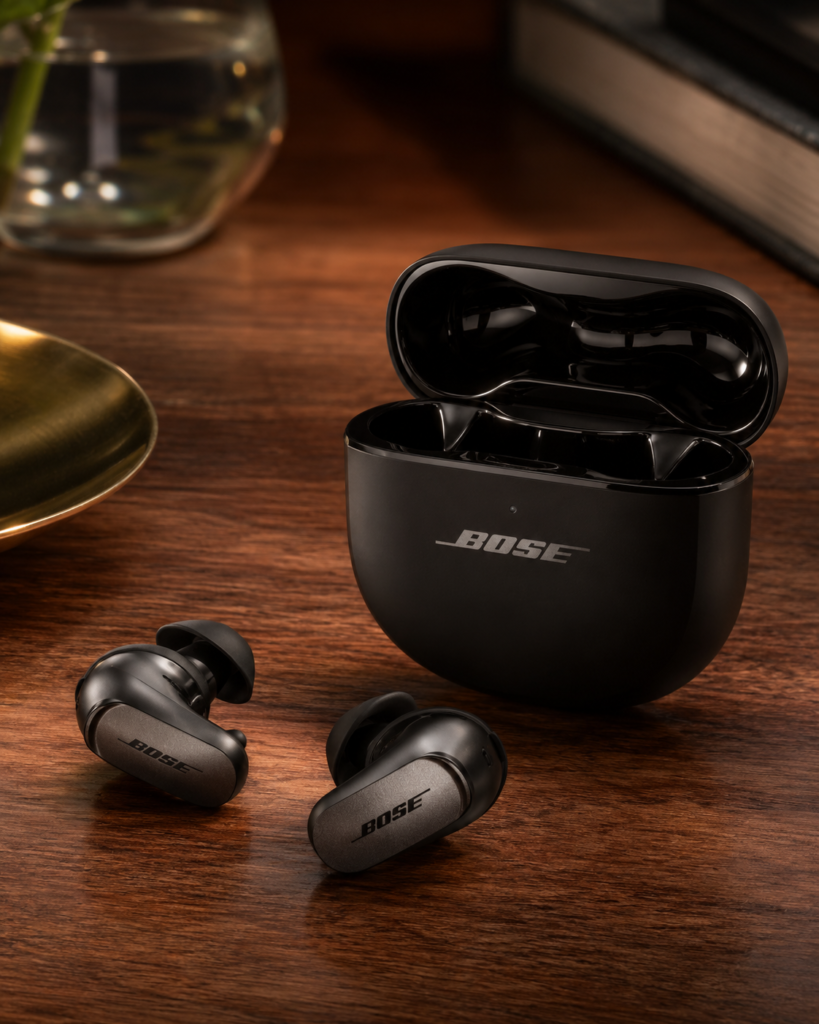
1. Bose QuietComfort Ultra Earbuds Review (2nd Gen)
The “Silent” King
Key Highlights
- Industry-leading Active Noise Cancellation (ANC) → sets the benchmark for true wireless
- Immersive Audio mode → expands soundstage beyond typical in-ear limits
- Exceptional low-frequency noise reduction → engines, traffic, and rumble nearly disappear
- CustomTune sound calibration → adapts audio to your ear shape
- Stable, comfortable fit designed for long sessions
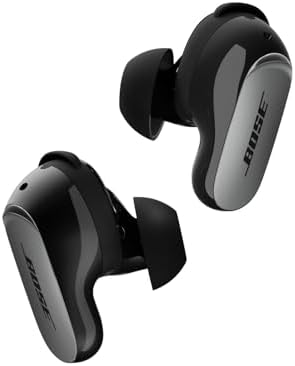
- WORLD-CLASS NOISE CANCELLATION: The best noise cancellation of any Bose wireless earbuds is now even better than before….
- CUSTOMTUNE TECHNOLOGY: CustomTune technology analyses your ears and adapts your in-ear headphones to their shape. The re…
- NOISE CONTROL: Quickly adjust the level of noise cancellation without using Modes, including turning it off completely t…
Built for people who want silence first—everything else second.
Pros
- Best-in-class ANC (full spectrum)
Dominates across low and mid frequencies—ideal for flights, commuting, and offices - Unmatched low-end noise suppression
Airplane engine hum and city rumble are where Bose clearly pulls ahead - Immersive Audio adds spatial depth
Makes music feel wider and more externalized - Excellent comfort
Secure yet soft fit for extended listening - Consistent, reliable performance
ANC works effortlessly without constant tweaking
Cons
- Battery drops with Immersive Audio (~4 hours)
Spatial processing significantly reduces runtime - Charging case is bulkier
Less pocket-friendly than Sony or Apple - Sound quality is good—but not audiophile-first
Focus leans toward ANC over absolute detail - Fewer advanced codec options
Lacks LDAC / aptX Lossless support
Bottom Line
The Bose QuietComfort Ultra (2nd Gen) has a very clear purpose:
- If you want the quietest environment possible → nothing beats it
- If you want maximum audio fidelity or features → others may edge ahead
When silence is the priority, Bose is still the reference point.
2. Sony WF-1000XM6
The Tech Powerhouse
Key Highlights
- Next-gen QN3 noise-cancelling chip (2026) → faster, more adaptive ANC processing
- Best-in-class balance of ANC, sound quality, and smart features
- LDAC support → high-resolution wireless audio on compatible devices
- Advanced Adaptive Sound Control (auto-adjusts based on activity & location)
- Excellent call clarity with AI-enhanced voice pickup
- Refined battery + fast charging improvements over previous gen
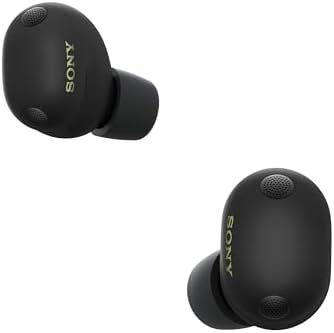
- THE BEST NOISE CANCELLATION: Experience powerful, adaptive noise cancelling that keeps distractions out and your music f…
- CO-CREATED WITH MASTERING AUDIO ENGINEERS: Developed in collaboration with mastering audio engineers, the WF-1000XM6 ear…
- HD NOISE CANCELLING PROCESSOR: The HD Noise Cancelling Processor QN3e is 3x faster than the QN2e (found in our WF-1000XM…
Built to be the most well-rounded true wireless earbuds—not the absolute best at one thing, but elite at everything.
Pros
- Top-tier balance (ANC + sound)
Very close to Bose in noise cancelling, while offering richer, more detailed audio - Hi-res audio capability (LDAC)
One of the few earbuds that actually pushes higher-quality wireless playback - Excellent call quality
Among the best for voice clarity, even in noisy environments - Highly intelligent features
Adaptive sound, wear detection, environment-based profiles - Customizable sound signature
Strong EQ controls + tuning flexibility in the Sony app
Cons
- Touch controls can be overly sensitive
Accidental taps are a common complaint - App is powerful—but not beginner-friendly
Lots of features, but can feel cluttered or overwhelming - Fit can be subjective
Foam tips improve isolation, but don’t suit everyone - ANC slightly behind Bose at absolute peak
Still elite—just not the outright #1
Bottom Line
The Sony WF-1000XM6 is what you pick when you don’t want to compromise:
- Not the absolute best ANC → Bose wins narrowly
- Not the purest sound → Sennheiser/Technics edge it
But it’s the best combination of everything in one package
Not sure yet? Read full comparisons at Best ANC Earbuds for Travel.
3. Apple AirPods 4 with ANC
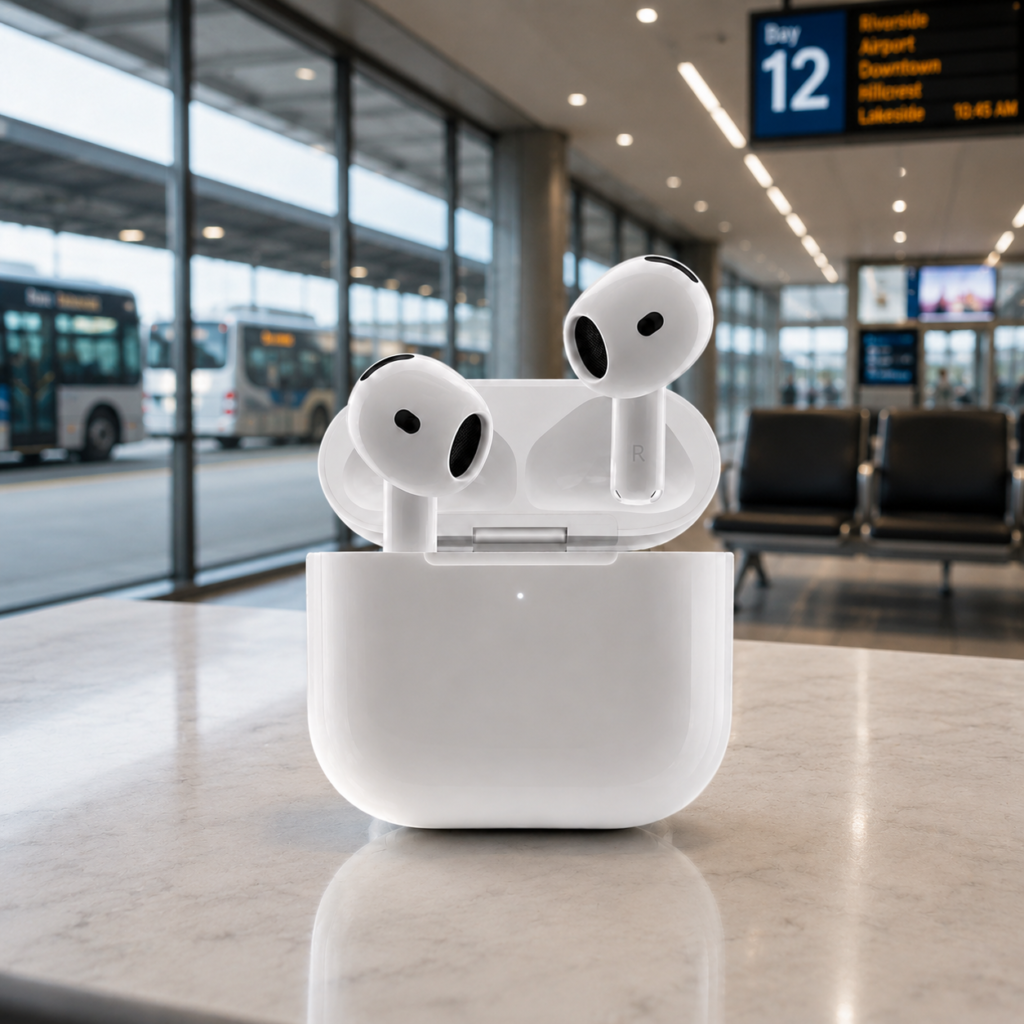
The Open-Fit Apple Essential
Key Highlights
- Seamless Apple ecosystem integration → fast pairing, automatic device switching, and effortless use across iPhone, iPad, Mac, and Apple Watch
- Active Noise Cancellation in an open-ear design → reduces everyday background noise without using silicone ear tips
- Adaptive Audio → blends noise cancellation and awareness depending on your surroundings
- Transparency mode → lets outside sound in when you need to stay aware
- H2 chip performance → improves audio processing, call clarity, Siri interaction, and smart listening features
- Personalized Spatial Audio with dynamic head tracking → creates a more immersive listening experience for music, movies, and calls
- Voice Isolation for clearer calls → helps your voice stand out in noisy places
- USB-C charging case with Find My speaker → easier charging and better recovery if the case is misplaced
- Wireless charging support → works with Apple Watch chargers and Qi-certified chargers
- IP54 dust, sweat, and water resistance → suitable for commuting, work, light workouts, and everyday use
AirPods 4 with ANC are designed for Apple users who want a lighter, tip-free alternative to AirPods Pro without giving up modern noise control, Spatial Audio, or smart ecosystem features.

- REBUILT FOR COMFORT — AirPods 4 have been redesigned for exceptional all-day comfort and greater stability. With a refin…
- ACTIVE NOISE CANCELLATION — AirPods 4 with Active Noise Cancellation help reduce outside noise before it reaches your ea…
- HEAR THE WORLD AROUND YOU — The powerful H2 chip comes to AirPods 4. Adaptive Audio seamlessly blends ANC and Transparen…
Pros
Excellent Apple ecosystem experience
They pair quickly, switch smoothly between Apple devices, and feel almost invisible in daily use.
More comfortable for casual listening
The open-fit shape can feel easier to wear for long work sessions, calls, podcasts, and commuting.
Smart adaptive listening features
Adaptive Audio and Transparency mode help balance quiet listening with real-world awareness.
ANC without silicone ear tips
For users who dislike the plugged-in feeling of in-ear earbuds, AirPods 4 with ANC offer noise reduction in a more open and lightweight design.
Strong everyday call performance
Voice Isolation improves clarity when taking calls in public spaces, offices, buses, airports, or city streets.
Spatial Audio support
Dynamic head tracking makes movies, shows, FaceTime calls, and supported music feel more immersive.
Better case experience
USB-C, wireless charging, and a built-in speaker for Find My make the case more convenient than older standard AirPods cases.
Cons
ANC is limited by the open-fit design
Because there are no silicone ear tips sealing the ear canal, noise cancellation is not as powerful as AirPods Pro or other sealed ANC earbuds.
Best value is inside the Apple ecosystem
Android users lose much of the seamless pairing, switching, Siri, and deeper Apple-device integration.
No customizable ear tips
Fit depends on your ear shape. If standard AirPods have never fit you well, these may still feel insecure.
Not audiophile-grade
Sound is clean and enjoyable, but more detail-focused earbuds from brands like Technics, Sennheiser, or Sony may offer stronger audio depth.
Less manual control than competitors
EQ, ANC tuning, and sound customization are still more limited compared with many premium Android-friendly earbuds.
Bottom Line
Apple AirPods 4 with ANC are not trying to beat AirPods Pro on maximum noise cancellation. Their strength is comfort, simplicity, and Apple ecosystem smoothness.
If you want noise cancellation without silicone ear tips, they are one of the most convenient Apple earbuds available.
If you already use an iPhone, iPad, Mac, or Apple Watch, they feel fast, polished, and effortless.
If you want the strongest ANC, deeper bass seal, or more advanced ear-fit customization, AirPods Pro are still the better choice.
AirPods 4 with ANC are best for Apple users who want a lighter everyday earbud with smart noise control, clean sound, strong calls, and zero setup friction.
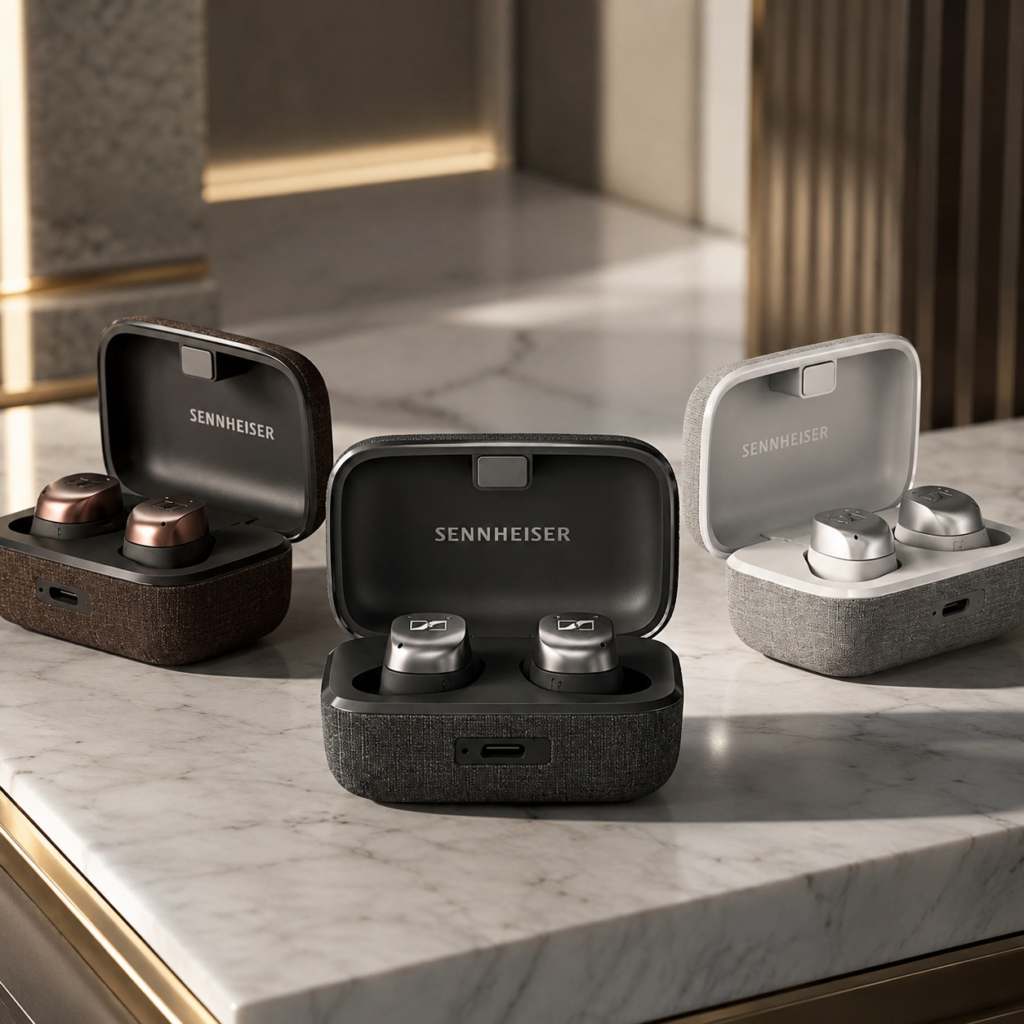
4. Sennheiser Momentum True Wireless 4
The Sound-First Choice
Key Highlights
- aptX Lossless + adaptive codecs → near-lossless wireless audio (on supported devices)
- Wide, speaker-like soundstage → more space and separation than most earbuds
- Audiophile-leaning tuning → balanced, natural, and detailed presentation
- Advanced EQ & sound personalization via the Sennheiser app
- Improved battery & stability vs previous gen
- Hybrid Adaptive ANC (refined, but not class-leading)

- Seamless Connectivity & Smart Features: Sennheiser MOMENTUM 4 earbuds wireless Bluetooth 5.4 with multipoint connectivit…
- Adaptive Noise Cancellation & Transparency Mode: The wireless Bluetooth earbuds block distractions with optimized ANC an…
- All-Day Comfort & Secure Fit: The true wireless earbuds have an ergonomic design with extra soft silicone ear tips for l…
Built for people who care more about how music sounds than how much noise disappears.
Pros
- Outstanding clarity & micro-detail
Instruments and vocals feel distinct and lifelike—great for complex tracks - Best-in-class codec support
aptX Lossless / Adaptive gives you higher ceiling audio quality than most competitors - Natural, non-fatiguing tuning
No artificial boosts—works across genres without sounding harsh - Highly customizable sound
EQ + sound personalization lets you dial it from neutral → fun - Spacious presentation
One of the few earbuds that feels “open” instead of in-your-head
Cons
- ANC is good, not dominant
Falls behind Bose QuietComfort Ultra and Sony WF-1000XM6 in raw noise suppression - Bulky shell design
May feel large for smaller ears or long sessions - Not bass-head focused out of the box
Some users may find it less punchy unless tuned via EQ - Premium price without “gimmick features”
You’re paying for sound—not smart cases, AI tricks, or ecosystem perks
Bottom Line
- If you want music to sound correct, layered, and immersive → this is top-tier
- If you want silence above all else → Bose/Sony still win
In simple terms “Others cancel noise better, these reproduce sound better.”
Still unsure? Most users choose between Bose for maximum silence and AirPods Pro 3 for Apple convenience.
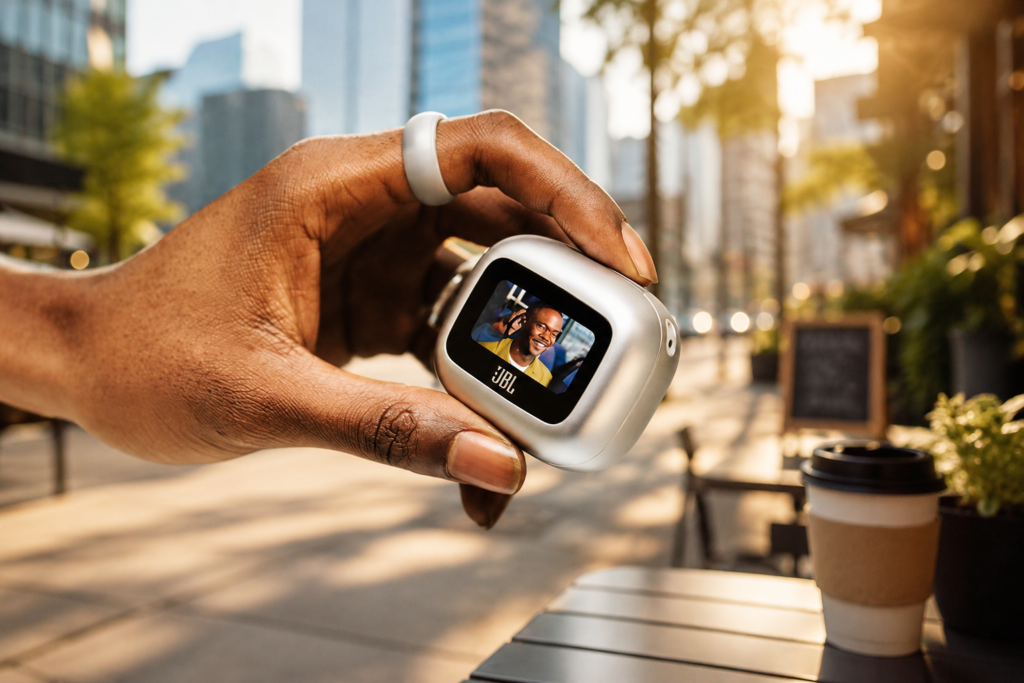
5. JBL Live Beam 3
Battery & practicality monster
Key Highlights
- 48-hour total battery life (≈12h buds + 36h case)
- Smart charging case with touchscreen (control music, ANC, calls without phone)
- True Adaptive ANC with real-time environmental adjustment
- 6-mic system for clear calls + noise suppression
- Multipoint Bluetooth + wireless charging + IP55 rating
- JBL Signature + Spatial Sound tuning (fun, punchy sound profile)

- Hi-Res Audio Wireless with JBL signature sound
- The JBL Live Beam 3’s 10mm dynamic drivers are powered by JBL Signature Sound. Each driver is perfectly tuned to deliver…
- Convenient Smart Charging Case for app-free control
These are engineered as a feature-packed daily driver, not a purist audiophile or ANC-first device.
Pros
- Battery monster
Easily among the longest-lasting ANC earbuds on the market right now (48h total) - Smart case = genuinely useful (not gimmick)
You can control playback, calls, ANC, notifications without touching your phone - Very strong everyday usability
Multipoint, app customization, touch controls, and adaptive features make them frictionless to use - Punchy, engaging sound
Lively bass + full-bodied tuning makes them enjoyable for casual listening - Excellent call quality
6 microphones + voice optimization = strong performance in noisy environments - Great value for features
Competes with flagship earbuds while offering more features per dollar
Cons
- ANC is good, not elite
Doesn’t match Bose / Sony level isolation, especially in complex noise environments - Sound is fun, not “audiophile-grade”
Less precision and detail compared to Sennheiser or Technics - Case screen = mixed practicality
Cool and useful—but not everyone will actually rely on it long-term - Bulky case vs competitors
The smart display adds size compared to minimalist cases - Fit may not suit everyone
Some users report pressure or discomfort over long sessions - Quality control concerns (user reports)
Bottom Line
The JBL Live Beam 3 sits in a very specific lane:
- Not the best at anything single metric
- But arguably the best “all-in-one practical earbuds”
Head-to-Head Comparison
Bose QuietComfort Ultra vs Apple AirPods Pro 3
This is one of the most common comparisons among premium noise cancelling earbuds buyers.
Noise Cancellation
- Bose QuietComfort Ultra: Best-in-class ANC, especially for low-frequency noise like engines and traffic
- AirPods Pro 3: Extremely strong ANC, but slightly less aggressive in deep noise environments
👉 Winner: Bose QuietComfort Ultra
Transparency / Awareness Mode
- Bose: Good, but slightly processed sound
- AirPods Pro 3: Industry-leading natural transparency mode
👉 Winner: AirPods Pro 3
Ecosystem & Usability
- Bose: Works equally well across Android and iOS
- AirPods Pro 3: Deep Apple integration (instant pairing, spatial audio, device switching)
👉 Winner: AirPods Pro 3
Physical Controls vs. Force Sensors
- The Bose Edge: Bose features a dedicated volume strip on the stem that allows you to swipe up and down. It is often more intuitive and responsive than Apple’s “squeeze” and “swipe” gestures, which can be finicky if your fingers are sweaty or you’re wearing gloves.
👉 Winner: Bose QuietComfort Ultra
Sound Quality
- Bose: V-shaped, immersive, slightly consumer-tuned
- AirPods Pro 3: Balanced, clean, optimized for general users
👉 Slight advantage to AirPods Pro 3: depends on preference
Stability and Fit (The “Security” Factor)
- The Bose Edge: Bose uses a two-piece system (separate ear tips and stability bands). This allows for a much more customizable fit that won’t budge during heavy workouts or fast head movements.
- The Apple Limit: AirPods rely entirely on the friction of the silicone tip. For many users, this leads to the “slow slide-out” effect during long listening sessions or runs.
👉 Winner: Bose QuietComfort Ultra
Universal High-Res Audio
- The Bose Edge: Bose supports Snapdragon Sound (aptX Adaptive). This means if you use any high-end Android device or a specialized music player, you get near-lossless audio quality. Apple remains locked to the AAC codec, which technically limits the amount of detail transmitted from the source.
👉 Winner: Bose QuietComfort Ultra
Buying Guide: How to Choose the Best Noise Cancelling Earbuds
When choosing the best noise cancelling earbuds, focus on:
1. Noise Cancellation Strength
Not all ANC is equal—Bose leads in deep noise blocking.
2. Ecosystem Compatibility
- Apple users → AirPods Pro 3
- Android users → Sony or Sennheiser
3. Sound Preference
- Bass-heavy & immersive → Bose
- Balanced & technical → Sony
- Natural & clean → Apple
- Audiophile detail → Sennheiser
4. Battery Life
Important for travel and long sessions.
Final Decision?
The best noise cancelling earbuds depend heavily on how you use them.
- Bose dominates pure silence and travel comfort
- Sony offers the best technical balance
- Apple leads usability and ecosystem integration
- Sennheiser targets sound enthusiasts
FAQs
Are the Bose QuietComfort Ultra Earbuds still the best ANC earbuds for travel?
For many travelers, the Bose QuietComfort Ultra Earbuds are still one of the strongest choices because they focus on the part that matters most during flights, trains, buses, airports, and busy terminals: deep, consistent active noise cancellation. A good Bose QuietComfort Ultra Earbuds review should not judge them only by bass, battery life, or app features. Their real strength is how well they reduce low-frequency travel noise such as engine rumble, air-conditioning hum, road vibration, and cabin drone.
That matters because travel noise is not the same as office noise. In a café, you may want balanced ANC with some awareness. On a plane, the goal is usually deeper isolation and less fatigue. Bose earbuds are built around that “quiet first” experience, which is why they remain a premium earbuds pick for travelers who value calm over maximum feature quantity.
| Travel Use Case | Bose QuietComfort Ultra Earbuds Performance | Why It Matters |
|---|---|---|
| Airplane engine noise | Excellent | Reduces fatigue on long flights |
| Bus and train rumble | Excellent | Helps podcasts and music stay clear |
| Airport crowd noise | Very good | Softens background movement and voices |
| Call clarity in public | Good to very good | Useful, but not the main reason to buy them |
| Immersive listening | Strong | Adds a wider, more spatial sound feel |
Travel ANC priority chart
| Feature | Importance for Travel | Bose Strength |
|---|---|---|
| Low-frequency ANC | 10/10 | 10/10 |
| Comfort over hours | 9/10 | 8.5/10 |
| Battery endurance | 8/10 | 7.5/10 |
| Case portability | 7/10 | 7/10 |
| Sound immersion | 8/10 | 8.5/10 |
The trade-off is that Bose does not always feel as compact or ecosystem-smooth as Apple, and it may not offer the same screen-case convenience as JBL Live Beam 3. But if the page category is best ANC earbuds, Bose belongs near the top because it solves the core problem better than most: making noisy environments feel quieter.
Is AirPods 4 with ANC good enough compared with AirPods Pro for noise cancelling?
AirPods 4 with ANC is good enough for casual noise reduction, commuting, work calls, walking, studying, and Apple users who dislike silicone ear tips. But it should not be described as a full AirPods Pro replacement for people who want maximum ANC. The most important difference is physical design: AirPods 4 with ANC uses an open-fit shape, while AirPods Pro uses sealed ear tips.
That seal matters. ANC works best when the earbud can block some sound passively before the microphones and processors cancel the rest. AirPods 4 with ANC is impressive because it brings active noise cancellation into a more open, lightweight AirPods design. But because it does not seal the ear canal, it cannot isolate deep noise as strongly as premium sealed ANC earbuds.
| Feature | AirPods 4 with ANC | AirPods Pro-Style Sealed Earbuds |
|---|---|---|
| Fit type | Open-fit | In-ear seal with tips |
| Comfort feel | Light, less plugged-in | More isolated, more secure |
| ANC strength | Good for open-fit | Stronger overall |
| Best for | Apple users, commuting, calls, casual ANC | Flights, loud transit, stronger isolation |
| Weak point | Less passive isolation | Some users dislike ear tips |
ANC expectation chart
| Noise Situation | AirPods 4 with ANC Expected Performance |
|---|---|
| Office hum | 8/10 |
| Light traffic | 7/10 |
| Bus station noise | 6.5/10 |
| Airplane cabin rumble | 5.5/10 |
| Sudden voices nearby | 5/10 |
The real reason to buy AirPods 4 with ANC is not that they beat every premium earbud. It is that they make ANC feel easier, lighter, and more natural for Apple users who never liked the pressure or fit of silicone-tip earbuds.
For an Apple-focused buyer, the decision is simple: choose AirPods 4 with ANC if comfort and open-fit convenience matter most. Choose AirPods Pro if stronger ANC, better seal, and more secure fit matter most.
Is JBL Live Beam 3 worth buying for noise cancelling earbuds with a smart case?
JBL Live Beam 3 is worth considering if you want noise cancelling earbuds with a smart case, strong app-style controls, long battery life, and a more feature-rich experience than basic ANC earbuds. The Smart Charging Case is the main differentiator. Instead of opening the phone app for every small adjustment, users can control key settings directly from the case screen.
That makes JBL Live Beam 3 especially useful for travelers, students, gym users, office workers, and people who switch between listening modes often. The case is not just a gimmick when it saves time. It becomes useful when you want to adjust ANC, check battery, switch modes, or control playback without pulling out your phone.
| JBL Live Beam 3 Feature | Practical Value | Best User |
|---|---|---|
| Smart Charging Case | Quick control without app opening | Travelers, commuters |
| True Adaptive Noise Cancelling | Adjusts cancellation based on surroundings | Mixed environments |
| JBL Spatial Sound | Wider media experience | Movies, YouTube, gaming |
| Hi-Res Audio Wireless | Better quality potential on supported devices | Android listeners |
| Long total battery life | Less frequent charging | Heavy daily users |
Feature-value chart
| Buying Factor | JBL Live Beam 3 Score |
|---|---|
| Smart controls | 10/10 |
| Battery convenience | 9/10 |
| ANC flexibility | 8/10 |
| Apple ecosystem smoothness | 6/10 |
| Premium travel ANC | 7.5/10 |
Compared with Bose, JBL Live Beam 3 is more of a “feature value” earbud than a pure ANC specialist. Compared with AirPods 4 with ANC, JBL is more customizable and more Android-friendly, but less seamless for iPhone users. It fits well on a best noise cancelling earbuds page as the pick for users who want strong everyday ANC plus a high-control charging case.
What are the best ANC earbuds for iPhone users who do not like silicone tips?
The best ANC earbuds for iPhone users who do not like silicone tips are usually AirPods 4 with ANC, because they bring active noise cancellation to an open-fit Apple earbud design. This is important because many users want less background noise but do not want the sealed, plugged-in feeling of traditional in-ear earbuds.
Most premium earbuds use silicone tips because they improve bass, isolation, and ANC strength. But not everyone finds them comfortable. Some people feel ear pressure, irritation, occlusion, or fit fatigue. AirPods 4 with ANC solves a different problem: it gives Apple users a lighter listening experience while still adding useful noise control.
| User Problem | Why AirPods 4 with ANC Helps |
|---|---|
| “I hate silicone ear tips” | Open-fit design feels lighter |
| “I want ANC for commuting” | Reduces steady background noise |
| “I use iPhone, Mac, and iPad” | Works smoothly across Apple devices |
| “I take many calls” | Voice Isolation helps call clarity |
| “I want awareness outdoors” | Transparency and Adaptive Audio help balance sound |
Best-fit decision chart
| Buyer Type | Best Choice |
|---|---|
| iPhone user who hates ear tips | AirPods 4 with ANC |
| iPhone user who wants strongest ANC | AirPods Pro-style sealed earbuds |
| Android user who wants case controls | JBL Live Beam 3 |
| Frequent flyer who wants maximum quiet | Bose QuietComfort Ultra Earbuds |
| Audiophile who wants more tuning | Premium earbuds with deeper EQ control |
AirPods 4 with ANC is not the strongest ANC earbud overall. But for a very specific search intent — “best ANC earbuds for iPhone without silicone tips” — it is one of the most relevant answers because it solves the comfort problem first and the noise problem second.
Which premium earbuds are better: Bose QuietComfort Ultra Earbuds, AirPods 4 with ANC, or JBL Live Beam 3?
The best choice depends on what “premium” means to the buyer. If premium means the strongest quiet, Bose QuietComfort Ultra Earbuds are the better pick. If premium means the smoothest Apple experience without silicone tips, AirPods 4 with ANC is the better fit. If premium means smart features, case controls, long battery convenience, and Android-friendly flexibility, JBL Live Beam 3 is the stronger value.
These three earbuds should not be ranked by one universal score only. They serve different buyer intentions inside the best ANC earbuds category.
| Earbud | Best For | Main Strength | Main Limitation |
|---|---|---|---|
| Bose QuietComfort Ultra Earbuds | Travel and maximum quiet | Excellent ANC | Bulkier, premium pricing |
| AirPods 4 with ANC | Apple users who want open-fit ANC | Seamless Apple experience | Weaker isolation than sealed earbuds |
| JBL Live Beam 3 | Feature-focused buyers | Smart case and customization | ANC not as elite as Bose |
| Premium sealed earbuds in general | Maximum isolation | Stronger passive + active cancellation | Ear-tip comfort varies |
Buyer-intent comparison chart
| Priority | Best Match |
|---|---|
| Best ANC earbuds for airplanes | Bose QuietComfort Ultra Earbuds |
| Best open-fit ANC earbuds for iPhone | AirPods 4 with ANC |
| Best ANC earbuds with smart charging case | JBL Live Beam 3 |
| Best premium earbuds for Apple ecosystem | AirPods 4 with ANC or AirPods Pro |
| Best premium earbuds for feature control | JBL Live Beam 3 |
For a buyer-guide page, the cleanest positioning is this:
Bose is the quiet-first pick.
Apple is the ecosystem-comfort pick.
JBL is the smart-feature value pick.
That structure helps readers choose faster and also gives search engines clearer topical coverage around Bose QuietComfort Ultra Earbuds review, AirPods 4 with ANC, JBL Live Beam 3, best ANC earbuds, and premium earbuds.
What Are the Best Noise Cancelling Headphones for Travel, Work and Everyday Listening?
The best noise cancelling headphones are the models that combine effective active noise cancellation, a secure acoustic seal, balanced sound, long-wearing comfort and reliable wireless connectivity. The right choice depends on where the headphones will be used rather than which model produces the largest advertised noise-reduction number.
For air travel, the best headphones should reduce continuous low-frequency sounds such as aircraft engines and cabin ventilation. Active noise cancellation is generally most effective against steady low-frequency noise, while earcup padding and passive isolation help reduce voices and sharper surrounding sounds. Recent research has similarly found greater ANC attenuation at lower frequencies.
For office work, adaptive ANC and a natural transparency mode may be more useful than maximum isolation. Adaptive noise cancelling headphones automatically adjust their processing as the surrounding environment changes. This can make them more comfortable when moving between a quiet office, a café and public transport.
The best headphones for everyday listening should also offer:
- Comfortable earcups with sufficient depth
- Moderate clamping pressure
- Clear microphones for calls
- Multipoint Bluetooth connectivity
- A stable mobile application
- Adjustable equalizer settings
- Replaceable or durable ear cushions
- A wired listening option when the battery is depleted
Current headphone development increasingly emphasizes adaptive ANC, spatial audio, multipoint pairing, longer battery life, improved speech processing and Bluetooth LE Audio support.
Best Noise Cancelling Headphones Buying-Priority Chart
The following chart is an editorial buying guide rather than a laboratory ANC measurement.
Feature Priority by Use Case

                         ANC   Comfort   Sound   Calls   Battery
Airplane travel          █████ █████     ████    ██      █████
Daily commuting          █████ ████      ████    ███     ████
Office concentration     ████  █████     ███     █████   ████
Remote meetings          ███   █████     ████    █████   ████
Home music listening     ██    █████     █████   ██      ███
Gaming and movies        ███   ████      █████   ███     ████
Best Headphones by Listening Environment
| Listening environment | Best headphone type | Features to prioritize | Common buying mistake |
|---|---|---|---|
| Airplane cabin | Over-ear ANC headphones | Strong low-frequency ANC, comfort, long battery life | Buying solely for sound quality |
| Train or subway | Closed-back noise cancelling headphones | Adaptive ANC, secure fit, transparency mode | Choosing loose or shallow earcups |
| Open office | Multipoint wireless headphones | Clear calls, adjustable ANC, sidetone | Ignoring microphone performance |
| Home listening | Sound-focused over-ear headphones | Tonal balance, detail, comfort, wired mode | Paying for extreme ANC that is rarely used |
| Gym or outdoor use | Noise cancelling earbuds | Secure fit, sweat resistance, awareness mode | Using bulky over-ear headphones |
| Frequent video calls | Wireless headset or call-focused headphones | Microphone clarity, multipoint, mute controls | Assuming expensive headphones always have good microphones |
A model can therefore be one of the best noise cancelling headphones without being the best headphones for every listener. A frequent traveler may value ANC and battery endurance, while a music-focused listener may accept weaker noise cancellation in exchange for more natural sound.
What Features Should the Best Headphones Have in 2026?
The best headphones in 2026 should perform well as complete personal-audio systems rather than simply producing loud or bass-heavy sound. Headphone buyers increasingly expect intelligent noise control, multi-device connectivity, application-based sound adjustment and improved integration with phones, televisions and computers.
Several features deserve particular attention.
1. Adaptive Active Noise Cancellation
Standard ANC uses microphones to detect environmental noise and generate an opposing audio signal. Adaptive ANC continually changes the intensity or processing profile according to the surrounding environment.
The best adaptive noise cancelling headphones should reduce background hum without creating excessive pressure, audible hiss or unnatural changes in the music.
2. Effective Passive Noise Isolation
ANC and passive isolation perform different jobs. Active noise cancellation electronically reduces environmental sound, while passive isolation physically blocks it through the earcups, padding and fit.
A strong physical seal matters because even the best noise cancelling headphones may perform poorly when:
- Eyeglass arms create gaps around the earcups
- Hair prevents the cushions from sealing
- The earcups are too shallow
- The headphones sit unevenly
- The ear pads have become compressed or damaged
3. Multipoint Bluetooth
Multipoint Bluetooth allows compatible headphones to maintain connections with two source devices. A listener might remain connected to a laptop for meetings while also receiving calls from a phone. Google’s Android documentation confirms that supported multipoint headphones can connect to two audio-source devices.
Multipoint is especially valuable for:
- Hybrid workers
- Remote professionals
- Students using a phone and laptop
- People switching between personal and business devices
- Travelers moving between a tablet and smartphone
4. Bluetooth LE Audio and Auracast Readiness
Bluetooth LE Audio is designed to introduce more efficient audio delivery, multi-stream capabilities and support for new listening applications. Auracast broadcast audio can allow compatible devices to receive shared audio broadcasts in supported public or private spaces.
These technologies are becoming more relevant, but buyers should verify compatibility across the complete chain:
Headphones → Smartphone or Computer → Operating System → Application
Owning LE Audio headphones does not guarantee that every connected device or application will expose every LE Audio feature.
5. Comfortable Long-Term Fit
The best headphones should remain comfortable beyond a short store demonstration. Weight alone does not determine comfort. Weight distribution, headband padding, earcup depth, heat buildup and clamping force can be equally important.
A heavier headphone with a well-designed suspension system may feel more comfortable than a lighter model that concentrates pressure on the crown of the head.
6. Useful Transparency Mode
Transparency or ambient mode uses external microphones to reproduce surrounding sound. A good implementation should make voices understandable without making the environment sound metallic, excessively amplified or delayed.
This feature is particularly useful when:
- Speaking to airline staff
- Crossing roads
- Hearing office announcements
- Ordering in a café
- Monitoring children or family members
- Walking through busy public areas
7. Clear Microphone Performance
The best headphones for music are not automatically the best headphones for calls. Call quality depends on microphone placement, wind management, voice-isolation algorithms and how aggressively the system suppresses background noise.
Buyers who work remotely should evaluate microphone samples recorded in realistic environments rather than relying only on the number of microphones listed in the specifications.
Best Headphones Feature-Importance Table
| Feature | Essential for most buyers? | Most important for | What to examine |
|---|---|---|---|
| Adaptive ANC | Yes | Commuters and travelers | Performance in changing environments |
| Comfortable earcups | Yes | All-day users | Depth, heat, clamping pressure |
| Multipoint Bluetooth | Highly useful | Work and study | Switching speed and connection stability |
| Transparency mode | Highly useful | Commuting and offices | Voice naturalness and background awareness |
| Long battery life | Yes | Travel | Real battery life with ANC enabled |
| Spatial audio | Optional | Movies and immersive content | Platform and device compatibility |
| LE Audio support | Emerging advantage | Future-focused buyers | Source-device compatibility |
| High-resolution codec | Optional | Critical wireless listening | Codec support on both devices |
| Wired mode | Useful | Flights, gaming and backup use | Whether wired mode works without battery |
| App-based equalizer | Highly useful | Listeners with sound preferences | Number of adjustable bands and saved presets |
The best approach is to rank the features according to actual daily use. A buyer who spends six hours in online meetings should prioritize microphones and comfort. A frequent flyer should place ANC, battery life and portability above spatial audio or decorative design.
How to Pair Bluetooth Headphones With iPhone, Android, Windows and Mac
To understand how to pair Bluetooth headphones, begin by placing the headphones in pairing or discovery mode. This usually requires holding the power or Bluetooth button until an indicator light flashes or a voice prompt announces that pairing mode is active.
The exact button sequence varies by manufacturer, but the general process is:
- Charge and turn on the Bluetooth headphones.
- Disconnect them from previously connected devices.
- Activate pairing mode.
- Open Bluetooth settings on the phone, tablet or computer.
- Select the headphone name from the available-device list.
- Approve the connection request.
- Play audio to confirm that the headphones are the selected output device.
How to Pair Bluetooth Headphones by Device
| Device | Bluetooth menu path | Pairing action |
|---|---|---|
| iPhone or iPad | Settings → Bluetooth | Turn Bluetooth on and tap the headphone name |
| Android phone | Settings → Connected devices → Pair new device | Select the headphones under available devices |
| Windows 11 PC | Settings → Bluetooth & devices → Add device | Choose Bluetooth and select the headphones |
| Mac | Apple menu → System Settings → Bluetooth | Locate the headphones and select Connect |
| Smart TV | Settings → Sound or Remotes and Accessories → Bluetooth | Search for and select the headphones |
| Gaming device | Bluetooth or Accessories menu | Support varies by console and headphone model |
On an iPhone, Apple directs users to open Settings, select Bluetooth, turn Bluetooth on and tap the accessory when it appears.
On Android, open the Bluetooth controls, select Pair new device, and tap the name of the headphones. Some compatible products may display a Fast Pair notification automatically.
On Windows, first make the Bluetooth headphones discoverable. Open Settings, select Bluetooth & devices, add a device and choose the headphones from the available list.
On a Mac, open System Settings, select Bluetooth, find the headphones in the device list and choose Connect.
Bluetooth Headphone Pairing Flowchart
Turn on headphones
        │
        ▼
Do they enter pairing mode?
        │
   ┌────┴────┐
   │         │
  Yes        No
   │         │
   │         └─ Hold Bluetooth/power button
   │            or consult the product manual
   ▼
Open Bluetooth settings
        │
        ▼
Does the headphone name appear?
        │
   ┌────┴────┐
   │         │
  Yes        No
   │         │
   │         ├─ Move devices closer
   │         ├─ Disconnect old devices
   │         ├─ Restart Bluetooth
   │         └─ Reset headphones
   ▼
Select headphone name
        │
        ▼
Confirm connection and test audio
What to Do When Bluetooth Headphones Will Not Pair
Start with the most common cause: the headphones may already be connected to another nearby phone, tablet or computer. Turn Bluetooth off on the previous source device or remove the headphones from its saved-device list.
Next, try the following sequence:
- Keep the headphones close to the source device.
- Turn Bluetooth off and back on.
- Restart both devices.
- Remove or “forget” the headphones from the Bluetooth menu.
- Place the headphones in pairing mode again.
- Reset the headphones using the manufacturer’s instructions.
- Update the phone, computer and headphone firmware.
- On Windows, update or reinstall the Bluetooth adapter driver.
Microsoft recommends turning Bluetooth off and on, removing the problematic device and adding it again. It also advises checking the Bluetooth driver when connection problems continue.
Bluetooth Headphones Connected but No Sound
A successful Bluetooth connection does not always mean that the headphones have been selected as the active audio output.
Check the following:
- Increase the headphone and source-device volume.
- Select the headphones in the device’s audio-output menu.
- Pause audio playing on another multipoint-connected device.
- Confirm that “Media audio” is enabled on Android.
- On Windows, choose the stereo headphone output rather than an unintended communications profile.
- Close and reopen the music or video application.
- Disconnect and reconnect the headphones.
Google’s Android troubleshooting guidance recommends checking that media audio is enabled and that another connected device is not controlling playback.
People Also Ask
Are Bose QuietComfort Ultra Earbuds better than JBL Live Beam 3 for active noise cancellation?
Yes, Bose QuietComfort Ultra Earbuds are generally the better choice if active noise cancellation is the main priority. JBL Live Beam 3 offers strong adaptive ANC and a more feature-heavy experience, but Bose is more focused on deep quiet, travel comfort, and premium noise reduction.
The difference is not only about how much noise is reduced. It is also about the type of noise. Bose performs especially well against steady, low-frequency noise such as airplane engines, buses, trains, fans, and HVAC systems. JBL Live Beam 3 is better for users who want a smart case, more visible controls, long battery convenience, and a strong everyday feature set.
| Comparison Point | Bose QuietComfort Ultra Earbuds | JBL Live Beam 3 |
|---|---|---|
| ANC strength | Stronger | Good to very good |
| Travel quiet | Better | Good |
| Smart case controls | No screen case | Yes |
| Battery convenience | Good | Strong |
| App and feature flexibility | Good | Strong |
| Best buyer | Frequent traveler | Feature-focused daily user |
ANC-focused scoring chart
| Category | Bose | JBL |
|---|---|---|
| Airplane ANC | 10/10 | 7.5/10 |
| Office ANC | 9/10 | 8/10 |
| Commute ANC | 9.5/10 | 8/10 |
| Feature controls | 7/10 | 9.5/10 |
| Overall value feel | 8/10 | 8.5/10 |
Choose Bose if the keyword in your mind is “quiet.” Choose JBL if the keyword is “control.” Both are premium earbuds, but they are premium in different ways.
Is AirPods 4 with ANC better than JBL Live Beam 3 for iPhone users?
AirPods 4 with ANC is usually better for iPhone users who care about Apple ecosystem convenience, instant pairing, device switching, Siri, FaceTime calls, and a lightweight open-fit design. JBL Live Beam 3 may be better for iPhone users who want more manual controls, a smart charging case, longer battery convenience, and stronger app-style customization.
This is where buyer intent matters. An iPhone user who wants the least friction will probably prefer AirPods 4 with ANC. An iPhone user who wants more features for the money may prefer JBL Live Beam 3.
| iPhone Buyer Need | Better Choice | Reason |
|---|---|---|
| Fastest pairing | AirPods 4 with ANC | Apple ecosystem integration |
| No silicone ear tips | AirPods 4 with ANC | Open-fit design |
| Smart case screen | JBL Live Beam 3 | Direct case controls |
| More sound customization | JBL Live Beam 3 | More adjustable experience |
| Stronger passive isolation | JBL Live Beam 3 | Sealed-style fit helps more than open fit |
| Most natural Apple workflow | AirPods 4 with ANC | Built around iOS/macOS |
iPhone user decision chart
| Priority | Winner |
|---|---|
| Convenience | AirPods 4 with ANC |
| Case features | JBL Live Beam 3 |
| Open-fit comfort | AirPods 4 with ANC |
| Manual control | JBL Live Beam 3 |
| Apple ecosystem polish | AirPods 4 with ANC |
AirPods 4 with ANC is the more natural Apple earbud. JBL Live Beam 3 is the more feature-loaded alternative. On a best ANC earbuds page, they should be positioned differently instead of forcing one to replace the other.
Do premium earbuds with ANC always sound better than cheaper noise cancelling earbuds?
Not always. Premium earbuds usually offer better ANC processing, more reliable microphones, stronger app support, better comfort materials, improved spatial features, and more stable performance. But price alone does not guarantee better sound for every listener.
Some cheaper ANC earbuds may have powerful bass or enjoyable tuning, while some premium earbuds may prioritize noise cancellation, calls, or ecosystem features over pure audio detail. For example, Bose is often bought for quiet first. AirPods 4 with ANC is bought for Apple convenience and open-fit comfort. JBL Live Beam 3 is bought for feature control and smart case utility. None of these priorities are identical to “best sound quality.”
| Premium Earbud Factor | Why It Matters | Does It Always Improve Sound? |
|---|---|---|
| Better ANC microphones | Helps reduce outside noise | Indirectly |
| Better drivers | Can improve detail and bass | Usually |
| Spatial audio | Makes media feel wider | Depends on content |
| EQ control | Lets users tune sound | Yes, if well implemented |
| Better fit | Improves bass and isolation | Very important |
| Ecosystem features | Improves usability | Not sound itself |
Premium value chart
| Feature | Sound Impact | Daily Use Impact |
|---|---|---|
| Fit and seal | 10/10 | 9/10 |
| Driver quality | 9/10 | 8/10 |
| ANC quality | 7/10 | 10/10 |
| App EQ | 8/10 | 7/10 |
| Case features | 3/10 | 8/10 |
| Ecosystem pairing | 2/10 | 9/10 |
The deeper answer is that premium earbuds do not all compete on the same axis. The best buyer-guide content should separate best sound, best ANC, best Apple experience, best smart features, and best value instead of treating “premium” as one single category.
What should I look for before buying the best ANC earbuds for commuting?
Before buying the best ANC earbuds for commuting, look at ANC type, fit, battery life, call quality, awareness modes, case size, and how quickly you can control settings while moving. Commuting is unpredictable. You may be on a bus, train, sidewalk, bike path, office elevator, or crowded station. The best commuting earbuds are not always the ones with the strongest ANC; they are the ones that balance quiet, awareness, comfort, and control.
A sealed earbud with strong ANC may be best for train noise. An open-fit earbud like AirPods 4 with ANC may be better if you want comfort and awareness. JBL Live Beam 3 may be better if you want quick case-based controls. Bose may be better if your commute is loud and repetitive.
| Commuting Factor | Why It Matters | Best Example Type |
|---|---|---|
| ANC strength | Reduces traffic, train, and bus noise | Bose-style premium ANC |
| Transparency mode | Helps you hear announcements and traffic | Apple-style adaptive listening |
| Fit security | Prevents earbuds from shifting | Sealed or stability-band designs |
| Quick controls | Useful when moving | JBL smart case or strong touch controls |
| Call clarity | Needed for work calls outside | Voice-focused microphone systems |
| Battery life | Handles full day use | Long-case battery models |
Commuter buying chart
| Commute Type | Best Earbud Priority |
|---|---|
| Loud train commute | Strong ANC and secure seal |
| Walking commute | Transparency mode and awareness |
| Bus station waiting | ANC + call clarity |
| Office commute | Comfort and multipoint/device switching |
| Long daily commute | Battery life and case convenience |
For your page, this question is valuable because it captures long-tail search intent around best ANC earbuds for commuting, while naturally allowing mentions of Bose QuietComfort Ultra Earbuds, AirPods 4 with ANC, JBL Live Beam 3, and premium earbuds.
Are open-fit ANC earbuds like AirPods 4 with ANC good for bus stations and airports?
Open-fit ANC earbuds like AirPods 4 with ANC can be good for bus stations and airports, but they are better for reducing general background noise than creating deep isolation. The advantage is comfort and awareness. The limitation is that open-fit earbuds do not block the ear canal, so some sound will always leak in.
This can actually be useful in public travel spaces. At a bus station or airport, you may need to hear announcements, boarding calls, traffic movement, or people speaking nearby. Full isolation is not always ideal. AirPods 4 with ANC works best for users who want the environment softened rather than completely blocked.
| Public Travel Space | AirPods 4 with ANC Suitability | Why |
|---|---|---|
| Airport terminal | Good | Reduces general noise while preserving awareness |
| Bus station | Good | Useful for waiting areas and calls |
| Airplane cabin | Moderate | Open fit limits deep rumble reduction |
| Train platform | Good | Awareness can be safer |
| Very loud traffic | Moderate | Sealed earbuds cancel more |
Open-fit ANC expectation chart
| Benefit | Strength |
|---|---|
| Comfort | 9/10 |
| Awareness | 9/10 |
| Apple convenience | 10/10 |
| Deep ANC isolation | 6/10 |
| Bass impact | 6.5/10 |
For bus stations and airports, AirPods 4 with ANC is best for users who want comfort, calls, Apple integration, and moderate noise reduction. If the goal is maximum quiet during flights or loud travel, a sealed premium earbud like Bose QuietComfort Ultra Earbuds is the stronger ANC choice.
Are the Best Noise Cancelling Headphones Worth It for Flights and Commuting?
The best noise cancelling headphones are usually worth considering for frequent flights, train journeys, bus travel and noisy commutes because these environments contain persistent engine, ventilation and road noise.
ANC works by using microphones to monitor environmental sound and producing an opposing signal. Because continuous low-frequency sounds are comparatively predictable, they are generally easier for an ANC system to reduce than sudden voices, clattering dishes or rapidly changing high-frequency sounds.
Noise cancelling headphones are particularly valuable when a person:
- Flies several times per year
- Works near ventilation systems or machinery
- Commutes on trains or buses
- Needs concentration in shared offices
- Listens at moderate volume in loud surroundings
- Experiences fatigue from continuous background noise
However, noise cancelling headphones do not create absolute silence. Voices, alarms, door slams and other irregular sounds may remain audible. The physical earcup seal also influences the result.
ANC Value by Environment
Relative Practical Value of Noise Cancellation

Airplane engine noise      ██████████  Very high
Train or subway rumble     █████████   Very high
Bus and road noise         ████████    High
Office ventilation         ████████    High
Café background noise      ██████      Moderate to high
Nearby conversation        █████       Moderate
Keyboard sounds            ████        Moderate to low
Sudden alarms or shouting  ██          Limited
This chart represents expected practical usefulness, not measured decibel reduction.
| Situation | Is premium ANC valuable? | Reason |
|---|---|---|
| Weekly air travel | Yes | Long exposure to continuous cabin noise |
| Daily train commute | Yes | Repetitive low-frequency rumble |
| Open-plan office | Often | Reduces HVAC and general background noise |
| Quiet home office | Sometimes | Comfort and call quality may matter more |
| Occasional casual listening | Not necessarily | Midrange headphones may provide sufficient isolation |
| Outdoor walking | Use cautiously | Awareness mode may be more important than maximum ANC |
The purchase is less compelling when the headphones will mostly be used in a quiet room. In that situation, the best headphones may be a sound-focused model with moderate ANC rather than the most aggressive noise cancelling system.
Are Over-Ear Noise Cancelling Headphones Better Than Noise Cancelling Earbuds?
Over-ear noise cancelling headphones are usually better for long flights, extended office sessions and immersive listening, while noise cancelling earbuds are better for portability, exercise and discreet everyday use.
Neither format is universally superior. The better option depends on comfort, fit and intended use.
Over-Ear Headphones vs Noise Cancelling Earbuds
| Category | Over-ear noise cancelling headphones | Noise cancelling earbuds |
|---|---|---|
| Maximum ANC potential | Usually stronger | Strong on premium models |
| Long-session comfort | Often better | Highly dependent on ear-tip comfort |
| Portability | Lower | Excellent |
| Battery per charge | Usually longer | Usually shorter |
| Exercise suitability | Limited | Better |
| Passive isolation | Depends on earcup seal | Can be strong with correct ear tips |
| Wind exposure | Earcups may catch wind | Microphones may produce wind noise |
| Call convenience | Strong on call-focused models | Convenient but variable |
| Soundstage | Often wider | More intimate |
| Heat buildup | Can become warm | Usually lower |
| Sleeping or lying down | Poor | Some compact earbuds may work |
| Risk of being misplaced | Lower | Higher |
The best noise cancelling headphones in an over-ear design generally have more physical space for microphones, batteries, processors and drivers. Their larger cushions can also provide broader passive isolation.
Noise cancelling earbuds seal inside the ear canal and may achieve impressive isolation when the ear tips fit correctly. A poor ear-tip seal, however, can reduce bass, weaken ANC and make the sound unbalanced.
Which Format Should You Choose?
Choose over-ear headphones when the priorities are:
- Air travel
- All-day office use
- Immersive music
- Long battery life
- Strong ANC
- Spacious sound
- Physical controls
Choose noise cancelling earbuds when the priorities are:
- Portability
- Gym use
- Warm-weather comfort
- Small carrying size
- Casual commuting
- Wearing glasses without breaking an earcup seal
For many buyers, the best headphone setup is not one product but two: full-size noise cancelling headphones for travel and focused work, plus compact earbuds for exercise and quick daily use.
How Much Should You Spend on the Best Headphones?
The appropriate headphone budget depends on which performance improvements will be used regularly. Spending more can provide stronger ANC, better microphones, more comfortable materials and smoother software, but price alone does not guarantee that a model will be the best headphones for a particular listener.
Best Headphones Price Guide
| Approximate price tier | What buyers can reasonably expect | Best suited to |
|---|---|---|
| Under $50 | Basic wireless audio, limited ANC, simple controls | Casual and backup use |
| $50–$100 | Improved battery life, usable ANC, app support on some models | Budget-conscious commuters |
| $100–$200 | Better comfort, stronger ANC, multipoint and improved microphones | Everyday work and travel |
| $200–$350 | Advanced ANC, refined sound, stronger applications and premium features | Frequent travelers and demanding users |
| $350–$600 | Premium materials, sophisticated tuning, ecosystem features or luxury design | Enthusiasts and brand-focused buyers |
| Above $600 | Specialist audiophile construction, luxury materials or niche acoustic engineering | Dedicated high-end listeners |
Prices vary by market, discounts and product generation, so these tiers should be treated as purchasing ranges rather than fixed rules.
Headphone Budget Allocation Chart
Recommended Feature Value Within the Purchase Price

Sound quality          ██████████
Comfort                ██████████
Build quality          ████████
Noise cancellation     ████████
Connectivity           ███████
Microphone quality     ███████
Battery life           ██████
Application features   █████
Spatial audio          ████
Luxury materials       ███
The best headphones under $100 should provide reliable Bluetooth, acceptable comfort and balanced everyday sound. Buyers in this range should not expect every premium feature to perform at a flagship level.
Between $100 and $200, the improvements usually become more meaningful for daily use. This is often the strongest value range for people seeking capable noise cancelling headphones without paying for luxury materials or advanced ecosystem features.
Between $200 and $350, buyers can expect stronger all-round performance. This range commonly targets travelers, remote workers and listeners who want the best noise cancelling headphones with refined applications, multipoint Bluetooth and more sophisticated ambient modes.
Above $350, the buyer should identify a specific reason for paying more, such as:
- Exceptional material quality
- A preferred acoustic tuning
- Advanced spatial-audio integration
- Superior ecosystem behavior
- Specialist audiophile drivers
- Replaceable components
- Premium industrial design
The most expensive model is not automatically the best choice. The best headphones are the ones that direct the budget toward the features the buyer will notice every day.
Sound Advice
If you just want the best noise cancelling earbuds without overthinking:
Choose AirPods Pro 3 if you are in the Apple ecosystem and want balanced all-around performance, but the reality is, Bose QuietComfort Ultra provides the best possible ANC, superior fit stability and an immersive, bass-rich listening experience.
BOSE, remains the King 🥇