
Noise Cancelling Earbuds (2026 Guide)
Last Updated: August 2026 — latest models reviewed and ranked
- Affiliate Disclosure: To keep Earsbud.com running, we may earn a commission from qualifying purchases made through our links, as an Amazon Associate.
Noise cancelling earbuds have become one of the most important categories in modern personal audio because they solve a real everyday problem: unwanted sound. Whether you are commuting, working in a noisy room, studying, flying, walking through a busy city, or trying to enjoy music without raising the volume too high, noise cancelling earbuds are designed to create a quieter listening space inside your ears. Instead of simply blocking sound with silicone ear tips, advanced ANC earbuds use microphones, chips, and real-time audio processing to detect outside noise and reduce it before it reaches your listening experience.
The best earbuds in 2026 are no longer just about turning the world down. They are becoming smarter, more adaptive, and more personalized. Premium models can adjust noise control based on your surroundings, ear shape, movement, voice activity, wind exposure, and listening habits. This means the experience is more natural than earlier generations, where active noise cancellation could sometimes feel heavy, artificial, or uncomfortable. Today’s leading ANC systems aim to reduce distractions while keeping music, calls, podcasts, and video sound clean and balanced.
This guide is built for anyone who wants to understand noise cancelling earbuds before buying. You may be comparing the best noise cancelling earbuds for travel, deciding whether premium models are worth the money, or choosing between major competitors like AirPods Pro 3, Bose QuietComfort Ultra, Sony WF-series earbuds, and Sennheiser Momentum models. Each brand takes a different approach. Bose focuses heavily on powerful silence and comfort. Sony often combines strong ANC with rich sound customization. Apple prioritizes ecosystem intelligence and seamless iPhone integration. Sennheiser leans toward sound quality, tuning, and a more audiophile-style listening experience.
The key is understanding that not all noise cancellation earbuds are built for the same person. Some are better for airplane cabin noise. Some handle office chatter more effectively. Some are designed for phone calls, transparency mode, and daily switching between quiet and awareness. Others focus on soundstage, bass, battery life, or premium design. That is why choosing the right pair requires more than looking at a product rating or a single specification. You need to understand how ANC works, what features matter, which compromises are acceptable, and which earbuds fit your real lifestyle.
At EarsBud, our goal is to make that decision easier by breaking down earbuds in a practical, buyer-focused way. This guide explains how noise cancelling earbuds work, what separates average ANC from elite ANC, how top brands compare, and what to look for before spending money on your next pair. By the end, you should have a clear understanding of which ANC earbuds are worth considering in 2026 and which type of noise cancellation experience is right for you.
Quick Navigation
Noise Cancelling Earbuds Guide
Jump to any section of this complete guide on ANC earbuds, noise cancellation technology, safety, buying advice, and the best noise cancelling earbuds for travel, sleep, work, and everyday listening.
What Are Noise Cancelling Earbuds?
Noise cancelling earbuds are wireless earphones built to reduce unwanted external sound so you can hear your music, calls, podcasts, videos, and audiobooks with greater clarity. Instead of depending only on volume, active noise cancelling wireless earbuds use a combination of physical design, microphones, digital signal processing, and intelligent sound control to make noisy environments feel calmer and more manageable.
Regular earbuds mainly reduce outside noise through passive isolation. This means the ear tip creates a physical seal inside the ear canal, blocking some sound in the same way an earplug would. Noise cancelling earbuds go further. They listen to the surrounding environment through tiny external microphones, analyze unwanted sound patterns, and create an opposing sound signal that helps cancel part of that noise before it reaches your ears.
This is why active noise cancelling wireless earbuds are especially useful in places where background noise is constant, repetitive, or distracting. Airplane cabin rumble, train vibration, traffic hum, office air conditioning, café noise, and low-frequency engine sounds are all examples of environments where ANC can make a noticeable difference. The technology is not designed to erase the world completely, but it can reduce enough background noise to make listening more comfortable and focused.
The most important thing to understand is that noise cancellation is not the same as total silence. Even the best earbuds cannot remove every sound equally. Sudden voices, sharp noises, keyboard clicks, crying babies, nearby announcements, and irregular street sounds may still be heard. What good ANC does is lower the overall noise floor. This makes your audio feel cleaner, your listening volume easier to manage, and your attention less divided.
Modern active noise cancelling wireless earbuds usually combine three layers of sound control. The first layer is passive isolation from the ear tips and earbud shape. The second layer is active noise cancellation, where microphones and processing reduce external sound electronically. The third layer is adaptive software, which adjusts the strength of ANC depending on your surroundings, fit, movement, and sometimes even wind conditions.
This matters because different users need noise cancellation for different reasons. A frequent traveler may want earbuds that reduce airplane cabin noise. A student may need a quieter space for reading and deep work. A remote worker may want fewer distractions during video meetings. A commuter may want to hear music clearly without raising the volume too high. A gym user may prefer ANC that reduces background machines while still allowing awareness when needed.
Noise cancelling earbuds are especially helpful in environments such as:
- Airplane cabins with constant engine rumble
- Busy roads, traffic, and urban walking routes
- Offices with background chatter and keyboard noise
- Public transport, including buses, trains, and subway systems
- Study rooms, libraries, cafés, and deep work environments
- Shared homes where background sound can interrupt focus
For many, the real value of ANC is comfort rather than silence. When the environment becomes less aggressive, you do not have to fight noise with louder audio. This can make long listening sessions feel easier, especially during travel, work, or study. It can also improve speech clarity during calls and make podcasts or dialogue-heavy videos easier to follow in noisy places.
However, the quality of ANC varies widely. Cheap earbuds may advertise noise cancellation but only reduce a small amount of background sound. Premium models use better microphones, faster chips, improved algorithms, stronger sealing designs, and smarter transparency modes. This is why two earbuds can both claim “active noise cancellation” but perform very differently in real life.
Before buying, it helps to ask what kind of noise you actually want to reduce. Low, steady sounds are usually easier for ANC to handle. Human speech and unpredictable sounds are harder. Fit also matters a lot. Even the most advanced active noise cancelling wireless earbuds will underperform if the ear tips do not seal properly. A poor seal allows sound to leak in and weakens bass, ANC strength, and overall audio quality.
In simple terms, noise cancelling earbuds are designed to give you more control over your sound environment. They help reduce distractions, improve listening clarity, and make everyday audio feel more private and refined. If you are deciding whether the upgrade is genuinely useful, read our detailed guide on are noise cancelling earbuds worth it before choosing your next pair.
How Do ANC Earbuds Work?
ANC earbuds work through a technology called Active Noise Cancellation, a real-time sound control system designed to reduce unwanted background noise before it fully reaches your ear. Instead of only depending on silicone ear tips to block sound physically, ANC uses microphones, audio processors, and anti-noise signals to electronically reduce parts of the surrounding environment.
Inside each earbud, tiny microphones constantly listen to external sound. These microphones detect noises such as airplane engine rumble, road traffic, train vibration, office air conditioning, gym machines, café background noise, and general environmental hum. Once the earbuds capture this outside sound, the internal processor analyzes the sound wave and produces an opposite wave, often called an anti-noise signal.
The basic idea is wave cancellation. Sound travels in waves. When a noise wave enters the earbud and the ANC system creates a matching wave in the opposite phase, the two waves interfere with each other. This reduces the strength of the unwanted noise, making the environment feel quieter and less distracting. In simple terms, ANC earbuds try to fight noise with a carefully calculated opposite version of that noise.
This entire process happens extremely quickly. In modern ANC earbuds, microphones and processors work continuously in milliseconds, adjusting the cancellation signal as your surroundings change. If you move from a quiet room to a busy road, or from an office to a train station, the earbuds keep listening, measuring, and recalculating the amount of noise cancellation needed. Premium earbuds can do this more intelligently, with adaptive ANC that changes based on fit, movement, wind, and sound intensity.
Most ANC earbuds use a combination of three systems. Feedforward microphones sit on the outside of the earbuds and listen to environmental noise before it reaches the ear. Feedback microphones sit closer to the ear canal and monitor what sound is actually being heard inside. Hybrid ANC combines both approaches, giving the earbuds more information and usually creating stronger, more balanced cancellation.
This is why fit matters so much. If the ear tips do not seal properly, external sound leaks into the ear canal faster than the ANC system can control it. A weak seal reduces bass, weakens noise cancellation, and makes the earbuds feel less stable. Good ANC is not only about the chip or microphone count. It also depends on ear tip size, earbud shape, acoustic chamber design, and how securely the earbuds sit in your ears.
ANC works best against steady, low-frequency sounds. Airplane cabin noise, bus engines, train tracks, fans, air conditioners, and traffic rumble are easier for the system to reduce because they are more consistent. Sudden or irregular sounds, such as nearby voices, barking dogs, keyboard clicks, door slams, and announcements, are harder to cancel completely. Good ANC earbuds can soften these sounds, but they usually cannot erase them.
Modern ANC earbuds also work alongside other smart features. Transparency mode lets outside sound pass through when you need awareness. Adaptive audio can automatically shift between noise cancellation and ambient sound depending on your environment. Some earbuds also include wind reduction, conversation detection, pressure management, and call noise reduction.
The quality of ANC depends heavily on processing speed. The earbuds must detect noise, calculate the opposite signal, and play that signal almost instantly. If the response is too slow, the cancellation becomes less effective. This is one reason premium ANC earbuds often perform better than cheaper models. They usually use better microphones, more advanced processors, stronger acoustic tuning, and more refined algorithms.
Battery life is another important part of how ANC works. Active noise cancellation uses power because the earbuds are constantly listening and processing sound. When ANC is turned on, battery life is usually shorter than when it is off. However, many modern earbuds have become more efficient, allowing users to enjoy strong noise cancellation for work, travel, calls, and daily listening without constantly recharging.
In real-world use, ANC earbuds are not designed to create perfect silence. Their purpose is to lower the amount of unwanted sound so your audio feels clearer, calmer, and easier to enjoy. The best ANC earbuds reduce the pressure of noisy environments without making the sound feel artificial. They help you listen at more comfortable volumes, focus for longer periods, travel with less fatigue, and move through busy spaces with more control over what you hear.
Core Types of ANC Systems
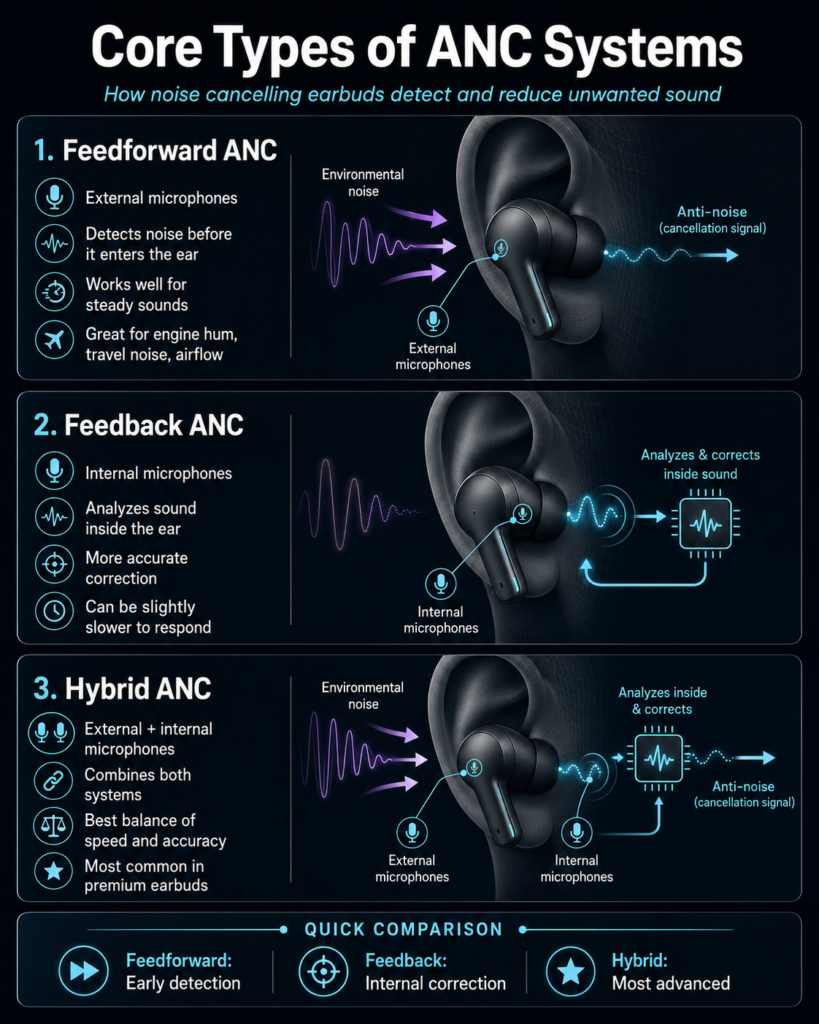
Not all noise cancelling earbuds reduce sound in the same way. The quality of active noise cancellation depends on where the microphones are placed, how quickly the processor responds, how well the earbuds seal inside the ear, and how intelligently the software adapts to changing environments. The three main ANC designs are Feedforward ANC, Feedback ANC, and Hybrid ANC. Each system has a different role in how earbuds detect, measure, and reduce outside noise.
Understanding these ANC types helps explain why one pair of earbuds may perform better on airplanes, while another may feel more natural during calls, office work, commuting, or daily listening. It also explains why premium earbuds often use more advanced microphone layouts instead of relying on a single cancellation method.
1. Feedforward ANC
Feedforward ANC uses microphones placed on the outside of the earbuds. These external microphones listen to surrounding noise before it reaches the ear canal. Once the sound is detected, the earbud processor creates an opposite sound signal designed to reduce that incoming noise.
This system works especially well when the noise is predictable and consistent. Airplane engine rumble, traffic hum, train vibration, air conditioning, fans, and steady mechanical sounds are easier for Feedforward ANC to analyze because the sound pattern remains relatively stable. Since the microphone is positioned outside the earbud, it can detect noise early and begin correction before that sound fully enters the listening chamber.
The advantage of Feedforward ANC is speed. Because it captures environmental sound from the outside, it gets an early reading of what the listener is about to hear. This can make it effective for travel, commuting, walking near roads, and noisy indoor spaces where the background sound is constant.
However, Feedforward ANC also has limits. Since the microphone is outside the ear, it does not always know exactly what sound actually reaches the listener after passing through the ear tip, earbud shell, and ear canal. A poor ear tip seal, wind movement, sudden voices, or irregular sounds can reduce its accuracy. This is why earbuds that rely only on Feedforward ANC may struggle with fast-changing environments or produce a less natural cancellation effect.
2. Feedback ANC
Feedback ANC uses microphones placed inside the earbud, closer to the ear canal. Instead of only listening to the outside world, this system monitors the sound that has already entered the earbud and is closer to what the listener actually hears. The processor then adjusts the anti-noise signal based on the real sound conditions inside the ear.
The strength of Feedback ANC is accuracy. Because the microphone is positioned closer to the ear, it can measure the combined result of external noise, passive isolation, music playback, and the user’s ear fit. This makes it useful for correcting noise that leaks past the ear tips or changes after entering the earbud.
Feedback ANC can also help create a more controlled and balanced listening experience. It is useful when the earbud needs to fine-tune cancellation inside the ear canal rather than simply react to external sound. This can improve performance when the fit is slightly different from one ear to the other or when the user is moving.
The limitation is response speed. Because Feedback ANC measures sound after it has already entered the earbud, it may react slightly later than Feedforward ANC. In most modern earbuds, this delay is very small, but it still matters when dealing with sudden, sharp, or unpredictable sounds. Feedback systems also need careful tuning because the internal microphone must avoid interfering with the music or creating pressure-like sensations.
3. Hybrid ANC
Hybrid ANC combines Feedforward ANC and Feedback ANC into one more advanced system. External microphones detect environmental noise before it enters the ear canal, while internal microphones monitor what is happening closer to the listener’s ear. The processor uses information from both microphone positions to create a more complete and accurate cancellation response.
This is the most common approach in premium noise cancelling earbuds because it gives the system two layers of information. The external microphone helps the earbuds react early, while the internal microphone helps confirm and correct what the listener actually hears. This makes Hybrid ANC more flexible across different environments, from airplane cabins and traffic-heavy streets to offices, gyms, cafés, and public transport.
The biggest advantage of Hybrid ANC is balance. It can reduce steady low-frequency noise while also adjusting more intelligently to changes in fit, movement, and sound leakage. It usually performs better than single-method ANC because it is not relying on only one microphone position or one measurement point.
Hybrid ANC is also the foundation for many modern smart noise control features. Adaptive ANC, wind reduction, transparency mode, conversation awareness, pressure management, and automatic environment detection often work better when the earbuds have both external and internal sound data. This is why many flagship earbuds from leading brands use hybrid systems rather than basic ANC designs.
Still, Hybrid ANC is not automatically perfect. Its performance depends on microphone quality, processor speed, algorithm design, ear tip seal, acoustic chamber design, and software tuning. A poorly tuned Hybrid ANC system can still sound artificial or inconsistent, while a well-engineered system can make noisy environments feel noticeably calmer without damaging audio quality.
Feedforward ANC vs Feedback ANC vs Hybrid ANC
The easiest way to understand the difference is this: Feedforward ANC listens before sound enters the ear, Feedback ANC listens after sound enters the earbud, and Hybrid ANC listens from both positions. Feedforward ANC is usually faster. Feedback ANC is usually more accurate. Hybrid ANC is usually the most complete.
For everyday users, Hybrid ANC is generally the best option when buying premium earbuds. It gives stronger real-world performance across more situations and usually handles movement, fit variation, and changing noise better than single-microphone systems. However, the best choice still depends on how the earbuds are designed. Strong ANC is not only about the label on the box; it is about how well the entire earbud system works together.
In practical buying terms, users who travel often, commute daily, work in noisy offices, or want the most advanced cancellation should look for earbuds with Hybrid ANC. Users who only need light background noise reduction may still be satisfied with simpler Feedforward ANC or Feedback ANC designs, especially if the earbuds have a secure fit and good passive isolation.
True Wireless Earbuds with Active Noise Cancelling Capability
True wireless earbuds with active noise cancelling have become the most practical form of personal audio for everyday life because they combine compact design, cable-free freedom, and intelligent sound control in one small device. They are built for people who move between noisy and quiet environments throughout the day: commuting in the morning, taking calls at work, listening to music at the gym, watching videos at home, and traveling through airports or public transport without carrying bulky headphones.
The main advantage of true wireless earbuds with active noise cancelling is portability. Over-ear noise cancelling headphones can still offer excellent isolation and long battery life, but they are larger, warmer, and less convenient for pockets, quick calls, walking, and daily switching between devices. True wireless ANC earbuds are easier to carry, easier to wear casually, and better suited for modern multitasking. They sit inside the ear, create a physical seal, and then use electronic cancellation to reduce external noise in real time.
Unlike basic wireless earbuds, ANC models use tiny microphones built into each earbud. These microphones listen to surrounding sound, identify unwanted noise, and work with internal processors to create an opposing anti-noise signal. This reduces the impact of background noise before it dominates your listening experience. The result is clearer audio, better call focus, and less need to raise the volume in loud environments.
Modern true wireless earbuds with active noise cancelling do not simply turn noise cancellation on or off. Many premium models now use adaptive ANC, which automatically adjusts cancellation strength based on your surroundings. If you are sitting in a quiet room, the earbuds may reduce ANC intensity to keep the sound natural. If you enter a bus, train, airplane cabin, or busy street, they can increase cancellation to reduce engine rumble, traffic noise, and environmental hum. This creates a more intelligent listening experience than older ANC earbuds, which often used one fixed level of cancellation.
Another major feature is transparency mode, sometimes called ambient mode or awareness mode. This allows external sound to pass through the microphones so you can hear conversations, announcements, traffic, or your surroundings without removing the earbuds. Good transparency mode is important because full isolation is not always safe or practical. The best ANC earbuds let users move smoothly between quiet focus and situational awareness.
This makes true wireless ANC earbuds suitable for several everyday situations:
- Air travel and public transport: They reduce airplane cabin rumble, train vibration, bus engine noise, and station background sound.
- Office and remote work: They help reduce chatter, keyboard noise, air conditioning, and shared-room distractions.
- Calls in noisy surroundings: Better models use beamforming microphones and voice-processing algorithms to make speech clearer.
- Daily listening: They allow music, podcasts, and videos to sound cleaner without forcing the user to increase volume unnecessarily.
- Study and deep work: They create a calmer sound environment for reading, writing, editing, and focused sessions.
- Walking and commuting: Adaptive ANC and transparency modes help balance quiet listening with environmental awareness.
The performance of true wireless earbuds with active noise cancelling varies significantly from one model to another. Some earbuds are excellent at reducing low-frequency sounds like engines, fans, and air conditioning but struggle with nearby voices. Others handle calls well but are weaker against wind. Some create powerful silence but may feel slightly pressurized in the ear. Others feel more natural but cancel less aggressively. This is why ANC quality should be judged by real-world use rather than marketing claims alone.
Fit is one of the most important parts of performance. Even the most advanced ANC system will struggle if the ear tips do not seal properly. A weak seal allows outside noise to leak in, reduces bass response, and weakens the cancellation effect. The best earbuds usually include multiple ear tip sizes, fit tests inside the companion app, and ergonomic shapes designed to stay stable without creating discomfort.
Battery life also matters because active noise cancellation consumes power. When ANC is turned on, earbuds usually drain faster than when ANC is off. Premium models try to balance strong cancellation with efficient chips and charging cases that provide multiple extra recharges. For travel and work, the ideal pair should offer enough ANC playback time for long sessions without needing frequent charging.
Call quality is another important difference between models. Noise cancellation for listening is not the same as noise reduction for voice calls. Good call performance requires microphones that can separate your voice from background noise, wind, traffic, and nearby conversations. This is especially important for people who take business calls, online meetings, voice notes, or video calls in unpredictable environments.
Wind handling is one of the hardest challenges for ANC earbuds. When wind hits external microphones, it can create turbulence that sounds like rumbling or distortion. Some earbuds use wind-reduction algorithms, protected microphone placement, or adaptive ANC adjustments to reduce this problem. For runners, walkers, cyclists, and outdoor commuters, wind resistance can be just as important as indoor noise cancellation strength.
The best wireless earbuds with active noise cancelling are not only judged by how much noise they block. They are judged by how naturally they manage sound. Strong ANC should not ruin music quality, create uncomfortable pressure, distort vocals, or make transparency mode sound robotic. The ideal experience feels controlled but not artificial: quieter when you need focus, open when you need awareness, and stable enough for daily use.
For most people, true wireless ANC earbuds are the best balance of convenience and performance. They are compact enough for everyday carry, advanced enough for travel and work, and flexible enough for music, calls, podcasts, workouts, and commuting. The right pair can make noisy spaces feel less stressful, improve listening clarity, and give you more control over how much of the outside world you want to hear.
Passive vs Active Noise Cancellation
Understanding Passive vs Active Noise Cancellation is essential before buying noise cancelling earbuds, because both systems reduce unwanted sound in different ways. Many people assume ANC does all the work, but the best earbuds depend on a careful combination of electronic noise cancellation and physical noise isolation. When both are designed well, the listening experience becomes quieter, clearer, and more controlled.
In simple terms, active noise cancellation uses technology to fight sound electronically, while passive noise isolation uses the physical shape of the earbud and ear tips to block sound naturally. One system needs microphones, processors, and battery power. The other depends on fit, seal, materials, and ear tip design. Neither system is perfect alone, but together they create the strongest real-world noise reduction.
What Is Active Noise Cancellation?
Active Noise Cancellation, often called ANC, is the electronic side of noise control. Earbuds with ANC use microphones to listen to external sound, then create an opposite sound signal to reduce part of that noise before it dominates what you hear. This process happens continuously while the earbuds are in use.
ANC is especially effective against low-frequency, steady background sounds. These include airplane cabin rumble, bus engines, train vibration, traffic hum, fans, air conditioning, and other repetitive environmental noises. These sounds are easier for the ANC system to identify and counter because they have more predictable sound patterns.
This is why active noise cancelling earbuds are popular for travel, commuting, office work, study sessions, and daily listening in noisy spaces. They lower the background noise floor, which makes music, podcasts, calls, and videos easier to hear without pushing volume levels too high.
However, ANC requires power. The earbuds must run microphones, signal processing, and cancellation algorithms in real time. This means battery life is usually shorter with ANC turned on compared with normal listening mode. Premium earbuds try to reduce this trade-off with more efficient chips, smarter adaptive ANC, and charging cases that provide extra power throughout the day.
ANC is powerful, but it is not magic. It usually performs best against consistent sounds and less effectively against sudden, sharp, or irregular noise. Nearby voices, keyboard clatter, dishes, barking dogs, door slams, and announcements may still be heard, although good earbuds can soften them.
What Is Passive Noise Isolation?
Passive noise isolation is the physical side of noise reduction. It does not rely on microphones, digital processors or electronically generated anti-noise. Instead, it works by creating a close acoustic seal between the earbud tip and the entrance to the ear canal. When that seal is complete, the ear tip restricts the path through which outside sound can reach the eardrum, much like a conventional earplug.
Passive isolation is particularly useful against midrange and higher-frequency sounds, including voices, office chatter, keyboard taps, nearby conversations, clattering objects and sharper environmental noises. These sounds change quickly and are often more difficult for active noise cancellation to suppress consistently, making the physical barrier created by the ear tip especially important.
This is why ear-tip fit can determine whether an otherwise capable pair of earbuds performs as intended. Tips that are too small, loose, shallow or poorly aligned may leave narrow acoustic gaps around the canal. Those gaps allow external noise to enter, low-frequency sound to escape and the earbuds to shift during movement. A stable seal improves passive attenuation, bass response and the acoustic conditions required for effective ANC. Our detailed guide to how earbud ear tips block noise explains how tip size, material, insertion angle and seal leakage affect passive isolation in real-world listening.
Passive noise isolation also works without battery power. Even when ANC is switched off—or the earbud battery is depleted—the tips can continue reducing some outside sound as long as the physical seal remains secure. This makes passive isolation useful for conserving battery life, casual listening and situations in which maximum electronic cancellation is unnecessary.
Ear-tip material also influences the result. Silicone tips are widely used because they are durable, washable and quick to insert. Memory foam tips may provide stronger isolation for some ears because the compressed material expands to fill irregular spaces within the canal, although foam generally wears faster and can alter the perceived sound balance. Some premium earbuds also include acoustic fit tests within their companion applications to help individuals identify leakage and select a more suitable tip size.
Passive vs Active Noise Cancellation: The Real Difference
The main difference in Passive vs Active Noise Cancellation is how each system reduces sound. Active noise cancellation uses microphones and processing to reduce noise electronically. Passive noise isolation uses a physical seal to block sound naturally.
ANC is usually better for low-frequency sounds. Passive isolation is usually better for higher-frequency and irregular sounds. ANC needs battery power. Passive isolation does not. ANC depends on microphones, chips, and algorithms. Passive isolation depends on fit, ear tips, earbud shape, and seal quality.
For example, if you are sitting on an airplane, ANC helps reduce the low rumble of the engine. If someone nearby is talking, passive isolation helps reduce some of that voice noise by physically blocking the sound. If both systems are strong, the overall listening experience becomes much quieter than either method could achieve alone.
Why Both Systems Matter in Earbuds
The best noise cancelling earbuds do not treat ANC and passive isolation as separate features. They are designed to work together. A good physical seal gives the ANC system a more controlled acoustic environment. This allows the microphones and processor to focus on reducing the noise that still gets through.
If the passive seal is poor, ANC has to work harder and still may not perform well. Sound leakage weakens bass, reduces cancellation strength, and makes the earbuds feel less immersive. This is why two earbuds with similar ANC claims can feel completely different in real-world use.
A strong seal also helps preserve audio quality. Bass sounds fuller, vocals feel more centered, and the overall soundstage becomes more stable. Without a good seal, music can sound thin, noise cancellation can feel inconsistent, and transparency mode may become less natural.
Which One Should You Care About More?
For most buyers, the answer is not one or the other. The smartest approach is to look for earbuds that combine both systems effectively. Strong ANC is important for travel, commuting, engines, public transport, and steady environmental noise. Strong passive isolation is important for voices, office chatter, cafés, and everyday interruptions.
If you travel frequently, prioritize earbuds with powerful ANC and good pressure management. If you work in shared spaces, focus on fit, passive isolation, call quality, and adaptive noise control. If you listen for long periods, comfort matters as much as cancellation strength. If you use earbuds outdoors, transparency mode and wind handling should also be part of the buying decision.
Quick Comparison: Passive vs Active Noise Cancellation
| Feature | Active Noise Cancellation | Passive Noise Isolation |
|---|---|---|
| How it works | Uses microphones and processing | Uses ear tips and physical seal |
| Best for | Low-frequency noise like engines and traffic | Higher-frequency sounds like voices and clatter |
| Requires battery | Yes | No |
| Depends on | Microphones, chips, algorithms | Fit, ear tips, earbud shape |
| Main benefit | Reduces steady background noise | Blocks sound naturally |
| Main limitation | Less effective against sudden sounds | Depends heavily on proper fit |
The Bottom Line
Passive vs Active Noise Cancellation is not a competition where one system replaces the other. The strongest earbuds use both. ANC reduces steady background noise electronically, while passive isolation blocks sound physically through the ear tips. When the two systems work together, earbuds can deliver a calmer environment, cleaner audio, better focus, and a more comfortable listening experience without forcing you to raise the volume.
The strongest-performing earbuds combine both systems. ANC handles deep noise, while passive sealing handles sharp, irregular sound.
Types of Noise You Can (and Cannot) Block
Noise cancelling earbuds can make loud environments feel calmer, cleaner, and easier to manage, but they do not reduce every type of sound equally. This is one of the most important things to understand before buying ANC earbuds. Active noise cancellation is highly effective against some sounds, moderately effective against others, and limited against sharp, sudden, or close-range noises.
The reason is simple: different noises behave differently. Some sounds are steady and predictable. Others are irregular, fast-changing, or very close to your ears. ANC technology works best when it can detect a sound pattern, calculate an opposing anti-noise signal, and respond quickly enough to reduce it. When a sound changes too suddenly, arrives too sharply, or comes from a nearby voice, even premium noise cancelling earbuds may only reduce it partially.
What Noise Cancelling Earbuds Reduce Well
Noise cancelling earbuds perform best against low-frequency, continuous background sounds. These are sounds that stay relatively stable over time, which gives the ANC system enough information to identify the pattern and generate an effective cancellation signal.
Common examples include airplane cabin rumble, bus engines, train vibration, air conditioners, fans, distant traffic hum, and low mechanical noise. These sounds are usually repetitive and predictable, which makes them easier for ANC microphones and processors to reduce.
This is why ANC earbuds are so popular for travel and commuting. On an airplane, they can reduce the heavy engine drone that causes fatigue during long flights. On a train or bus, they can soften the constant vibration and road noise. In an office or home workspace, they can reduce air conditioning, computer fans, and low-level background hum.
Noise cancelling earbuds usually reduce these sounds well:
- Airplane engine hum
- Bus and train noise
- Air conditioners and fans
- Background traffic rumble
- Low-frequency machine noise
- Distant environmental hum
- Some gym equipment noise
- Constant ventilation systems
When these noises are reduced, music and speech become easier to hear without raising the volume too much. Podcasts sound clearer. Calls feel less buried under background rumble. Long listening sessions can also feel less tiring because your ears are not constantly competing with the environment.
What Noise Cancelling Earbuds Reduce Partially
Some sounds are more difficult for ANC earbuds because they are less predictable. Nearby conversations, office chatter, keyboard noise, footsteps, cafés, clinking dishes, and sudden background activity may be reduced, but they usually do not disappear completely.
Human voices are especially challenging because speech constantly changes in pitch, rhythm, volume, and direction. A sentence is not a steady low-frequency hum. It contains many fast-moving sound details, including consonants, syllables, pauses, and higher-frequency elements. ANC can soften the background level of speech, but passive isolation from the ear tips often does much of the work here.
This is why you may still hear people talking even when ANC is turned on. Their voices may sound lower, more distant, or less distracting, but they may not vanish. In a shared office, for example, ANC earbuds can make the room feel calmer, but they may not fully block a coworker speaking next to you.
Noise cancelling earbuds usually reduce these sounds partially:
- Conversations nearby
- Office chatter
- Keyboard typing
- Café background noise
- Footsteps and movement
- Dishes, cups, and light clatter
- Public announcements
- Sudden moderate sounds
For these noise types, the best results usually come from combining ANC with a strong passive seal. Ear tips matter a lot. If the earbuds fit properly, they physically block more high-frequency detail, allowing ANC to handle the lower background layer. If the fit is loose, voices and sharp sounds leak in more easily.
What Noise Cancelling Earbuds Struggle With
Noise cancelling earbuds struggle most with sharp, unpredictable, high-frequency, or close-range sounds. These sounds move too quickly or appear too suddenly for the ANC system to fully counteract in real time.
Examples include a nearby person speaking directly beside you, a dog barking, a baby crying, a door slamming, glass breaking, metal clatter, sirens, alarms, and sudden high-pitched bursts. These sounds are not only irregular; they often contain frequencies that are harder for ANC to cancel electronically.
High-frequency sounds have shorter wavelengths, which makes precise cancellation more difficult inside a tiny earbud system. Sudden sounds also give the processor very little time to react. By the time the microphones detect the sound and the processor calculates a response, part of the sound has already reached your ear.
Noise cancelling earbuds commonly struggle with:
- Human speech at close range
- Sharp unpredictable noises
- High-frequency sound bursts
- Barking dogs or crying babies
- Door slams and sudden impacts
- Alarms, sirens, and warning signals
- Nearby clatter or metallic sounds
- Wind hitting external microphones
Wind is a special challenge. When wind passes over the microphones, it can create turbulence that sounds like rumbling or distortion. Some premium earbuds include wind reduction modes, protected microphone placement, or adaptive ANC tuning, but outdoor wind can still reduce performance.
Why Premium Earbuds Still Cannot Create Absolute Silence
Even the best noise cancelling earbuds cannot create perfect silence in every situation because ANC is not a universal sound eraser. It is a real-time correction system with physical limits. The earbuds must detect noise, process it, generate anti-noise, and deliver that signal almost instantly. That works very well for stable sounds, but less well for sudden, complex, or close-range noises.
There is also the issue of ear shape and fit. Every ear canal is different. A pair of earbuds that performs extremely well for one person may feel weaker for another if the seal is not secure. Ear tip size, insertion depth, earbud angle, and comfort all affect how much sound leaks in.
This is why real-world ANC performance is a combination of several factors: microphone quality, processor speed, algorithm design, passive isolation, ear tip fit, wind handling, and acoustic tuning. A strong ANC claim on a product page does not guarantee strong performance in every environment.
The Practical Way to Think About Noise Blocking
The best way to judge noise cancelling earbuds is not by asking whether they create silence. A better question is: what kind of noise do you need to reduce most often?
If you travel frequently, strong ANC for airplane engines and public transport matters most. If you work in shared offices, passive isolation and voice reduction become more important. If you take calls outdoors, wind handling and microphone quality matter. If you study or write in cafés, you need a balance of ANC, fit, comfort, and stable sound quality.
Quick Noise Blocking Guide
| Noise Type | How Well ANC Earbuds Usually Handle It | Why |
|---|---|---|
| Airplane engine hum | Very well | Low-frequency and steady |
| Bus and train noise | Very well | Repetitive mechanical rumble |
| Air conditioners and fans | Very well | Predictable background sound |
| Traffic rumble | Well | Mostly low-frequency and continuous |
| Office chatter | Partially | Speech changes constantly |
| Nearby conversations | Partially | Complex and higher-frequency |
| Keyboard and clatter | Partially | Sharp, irregular sound |
| Door slams | Poorly | Sudden impact sound |
| Close-range human speech | Poorly to partially | Fast-changing and detailed |
| Sirens and alarms | Poorly | Sharp, high-frequency, intentionally attention-grabbing |
| Wind noise | Varies widely | Microphone turbulence affects ANC |
The Bottom Line
Noise cancelling earbuds are excellent at reducing steady background noise, especially low-frequency sounds like engines, traffic rumble, fans, and air conditioning. They are less effective against close-range speech, sudden impacts, sharp clatter, and high-frequency bursts. This does not mean ANC is weak; it means the technology has a specific strength.
The best experience comes from understanding what ANC can realistically do. Premium models can make noisy environments feel dramatically calmer, but they cannot erase every sound. Strong noise cancellation, a secure ear tip seal, good passive isolation, and smart adaptive modes work together to create a quieter and more controlled listening experience.
Are Active Noise Cancelling Wireless Earbuds Safe?
Yes, active noise cancelling wireless earbuds are generally safe for daily use when they are used responsibly. The active noise cancellation feature itself is not the main safety concern. The bigger issue is listening volume, listening duration, ear fit, awareness of surroundings, and how often you give your ears a break.
In many everyday situations, active noise cancellation can actually support safer listening habits. When you are in a loud place, such as a train, airplane, bus, café, gym, or busy street, regular earbuds often make you increase the volume to compete with background noise. That volume increase is where long-term listening strain can become a problem. ANC helps reduce the background noise first, so your music, podcast, audiobook, or call sounds clearer at a lower volume.
This is the key safety advantage of active noise cancelling wireless earbuds: they make it easier to hear your audio without forcing loud playback. Instead of overpowering the environment, the earbuds lower part of the environmental noise. This can create a calmer listening experience and reduce the habit of turning the volume up every time the outside world gets louder.
Health organizations generally focus on safe listening behavior rather than warning against ANC itself. The World Health Organization advises keeping personal audio volume below 60% of maximum, using noise-cancelling and well-fitted earphones or headphones, and taking breaks between listening sessions. The CDC also emphasizes that safe volume level is central to protecting hearing when using headphones or earbuds. (World Health Organization)
Why ANC Can Reduce Listening Strain
The main benefit of active noise cancellation is that it lowers the amount of background sound competing with your audio. When the background becomes quieter, speech and music details become easier to hear. Vocals feel clearer. Podcasts become easier to follow. Calls sound less buried under traffic, fans, or engine noise.
This matters because many people do not raise volume for enjoyment alone. They raise it because the environment is too loud. On an airplane, for example, engine rumble can make dialogue hard to understand. In a café, background chatter can cover parts of a podcast. On a bus or train, road vibration and mechanical noise can mask lower frequencies. Active noise cancelling wireless earbuds reduce some of that environmental layer, making moderate listening more practical.
ANC can be helpful because:
- You do not need to increase volume as much in loud places
- Background noise is reduced before it competes with your audio
- Speech, podcasts, and calls become clearer at lower levels
- Long listening sessions may feel less tiring
- Travel and commuting can feel calmer and less aggressive
The Real Safety Factor Is Volume Control
The most important safety factor is not whether ANC is on or off. It is how loud you listen and how long you listen. Even with strong noise cancellation, listening at high volume for long periods can still be harmful. ANC does not protect your ears from audio that is played too loudly inside the earbuds.
This is why volume control should remain the main habit. If your earbuds sound clear at a lower volume with ANC on, that is a good use of the technology. If ANC makes the sound feel immersive and you still push the volume near maximum, the safety benefit is reduced.
A practical rule is to keep volume moderate, especially during long sessions. Many users follow a simple pattern: listen at a comfortable level, avoid maximum volume, and take breaks during extended use. Smartphone hearing tools, volume limit settings, and headphone audio level alerts can also help you monitor exposure more carefully.
ANC Is Not the Same as Ear Protection
It is important to understand that active noise cancelling earbuds are not the same as professional hearing protection. They are designed for listening comfort and audio clarity, not for industrial noise protection. They may reduce some background sound, but they should not be used as a substitute for certified ear protection in construction sites, factories, shooting ranges, motorsport environments, or other high-noise workplaces.
For normal daily use, such as commuting, travel, office work, studying, and casual listening, ANC earbuds can be very useful. For dangerous sound levels, use proper hearing protection designed for that purpose.
Awareness and Environmental Safety
Another safety concern is situational awareness. Strong ANC can reduce your awareness of traffic, announcements, cyclists, people nearby, or warning sounds. This does not make ANC unsafe by itself, but it means you should use the right mode for the right situation.
When walking outside, crossing roads, cycling, running, or moving through public spaces, transparency mode or adaptive audio may be safer than full noise cancellation. Transparency mode allows outside sound to pass through the microphones, helping you stay aware of your surroundings while still wearing your earbuds.
Full ANC is better suited for controlled environments such as airplanes, trains, offices, study rooms, and indoor work sessions. Outdoors, awareness matters.
Comfort, Pressure, and Ear Fatigue
Some people feel a slight pressure sensation when ANC is turned on. This is not usually actual air pressure inside the ear, but a perception caused by the way low-frequency noise is reduced and how the brain interprets the change. For most users, this feeling fades after a short adjustment period. For others, it may remain uncomfortable.
If ANC feels heavy, try lowering the cancellation level, switching to adaptive mode, changing ear tip size, or taking breaks. The safest earbuds are not only the ones with the strongest ANC, but the ones you can wear comfortably without irritation, pressure, or the urge to keep adjusting them.
Ear hygiene also matters. Because true wireless earbuds sit inside the ear canal, they should be cleaned regularly. Dirty ear tips can collect wax, dust, and moisture. Good cleaning habits help maintain comfort, sound quality, and fit.
Safe Ways to Use Active Noise Cancelling Wireless Earbuds
For daily use, the safest approach is simple: use ANC to reduce environmental noise, then keep playback volume moderate. Choose a good ear tip fit, take breaks during long sessions, and use transparency mode when awareness is important.
A safer listening routine looks like this:
- Use ANC in noisy but controlled environments
- Keep volume at a moderate level rather than near maximum
- Take breaks during long listening sessions
- Use transparency mode outdoors or around traffic
- Avoid using earbuds as industrial hearing protection
- Clean ear tips regularly
- Choose a comfortable fit that does not create pressure or pain
The Bottom Line
Active noise cancelling wireless earbuds are safe for everyday use when used responsibly. ANC itself is not the main risk. The real safety factor is volume control. In fact, strong noise cancellation can support better listening habits because it helps you hear clearly at lower volume levels.
The best approach is to treat ANC as a tool for comfort, clarity, and control. Use it to reduce background noise, not to justify louder playback. Keep volume moderate, take listening breaks, and switch to transparency mode when you need awareness. Used this way, active noise cancelling wireless earbuds can make daily listening more comfortable without adding unnecessary hearing strain.
Best Noise Cancelling Earbuds (2026 Overview)
The market for the best noise cancelling earbuds has become much more competitive in 2026. Almost every major audio brand now claims strong ANC, adaptive noise control, transparency mode, better call microphones, and smarter app-based tuning. But in real-world use, only a smaller group of earbuds truly stand out. The difference is not just about specifications. It is about how well the earbuds perform in the environments where noise cancellation matters most: airplanes, trains, buses, offices, cafés, busy streets, and long work sessions.
The best noise cancelling earbuds are not all trying to win in the same way. Some focus on maximum silence. Some focus on music quality. Some are better for iPhone users. Some are better for Android customization. Some are designed for travel comfort, while others balance ANC, calls, battery life, and everyday convenience. This is why a 2026 noise cancelling earbuds comparison should look beyond marketing claims and focus on practical performance.
For travel, the most important test is low-frequency noise control. Airplane engines, train vibration, road rumble, and cabin pressure-like hum are the sounds that create fatigue during long journeys. A strong ANC system lowers these background layers so voices, podcasts, films, and music become easier to hear without increasing volume. This is where premium earbuds separate themselves from cheaper models.
In the current premium category, Bose, Sony, Apple, Sennheiser, Technics, and Bowers & Wilkins all compete seriously, but each brand has a different personality. Bose is still strongly associated with powerful noise cancellation. Sony often combines strong ANC with deep app control and sound customization. Apple focuses on seamless iPhone integration and adaptive listening. Sennheiser leans toward detailed audio performance. Bowers & Wilkins targets a more premium sound-first buyer. The best choice depends on whether your priority is silence, sound quality, ecosystem features, call clarity, or travel comfort.
Bose QuietComfort Ultra Earbuds 2nd Gen
Best Pure Noise Cancellation for Travel
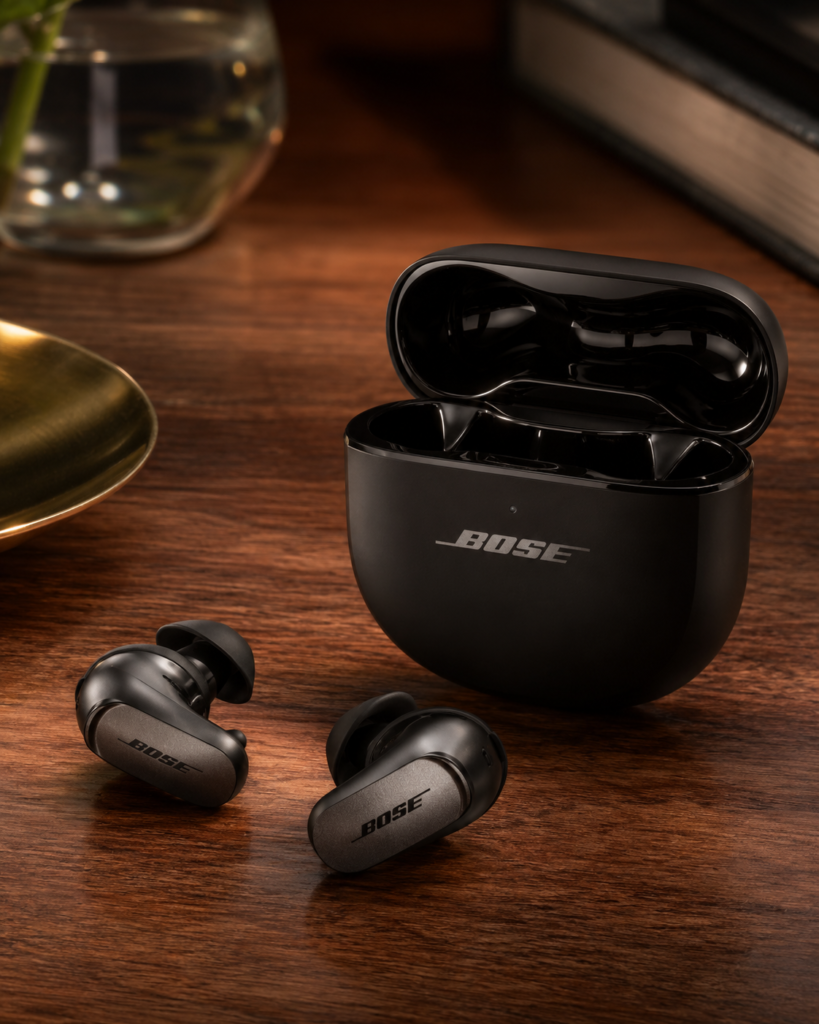
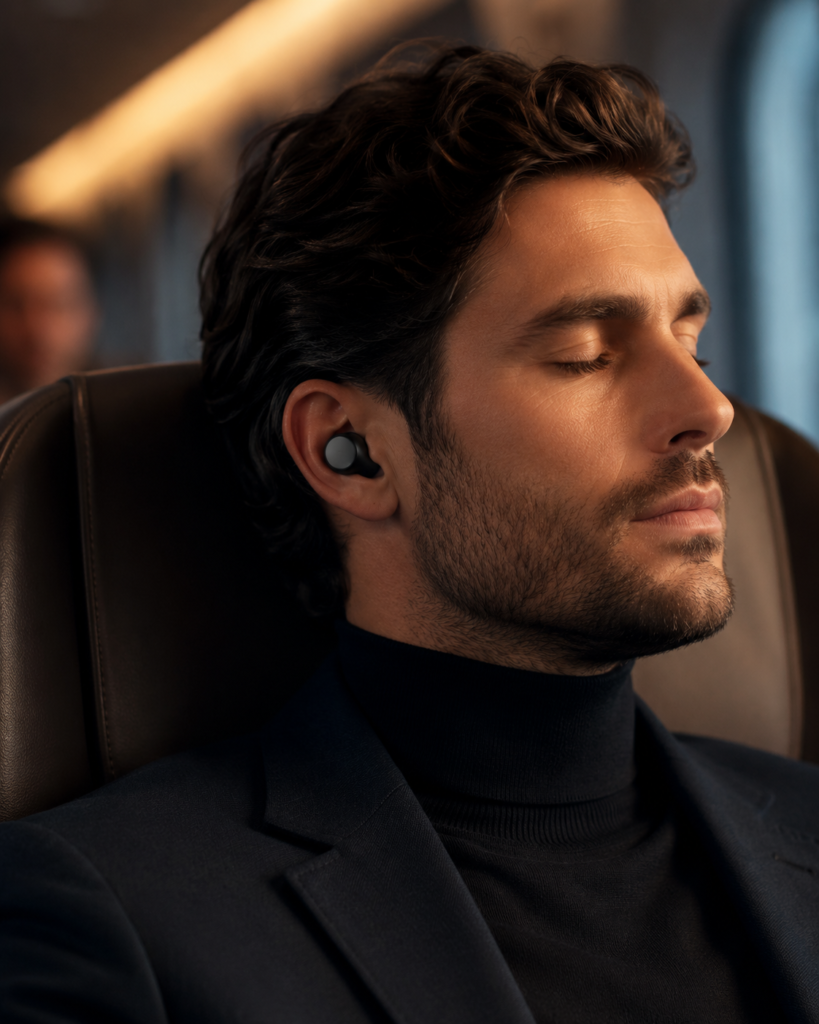
The Bose QuietComfort Ultra 2nd Gen earbuds are built for listeners who want the strongest possible noise reduction in a true wireless form. In a category filled with capable competitors, Bose remains one of the clearest benchmarks for pure ANC performance, especially for travel and low-frequency environmental noise. Recent 2026 testing roundups continue to place Bose QuietComfort Ultra Earbuds 2nd Gen among the top choices for elite noise cancellation, particularly for users who prioritize quietness over every other feature. (TechRadar)
What makes the Bose QuietComfort Ultra 2nd Gen stand out is how confidently they handle constant background noise. Airplane cabin hum, bus engines, train vibration, air conditioning, and deep traffic rumble are exactly the kinds of sounds Bose ANC is designed to reduce. The effect is most noticeable in travel environments, where weaker earbuds may reduce noise slightly but still leave a heavy layer of engine drone in the background.
For frequent flyers, this difference matters. The moment you sit in an airplane cabin, the sound environment is dominated by low-frequency engine pressure, ventilation noise, and cabin rumble. Strong Bose noise cancellation can make that environment feel dramatically calmer. It does not create perfect silence, but it lowers the constant noise floor enough that music, movies, and podcasts become clearer at more comfortable volume levels.
The Bose QuietComfort Ultra 2nd Gen also works well for long listening sessions because comfort is part of the design priority. Travel earbuds need more than strong ANC. They need to stay secure, avoid pressure fatigue, and remain comfortable during long flights, airport waits, train journeys, and extended work sessions. Bose’s soft ear tips and stability-focused fit help make the earbuds feel practical for longer use, not just short listening bursts.
Why It Stands Out
The main reason the Bose QuietComfort Ultra 2nd Gen belongs in any best noise cancelling earbuds discussion is simple: it prioritizes silence with unusual confidence. Many earbuds offer ANC as one feature among many. Bose builds the entire listening experience around controlling outside sound.
Key strengths include:
- Industry-leading active noise cancellation performance
- Excellent reduction of low-frequency travel noise
- Strong performance against airplane engines, trains, buses, and traffic rumble
- Premium comfort for long sessions
- Refined transparency and awareness modes
- Strong app-based control over listening modes
- A travel-first sound experience built around calmness and isolation
The ANC performance is especially strong when the earbuds have a secure seal. As with all in-ear noise cancelling earbuds, fit matters. If the ear tips are too loose, outside sound leaks in and reduces the cancellation effect. With the right fit, Bose’s travel performance is among the strongest in the true wireless earbuds category.
Real-World Performance
In real use, the Bose QuietComfort Ultra 2nd Gen feels most impressive in environments where sound is constant and tiring. On airplanes, they reduce the low engine hum that makes long flights feel exhausting. On trains and buses, they soften mechanical vibration and background rumble. In offices, they reduce air conditioning, distant chatter, and general room noise enough to make focused work easier.
The earbuds are also useful for people who listen to podcasts, audiobooks, and spoken content. When background noise is reduced, dialogue becomes easier to follow without raising volume too high. This is important because many listeners increase volume not because they want louder audio, but because they are trying to overcome environmental noise.
Bose’s strength is not only cancellation intensity. It is also the feeling of stability. Some earbuds can cancel noise aggressively but make the listening experience feel artificial, pressurized, or inconsistent. Bose generally aims for a controlled, comfort-focused ANC profile that feels natural enough for long use.
Trade-Offs
The Bose QuietComfort Ultra 2nd Gen is not the perfect choice for every buyer. Its biggest trade-off is that advanced listening modes can reduce battery life compared with simpler playback. Immersive audio and high ANC use require more processing, which can shorten listening time. For most daily users this is manageable, especially with the charging case, but long-haul travelers should still pay attention to battery behavior.
The second trade-off is price. Bose premium earbuds usually sit in the higher end of the market, so they make the most sense for buyers who genuinely value strong noise cancellation. If you only need light ANC for occasional use, a cheaper model may feel more sensible. If you travel often or work in noisy spaces every day, the premium becomes easier to justify.
Another point is sound preference. Bose tuning is designed to be enjoyable and full, but listeners who want highly analytical, studio-like audio may prefer alternatives from brands that prioritize audiophile detail. Bose is strongest when the buying priority is quietness, comfort, and controlled everyday listening rather than pure technical audio neutrality.
Best For
The Bose QuietComfort Ultra 2nd Gen is best for:
- Frequent flyers
- Long-haul travelers
- Commuters using buses, trains, or subways
- Users who want maximum silence in a compact earbud form
- People who listen to podcasts or calls in noisy environments
- Office workers who need strong background noise reduction
- Buyers who prioritize ANC strength over budget pricing
Buyer Verdict
- WORLD-CLASS NOISE CANCELLATION: The best noise cancellation of any Bose wireless earbuds is now even better than before….
- CUSTOMTUNE TECHNOLOGY: CustomTune technology analyses your ears and adapts your in-ear headphones to their shape. The re…
- NOISE CONTROL: Quickly adjust the level of noise cancellation without using Modes, including turning it off completely t…
The Bose QuietComfort Ultra 2nd Gen is one of the strongest choices for anyone searching for the best noise cancelling earbuds in 2026, especially if travel performance is the main priority. Its biggest advantage is not that it has the most features on paper. Its advantage is that it delivers the core promise of ANC extremely well: it makes loud, repetitive environments feel quieter, calmer, and easier to live with.
If you want earbuds mainly for airplanes, public transport, commuting, and maximum background noise reduction, Bose remains one of the safest premium choices. If your priority is the deepest sound customization, lowest price, or the most ecosystem-specific features, other models may compete more closely. But for pure noise cancellation in real-world travel conditions, Bose QuietComfort Ultra 2nd Gen deserves its place near the top of the 2026 ANC earbuds category.
Sony WF-1000XM6
Best Balanced Active Noise Cancelling Earbuds
The Sony WF 1000XM6 is one of the strongest premium choices for buyers who want active noise cancellation, high-quality sound, intelligent features, and everyday practicality in one pair of true wireless earbuds. While some noise cancelling earbuds focus mainly on silence and others focus mainly on audio quality, Sony’s strength is balance. The WF-1000XM6 is designed for users who want powerful ANC without losing musical detail, app control, codec support, comfort, or daily convenience.
Sony has built a strong reputation in the premium earbuds category because its flagship WF-1000X series usually delivers a complete experience rather than a one-dimensional one. The Sony WF 1000XM6 continues that direction. It is not only made for airplanes or commuting. It is made for people who move between different environments throughout the day: home, office, gym, street, train, café, airport, and quiet work sessions.
This makes the Sony WF-1000XM6 a strong option for users who want one premium pair of earbuds that can handle almost everything. It reduces background noise effectively, supports high-resolution wireless audio through LDAC on compatible devices, offers smart adaptive noise control, and gives listeners more control over how the earbuds sound and behave.
Why the Sony WF 1000XM6 Stands Out
The biggest reason the Sony WF 1000XM6 stands out is its all-around refinement. It is not simply trying to be the loudest, bassiest, smallest, or most aggressive ANC earbud. Instead, it focuses on creating a polished listening experience across several important categories.
Its ANC is strong enough for travel and commuting, but its real advantage is how well it combines noise cancellation with sound quality. Some earbuds reduce noise well but make music feel compressed, flat, or overly processed. Sony’s approach is more balanced. The WF-1000XM6 is built for listeners who want quiet surroundings and expressive audio at the same time.
Key strengths include:
- Excellent active noise cancellation across everyday environments
- Strong performance against low-frequency rumble and background noise
- High-resolution audio support through LDAC on compatible devices
- Smart adaptive noise control for changing surroundings
- Rich sound customization through Sony’s companion app
- Strong balance between ANC, comfort, audio quality, and features
- Better suited for Android users than many ecosystem-locked alternatives
- Premium design for travel, work, and daily listening
The Sony WF 1000XM6 is especially attractive for listeners who care about sound tuning. If you want earbuds that let you adjust EQ, ambient sound, noise cancellation behavior, and listening preferences, Sony gives more control than many simpler ANC earbuds.
Real-World Performance
In real-world use, the Sony WF-1000XM6 performs best as a premium all-rounder. It can reduce airplane noise, train vibration, traffic rumble, air conditioning, office hum, and general background sound, but it does not feel limited to travel. These earbuds are just as useful for work calls, focused writing, gym sessions, podcasts, video streaming, and relaxed music listening.
Unlike Bose, which is often known for raw noise suppression, Sony delivers a more balanced experience. The WF-1000XM6 combines strong ANC with better sound flexibility and smarter everyday features. That makes it a better fit for users who do not want to sacrifice audio quality just to get strong noise cancellation.
For commuting, the earbuds help reduce road noise, engine rumble, and background movement. For office work, they lower air conditioning, distant chatter, keyboard noise, and room distractions. For home use, they make music, calls, and video content feel cleaner without requiring high volume. For travel, they create enough isolation to make flights and public transport more comfortable.
The Sony WF-1000XM6 also handles the transition between environments well. Good ANC earbuds should not force you to keep adjusting settings every few minutes. Sony’s adaptive features help the earbuds respond more intelligently when you move from a quiet space to a noisy one, or from focused listening to a situation where awareness matters.
Sound Quality and LDAC Support
One of the main reasons to choose the Sony WF 1000XM6 over many other ANC earbuds is sound quality. Sony understands that premium earbuds should not only cancel noise; they should also make music sound engaging, detailed, and controlled.
LDAC support is a major advantage for Android users with compatible devices. It allows higher-quality Bluetooth audio transmission compared with basic codecs, giving music more room for detail and depth. This is especially useful for listeners who stream high-quality audio, listen to detailed tracks, or want a more refined sound profile from wireless earbuds.
The WF-1000XM6 is not just for bass lovers or casual listeners. It is a strong choice for users who want fuller sound, better vocal clarity, cleaner separation, and more control over the final tuning. Through Sony’s app, users can adjust the sound profile more precisely than with many standard earbuds.
This makes the Sony WF-1000XM6 ideal for people who want ANC but still care deeply about how their music sounds.
Smart Adaptive Noise Control
Smart adaptive noise control is another major advantage of the Sony WF-1000XM6. Modern listening is not static. You may need full ANC on a train, partial awareness while walking, transparency mode in an office, and a quieter setting at home. Sony’s system is designed to make these changes feel smoother.
Instead of treating noise cancellation as a simple on/off feature, the earbuds can adjust based on your surroundings and activity. This creates a more natural experience for users who move through different environments during the day.
This feature is especially useful for commuters, remote workers, students, travelers, and anyone who frequently switches between music, calls, meetings, and outdoor movement. The goal is not only to block sound. The goal is to manage sound intelligently.
Trade-Offs
The main trade-off with the Sony WF 1000XM6 is that it may not feel quite as aggressively silent as Bose in certain travel-heavy environments. Bose is still the safer choice for buyers whose only priority is maximum noise suppression, especially on airplanes and long-haul travel.
Sony’s strength is broader. It delivers strong ANC, but it also gives you better sound customization, LDAC support, intelligent features, and a more flexible daily-use experience. For many buyers, that balance is more valuable than having the absolute strongest cancellation.
Price is another trade-off. The WF-1000XM6 sits in the premium category, so it is not the best choice for budget buyers. It makes the most sense for users who will actually use its advanced features: ANC, adaptive sound, app controls, EQ, LDAC, and all-day versatility.
Fit also matters. Like all in-ear ANC earbuds, the Sony WF-1000XM6 needs a proper seal to perform at its best. If the ear tips do not fit securely, bass response weakens, noise cancellation becomes less effective, and the overall experience feels less premium. Taking time to test the correct ear tip size is important.
Best For
The Sony WF-1000XM6 is best for:
- Android users who want LDAC support
- Listeners who want strong ANC and high-quality sound
- Audiophiles who want noise cancelling earbuds for daily use
- Commuters who need adaptive noise control
- Remote workers who switch between music, calls, and focus sessions
- Travelers who want strong ANC without sacrificing audio quality
- Users who want app-based customization and EQ control
- Buyers looking for one premium pair of earbuds for travel and everyday life
Buyer Verdict
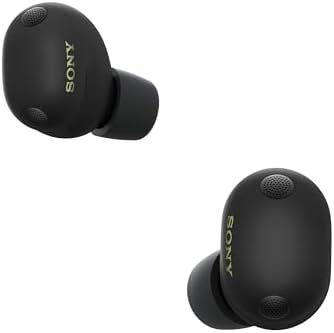
- THE BEST NOISE CANCELLATION: Experience powerful, adaptive noise cancelling that keeps distractions out and your music f…
- CO-CREATED WITH MASTERING AUDIO ENGINEERS: Developed in collaboration with mastering audio engineers, the WF-1000XM6 ear…
- HD NOISE CANCELLING PROCESSOR: The HD Noise Cancelling Processor QN3e is 3x faster than the QN2e (found in our WF-1000XM…
The Sony WF 1000XM6 is one of the best balanced active noise cancelling earbuds for 2026. It may not be the most aggressive option for pure silence, but it is one of the most complete choices for real-world use. It combines strong ANC, premium audio, LDAC support, smart adaptive controls, and deep customization in a way that few earbuds can match.
If Bose is the best choice for maximum travel silence, Sony is the better choice for users who want a more complete premium listening experience. The WF-1000XM6 is ideal for Android users, music lovers, commuters, remote workers, and anyone who wants active noise cancelling earbuds that perform well across almost every part of daily life.
Apple AirPods 4 with Active Noise Cancellation
Best Open-Ear Noise Canceling Earbuds for Apple Users
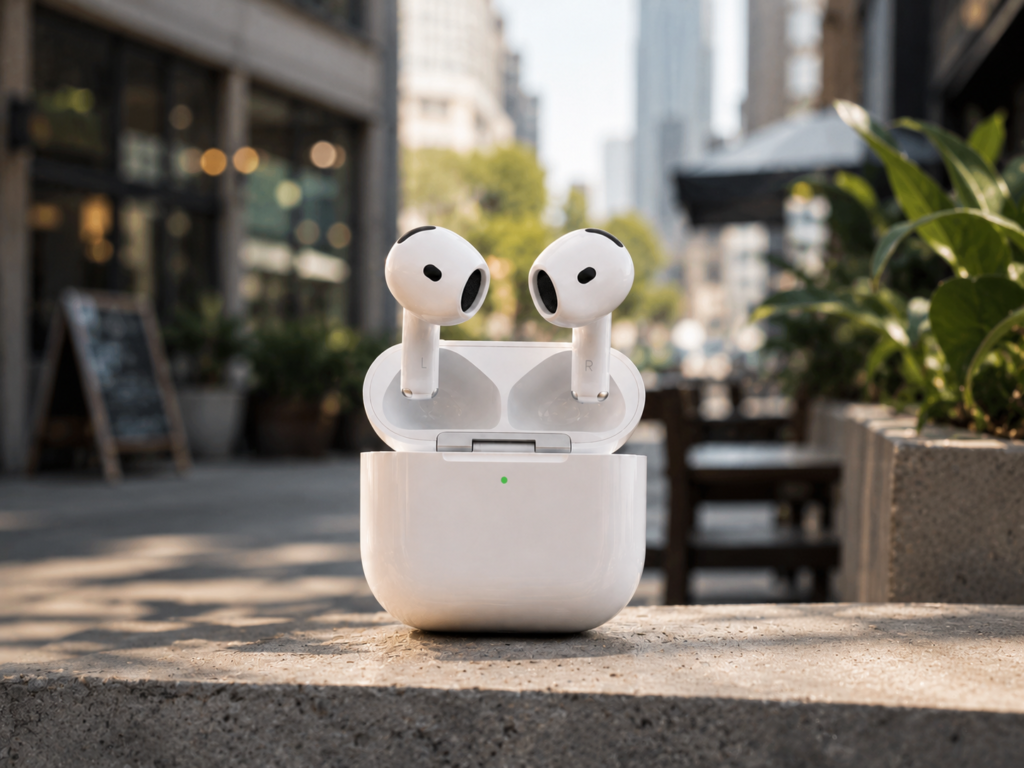
Apple AirPods 4 with Active Noise Cancellation shown with their compact white USB-C wireless charging case in a clean premium studio setting.
The Apple AirPods 4 with Active Noise Cancellation are among the most distinctive noise canceling earbuds in Apple’s lineup. Instead of using silicone ear tips to create a sealed in-ear fit, AirPods 4 retain Apple’s familiar open-ear shape while adding Active Noise Cancellation, Transparency mode, Adaptive Audio, and Conversation Awareness.
That combination makes them especially appealing to people who want Apple noise canceling earbuds without silicone ear tips.
AirPods 4 with ANC are not simply a less expensive version of AirPods Pro. They answer a different question. AirPods Pro prioritize acoustic sealing, stronger isolation, and more controlled in-ear stability. Apple AirPods 4 with ANC prioritize openness, low-pressure comfort, fast everyday use, and the familiar fit preferred by people who dislike having ear tips inserted into their ear canals.
Apple uses the H2 headphone chip and upgraded microphones to reduce lower-frequency environmental noise, including traffic and aircraft-engine rumble. Because these are open-fit earbuds, they cannot physically isolate the ear as completely as sealed premium models. Their achievement is therefore not maximum silence. It is delivering meaningful noise reduction without abandoning the classic AirPods design.
For iPhone, iPad, Mac, Apple Watch, and Apple TV users, the AirPods 4 ANC experience extends far beyond noise cancellation. Pairing, automatic device switching, Personalized Spatial Audio, Siri interactions, Find My support, calls, media controls, and system-level settings are integrated directly into Apple’s software ecosystem.
The result is a pair of earbuds that feels less like an external Bluetooth accessory and more like a built-in part of the Apple experience.
Why the Apple AirPods 4 with ANC Stand Out
The defining feature of the Apple AirPods 4 with ANC is their open-ear noise canceling design.
Most effective ANC earbuds depend on silicone or foam tips to seal the ear canal before electronic noise cancellation begins. That physical seal helps block sound, but not everyone finds it comfortable. Some users experience ear pressure, heat, irritation, or a plugged-ear sensation after wearing sealed earbuds for extended periods.
AirPods 4 with Active Noise Cancellation provide an alternative. They rest in the outer ear rather than sealing the canal, allowing users to retain the lightweight character of traditional AirPods while gaining access to several noise-control features previously associated with the AirPods Pro line.
Apple AirPods 4 with ANC include:
- Active Noise Cancellation
- Transparency mode
- Adaptive Audio
- Conversation Awareness
- Voice Isolation for calls
- Personalized Spatial Audio with dynamic head tracking
- Siri interactions
- A USB-C wireless charging case
- A case speaker for Find My
- IP54 dust, sweat, and water resistance
The H2 chip coordinates these features through computational audio, adjusting playback and noise management according to the listening mode and surrounding environment.
This gives the AirPods 4 ANC a rare position in the market. They are not designed to compete directly with tightly sealed travel earbuds for the highest possible level of isolation. They are designed to make everyday noise cancellation more comfortable, accessible, and convenient.
AirPods 4 Active Noise Cancellation Performance
The Active Noise Cancellation in AirPods 4 works best against persistent lower-frequency sounds. Examples include road noise, vehicle engines, ventilation systems, air conditioning, distant machinery, train movement, and the underlying rumble heard inside aircraft cabins.
These sounds are comparatively predictable, giving the microphones and H2 chip enough information to produce opposing sound waves before much of the noise reaches the listener.
In daily use, the effect is best understood as environmental noise reduction rather than complete isolation.
Traffic becomes less dominant. Office ventilation moves farther into the background. Bus and train vibrations become easier to ignore. The constant hum inside a café or shared workspace feels less intrusive. Music, podcasts, and spoken audio become easier to hear without raising the volume as aggressively.
Voices, keyboard taps, dishes, sudden announcements, and other irregular higher-frequency sounds remain more noticeable than they would with well-sealed in-ear earbuds. This is partly a consequence of the open design. Sound can still enter naturally around the earbuds because there is no silicone barrier closing the ear canal.
Fit also affects performance. Apple redesigned the AirPods 4 shape using extensive ear-shape data, but no universal open-fit earbud will sit identically in every person’s ears. A secure, close fit can produce more convincing ANC and fuller bass. A looser fit may allow more external sound to pass through and reduce low-frequency impact.
For the right wearer, however, AirPods 4 with ANC provide an impressive balance: enough noise reduction to improve concentration and listening clarity, without the sealed sensation of conventional ANC earbuds.
Open-Ear Comfort and Fit
Comfort is one of the strongest reasons to choose the Apple AirPods 4 with Active Noise Cancellation.
Their open-ear construction avoids the pressure and friction created by silicone ear tips. There are no ear-tip sizes to test, no seal test to complete, and no tips to clean or replace. You place the earbuds in your ears, press the stems to control playback or noise modes, and begin listening.
This can make AirPods 4 ANC particularly comfortable for:
- Long office sessions
- Podcasts and audiobooks
- Casual commuting
- Video calls
- Studying
- Walking
- Household listening
- Users sensitive to silicone ear tips
The trade-off is that fit is less adjustable. AirPods Pro can be adapted using different ear-tip sizes, whereas AirPods 4 depend on the shape of the wearer’s ears. They may fit exceptionally well for one person and feel less secure for another.
People planning to use them while running, performing intense exercise, or moving rapidly should test the fit carefully. The lightweight design may feel almost invisible when it matches the ear correctly, but there is no silicone tip to provide additional anchoring.
AirPods 4 and their charging case carry an IP54 rating for resistance to dust, sweat, and water under controlled conditions. This makes them suitable for workouts and normal outdoor use, but they are not waterproof and should not be used for swimming or submerged in water.
Transparency Mode and Everyday Awareness
Transparency mode is particularly important on open-ear ANC earbuds because users are likely to move frequently between concentration and environmental awareness.
When Transparency mode is enabled, the external microphones pass surrounding sound through the earbuds. This allows conversations, announcements, approaching vehicles, checkout interactions, and workplace communication to remain audible without requiring the user to remove the AirPods.
The experience is designed to feel natural rather than dramatically amplified. Voices remain recognizable, and environmental sound is integrated with the audio rather than sounding completely disconnected from it.
This is valuable in situations where full isolation would be inconvenient or unsafe:
- Walking near traffic
- Waiting for an airport announcement
- Speaking briefly with a coworker
- Shopping
- Exercising outdoors
- Moving through a train station
- Listening while caring for children
- Working in a shared home environment
Because the AirPods 4 already have an open fit, passive awareness is naturally higher than it is with sealed earbuds. Transparency mode builds on that openness, making it easier to remain connected to the environment while continuing to listen.
Adaptive Audio and Conversation Awareness
Adaptive Audio combines aspects of Active Noise Cancellation and Transparency mode. Instead of forcing the user to choose between maximum noise reduction and complete environmental awareness, the earbuds adjust the balance according to changing surroundings.
This is useful during activities where noise conditions do not remain constant.
A commuter may begin on a quiet residential street, enter a busy station, board a loud train, and then walk into an office. Adaptive Audio is intended to make those transitions less dependent on manual switching.
Conversation Awareness adds another layer of convenience. When the wearer begins speaking, the AirPods can lower media volume and emphasize nearby voices. This makes short interactions easier without requiring the earbuds to be removed or playback to be stopped manually. Apple introduced both Adaptive Audio and Conversation Awareness on the ANC version of AirPods 4.
These features are not essential for everyone, but they illustrate the larger philosophy behind Apple AirPods 4 with ANC. The earbuds are designed to manage routine interruptions automatically, reducing the number of times the user has to open a settings menu or handle the earbuds.
Apple Ecosystem Integration
The Apple AirPods 4 with Active Noise Cancellation deliver their fullest experience when connected to Apple devices.
Initial pairing is straightforward. Opening the case near a compatible iPhone or iPad brings up the setup interface, and the AirPods can then become available across compatible devices connected to the same Apple Account.
This integration is especially useful for people who regularly move between an iPhone, iPad, and Mac.
A typical day might involve listening to music on an iPhone during a commute, joining a meeting on a MacBook, watching a video on an iPad, answering a phone call, and using an Apple Watch during a walk. AirPods 4 are built to reduce the friction involved in moving between those activities.
Noise-control settings, battery information, Spatial Audio options, microphone behavior, Find My tools, and other controls are incorporated into Apple’s operating systems. Users do not need to depend on a separate third-party application for basic management.
The charging case also includes a speaker that assists with Find My, making the case easier to locate when it is nearby. The ANC model’s case can be charged through USB-C, an Apple Watch charger, or a Qi-certified wireless charger.
AirPods 4 can still function as Bluetooth earbuds with non-Apple devices, but several integration features become limited or unavailable. Android and Windows users can listen and make calls, but they should not purchase AirPods 4 ANC expecting the same system-level experience available on an iPhone or Mac.
Personalized Spatial Audio
Personalized Spatial Audio with dynamic head tracking is another major component of the AirPods 4 experience.
With compatible content and devices, Spatial Audio creates a wider, more dimensional presentation around the listener. Dynamic head tracking can anchor elements of the soundstage relative to the screen or device, producing a more theater-like effect during movies, television programs, and some music playback.
Spatial Audio does not improve every recording automatically. Its value depends on the source material, application, mix, and personal preference. Some users enjoy the added scale and movement, while others prefer conventional stereo playback for music.
Within Apple’s ecosystem, however, Spatial Audio is easy to access and manage. It is particularly relevant for people who watch a large amount of content through an iPhone, iPad, Mac, or Apple TV.
The combination of Spatial Audio and the open AirPods 4 design can create an airy, less enclosed presentation. It may not offer the same deep low-frequency isolation as sealed earbuds, but it can make films, live recordings, and cinematic content feel spacious and engaging.
Calls, Voice Isolation and Siri
AirPods have traditionally been popular for calls because of their stem-mounted microphone positioning and close integration with Apple devices. AirPods 4 continue that focus with improved microphones, the H2 chip, and Voice Isolation.
Voice Isolation uses computational processing to emphasize the wearer’s speech and reduce competing environmental sound. It is intended to improve intelligibility during phone calls and supported online meetings, particularly in environments with wind, traffic, or nearby conversation.
Performance still depends on conditions. No open-ear wireless earbud can completely remove severe wind or very loud background noise. In normal offices, homes, cafés, and moderately busy outdoor environments, however, AirPods 4 ANC are well suited to routine communication.
Siri interactions also allow certain actions to be performed without reaching for the phone. Depending on the connected device and software support, users can manage playback, place calls, request information, send messages, and respond to some Siri prompts.
For Apple users who frequently alternate between calls, media, and voice assistance, this integration is often more valuable than having a large collection of manual sound controls inside a separate app.
Battery Life and Charging
Battery endurance is one of the most important limitations of the Apple AirPods 4 with ANC.
Apple rates the earbuds for up to four hours of listening on a single charge with Active Noise Cancellation enabled. Turning noise control off increases the stated listening time to up to five hours.
With the charging case, total listening time reaches up to 20 hours with ANC enabled or up to 30 hours with noise control switched off. A five-minute charge in the case provides approximately one additional hour of listening under Apple’s test conditions. Actual battery life varies according to volume, calls, feature use, device settings, environmental conditions, and battery age.
These figures are adequate for commuting, meetings, workouts, and everyday listening, but four hours per charge is modest compared with many sealed premium earbuds.
People taking long flights or working through extended sessions may need to return the AirPods to their case during breaks. Buyers who prioritize uninterrupted battery life above open-ear comfort should compare them carefully with longer-lasting alternatives.
The compact charging case helps compensate for the shorter earbud endurance. It is easy to carry, supports USB-C and wireless charging, and can provide multiple partial recharges throughout the day.
Key Strengths
The strongest reasons to choose Apple AirPods 4 with Active Noise Cancellation include:
- Active Noise Cancellation without silicone ear tips
- Lightweight open-ear comfort
- Strong integration with iPhone, iPad, Mac, Apple Watch, and Apple TV
- Adaptive Audio and Conversation Awareness
- Natural environmental awareness through Transparency mode
- Clear everyday calling with Voice Isolation
- Personalized Spatial Audio with dynamic head tracking
- Compact USB-C wireless charging case
- Find My speaker built into the case
- IP54 dust, sweat, and water resistance
- Simple pairing and minimal setup requirements
Trade-Offs
The open-ear design that makes AirPods 4 ANC comfortable also creates their most important limitations.
Less Isolation Than Sealed ANC Earbuds
Without silicone ear tips, AirPods 4 cannot form the acoustic seal used by AirPods Pro, Bose QuietComfort earbuds, Sony WF-series models, and other conventional ANC products.
They can reduce steady environmental noise effectively, but more sound remains audible. Buyers seeking the deepest possible silence for long-haul flights, loud trains, industrial environments, or crowded public spaces should choose a sealed ANC model.
Fit Cannot Be Adjusted
There are no interchangeable ear tips. The AirPods either match the wearer’s ear shape or they do not. A loose fit can weaken bass, reduce ANC performance, and make the earbuds less secure during movement.
Moderate Battery Life With ANC
Up to four hours of listening with ANC enabled is enough for many everyday activities but comparatively limited for long uninterrupted sessions.
Limited Manual Sound Customization
Apple emphasizes automated processing and straightforward controls rather than a conventional multiband equalizer with extensive user adjustment. Buyers who enjoy building detailed EQ profiles may prefer earbuds from Sony, Sennheiser, Technics, Nothing, or Soundcore.
Best Features Favor Apple Devices
The earbuds work over Bluetooth with other platforms, but their ecosystem advantages are substantially reduced outside Apple hardware and software.
Open Fit Provides Limited Passive Bass Reinforcement
The sound can be clean, spacious, and balanced, but listeners seeking powerful sub-bass and a tightly sealed low-frequency presentation may prefer an in-ear model with silicone tips.
Best For
The Apple AirPods 4 with Active Noise Cancellation are best for:
- iPhone users who dislike silicone ear tips
- Mac and iPad users who move between devices throughout the day
- Buyers seeking open-ear earbuds with meaningful ANC
- Office workers and students
- Everyday commuters
- Podcast, audiobook, and video listeners
- Users who prioritize lightweight comfort
- People who frequently use Transparency mode
- FaceTime and routine voice-call users
- Buyers who want uncomplicated Apple integration
They are less suitable for:
- Travelers who need maximum aircraft-cabin isolation
- Listeners who require very long single-charge battery life
- Users who want adjustable ear tips
- Bass-focused listeners who prefer a sealed fit
- Buyers seeking extensive manual EQ controls
- Android users who cannot access the complete Apple feature set
Apple AirPods 4 with ANC Buyer Verdict

- REBUILT FOR COMFORT — AirPods 4 have been redesigned for exceptional all-day comfort and greater stability. With a refin…
- ACTIVE NOISE CANCELLATION — AirPods 4 with Active Noise Cancellation help reduce outside noise before it reaches your ea…
- HEAR THE WORLD AROUND YOU — The powerful H2 chip comes to AirPods 4. Adaptive Audio seamlessly blends ANC and Transparen…
Apple AirPods 4 Wireless Earbuds with Active Noise Cancellation
The Apple AirPods 4 with ANC combine Apple’s lightweight open-ear design with Active Noise Cancellation, Transparency mode, Adaptive Audio, Conversation Awareness, Voice Isolation, Personalized Spatial Audio, and the H2 chip.
Their compact USB-C charging case supports Qi-certified and Apple Watch wireless chargers and includes a speaker for Find My. The earbuds and case also carry an IP54 rating for dust, sweat, and water resistance.
Recommended for: Apple users who want noise reduction and ecosystem convenience without the sealed feeling of silicone ear tips.
Consider an alternative when: maximum ANC strength, adjustable fit, deep bass isolation, extensive sound customization, or longer continuous battery life matters more than open-ear comfort.
The Apple AirPods 4 with Active Noise Cancellation are not the strongest noise canceling earbuds in absolute terms, nor are they intended to replace sealed premium models. Their appeal comes from solving a more specific problem: how to add effective everyday noise management to the familiar AirPods shape without placing silicone tips inside the ears.
That makes them one of the most practical options for iPhone users who have wanted ANC but avoided AirPods Pro because of their in-ear seal.
They reduce transportation rumble, soften workplace distractions, handle calls effectively, switch naturally between Apple devices, and provide quick access to awareness when the environment demands it. Adaptive Audio and Conversation Awareness further reduce the need to manage listening modes manually.
Buyers who want maximum flight silence should choose a sealed model such as AirPods Pro or another premium in-ear alternative. Buyers who want longer battery life also have stronger options. But for users seeking the best combination of open-ear comfort, Apple ecosystem integration, and Active Noise Cancellation, the Apple AirPods 4 with ANC occupy a category largely of their own.
Sennheiser Momentum True Wireless 4
Best Sound Quality in Noise Cancelling Earbuds
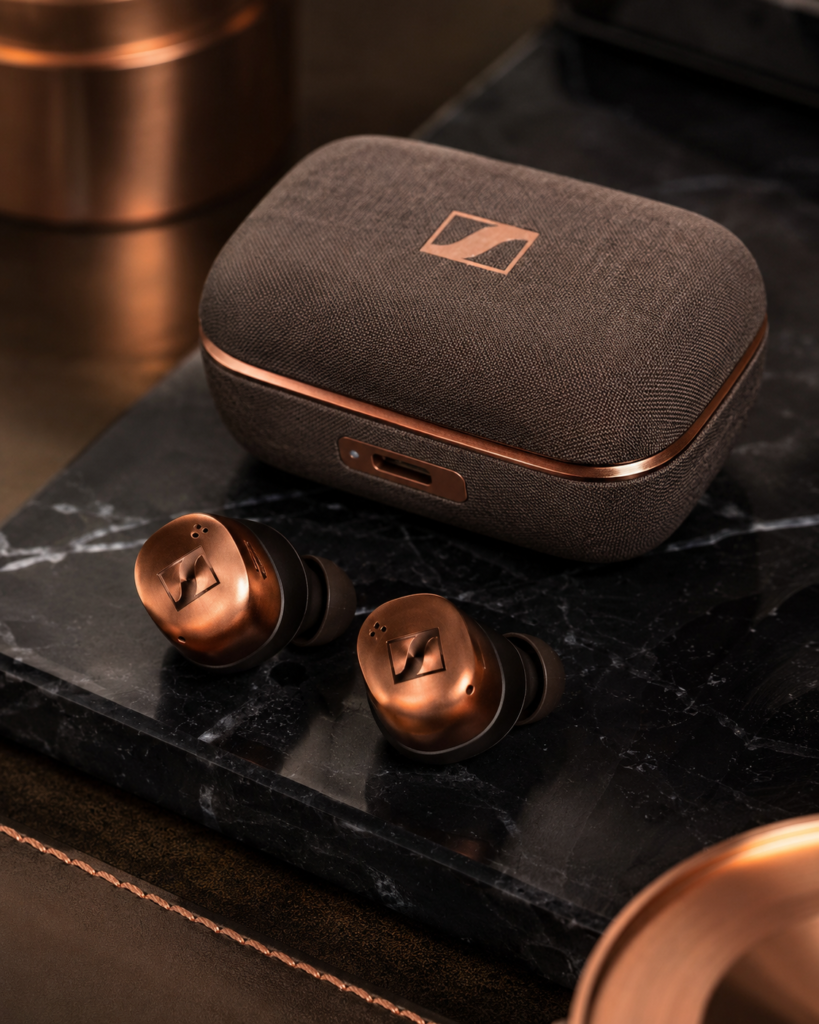
The Sennheiser Momentum True Wireless 4 is the best choice in this lineup for listeners who care most about sound quality. While Bose leads with maximum noise cancellation and Apple wins on ecosystem convenience, Sennheiser focuses on a more refined listening experience. These earbuds are built for people who want active noise cancelling earbuds that still feel musical, spacious, detailed, and emotionally engaging.
The Sennheiser Momentum True Wireless 4 does not try to win by creating the most aggressive silence. Instead, it targets a more balanced premium audio experience: strong enough ANC for daily use, but with a sound signature that feels richer, wider, and more carefully tuned than many mainstream earbuds. For music enthusiasts, that distinction matters. Noise cancellation is valuable, but not if it makes the music feel flat, compressed, or overly processed.
Sennheiser has a long reputation in serious audio, and the Momentum True Wireless series reflects that identity. These earbuds are designed for listeners who notice vocal texture, bass control, instrument separation, treble detail, and soundstage width. They are not simply background listening earbuds. They are for people who want to enjoy music deeply while still reducing distractions from the outside world.
Why the Sennheiser Momentum True Wireless 4 Stands Out
The biggest strength of the Sennheiser Momentum True Wireless 4 is audio refinement. These earbuds deliver a wide, immersive soundstage that helps music feel more open and less trapped inside the ear. Many true wireless earbuds can sound narrow or overly bass-heavy, but Sennheiser aims for a more detailed and controlled presentation.
This makes them especially appealing for users who listen to full albums, acoustic tracks, jazz, classical, electronic, vocal music, live recordings, podcasts, and high-quality streaming. The sound feels more layered, allowing listeners to hear subtle details that cheaper earbuds often blur.
Key strengths include:
- Wide and immersive soundstage
- Rich, detailed audio tuning
- Strong instrument separation
- Premium sound-first identity
- High-quality build and design
- Good ANC for daily environments
- Comfortable listening for long sessions
- Better suited for music lovers than silence-only buyers
The Sennheiser Momentum True Wireless 4 is not about chasing the loudest bass or the most artificial detail. Its appeal is in the balance of depth, clarity, warmth, and space. The sound feels mature rather than exaggerated.
Real-World Performance
In real-world use, the Sennheiser Momentum True Wireless 4 performs best when the goal is high-fidelity listening in imperfect environments. They help reduce background distractions in offices, cafés, trains, airports, home workspaces, and general commuting situations, but they are not as silence-focused as Bose or as ecosystem-driven as Apple.
That is not a weakness for the right buyer. It simply means Sennheiser has a different priority. The earbuds are designed for people who want music to remain the main experience. ANC supports the listening environment, but it does not dominate the product identity.
For example, on a train or plane, the Momentum True Wireless 4 can reduce enough low-frequency rumble to make music easier to enjoy. In an office or café, they can soften background chatter and room noise. During long listening sessions, they maintain a premium sound profile that feels more natural and less fatiguing than overly aggressive earbuds.
Where Bose may make the environment feel quieter, Sennheiser often makes the music feel more alive. That is the core difference.
Sound Quality First
The Sennheiser Momentum True Wireless 4 is the sound-quality pick because it treats audio as the main reason to buy premium earbuds. Many noise cancelling earbuds use ANC as the headline feature, then tune the sound for mass appeal. Sennheiser takes a more audio-centered approach.
The bass has body without becoming uncontrolled. Vocals feel present and textured. Higher frequencies have detail without sounding harsh when tuned properly. The overall presentation feels more spacious than many compact true wireless earbuds, which makes the listening experience feel more premium.
This is especially important for users who listen for long periods. Poor tuning can become tiring. Overly sharp treble, muddy bass, or compressed mids can make earbuds feel impressive at first but irritating over time. Sennheiser’s advantage is that the Momentum True Wireless 4 feels built for longer, more intentional listening.
Noise Cancellation Performance
The ANC on the Sennheiser Momentum True Wireless 4 is capable, but it is not the most aggressive in the category. It can reduce travel noise, office hum, fans, low-level traffic, and general background sound, but it does not match Bose for maximum low-frequency suppression or Sony for the most complete balance of adaptive ANC and feature depth.
This is why the Momentum True Wireless 4 should not be bought only for silence. If your main goal is to block airplane engine noise as much as possible, Bose may be the better fit. If you want a stronger balance of ANC, features, app control, and Android audio support, Sony may be more practical. But if you want noise cancelling earbuds that sound more refined and musical, Sennheiser becomes very compelling.
The ANC is best understood as a support system for the music rather than the main attraction. It reduces enough environmental noise to improve clarity and immersion, but it does not completely reshape the outside world.
Premium Build and Comfort
The Sennheiser Momentum True Wireless 4 also feels premium in construction. The design is more substantial than some ultra-compact earbuds, and that gives them a more serious audio-device feel. The earbuds are made for users who appreciate build quality and a more refined product identity.
Comfort depends on fit, as with all in-ear earbuds. Because these earbuds may feel slightly larger than some competitors, users with smaller ears should pay attention to tip size and wearing comfort. A secure seal is important not only for ANC, but also for bass response and soundstage stability.
The case footprint is also larger than some minimalist alternatives. This is not a major issue for users who carry a bag or travel pouch, but it may matter if you want the smallest possible pocket case.
Trade-Offs
The biggest trade-off with the Sennheiser Momentum True Wireless 4 is that its ANC is slightly weaker than Bose and Sony in difficult environments. It is still useful, but it is not the strongest option for maximum silence.
Another trade-off is case size. Compared with some compact competitors, the charging case may feel less pocket-friendly. For users who prioritize slim everyday carry, this could matter.
The third trade-off is that Sennheiser’s value depends on whether you care about sound quality. If you only want earbuds for casual podcasts, phone calls, and basic commuting, you may not fully appreciate what these earbuds do best. They make the most sense for listeners who actively care about music quality.
Best For
The Sennheiser Momentum True Wireless 4 is best for:
- Music enthusiasts who want premium wireless sound
- Listeners who value detail, separation, and soundstage
- Travelers who care more about sound quality than maximum silence
- Users who want refined ANC without sacrificing audio character
- Long listening sessions at home, work, or during travel
- Buyers who prefer a mature, premium sound signature
- People who find overly aggressive ANC or bass-heavy tuning tiring
- Listeners who want noise cancelling earbuds with a serious audio identity
Buyer Verdict

- Seamless Connectivity & Smart Features: Sennheiser MOMENTUM 4 earbuds wireless Bluetooth 5.4 with multipoint connectivit…
- Adaptive Noise Cancellation & Transparency Mode: The wireless Bluetooth earbuds block distractions with optimized ANC an…
- All-Day Comfort & Secure Fit: The true wireless earbuds have an ergonomic design with extra soft silicone ear tips for l…
The Sennheiser Momentum True Wireless 4 is the best sound-quality pick among premium noise cancelling earbuds. It may not deliver the strongest ANC in the category, but it offers one of the most satisfying listening experiences for users who care about music.
If Bose is the best choice for maximum quiet and Sony is the best all-around balance, Sennheiser is the choice for listeners who want the music to come first. The Momentum True Wireless 4 is ideal for people who want active noise cancelling earbuds that reduce distractions while preserving richness, detail, and emotional depth.
For buyers who value high-fidelity sound in a true wireless format, the Sennheiser Momentum True Wireless 4 deserves a serious place on the shortlist.
Head-to-Head Comparison
| Model | ANC Strength | Sound Quality | Comfort | Best Use Case |
|---|---|---|---|---|
| Bose QC Ultra 2 | ⭐⭐⭐⭐⭐ | ⭐⭐⭐⭐ | ⭐⭐⭐⭐⭐ | Flights / Travel |
| Sony WF-1000XM6 | ⭐⭐⭐⭐☆ | ⭐⭐⭐⭐⭐ | ⭐⭐⭐⭐☆ | All-rounder |
| AirPods Pro 3 | ⭐⭐⭐⭐ | ⭐⭐⭐⭐☆ | ⭐⭐⭐⭐☆ | Apple users |
| Sennheiser MTW4 | ⭐⭐⭐⭐ | ⭐⭐⭐⭐⭐ | ⭐⭐⭐⭐ | Audio quality |
AirPods Pro 3 vs. Bose QC Ultra: Quick Comparison
For premium buyers, the choice comes down to Bose’s hardware performance versus Apple’s software ecosystem.
| Feature | Bose QuietComfort Ultra | Apple AirPods Pro 3 | Winner |
| Noise Cancelling | Best-in-class; kills deep engine roar. | Excellent; adapts well to sharp sounds. | Bose |
| Transparency | High-quality but slightly processed. | Industry-leading; feels like an open ear. | Apple |
| Sound Quality | Cinematic, bass-rich, and personalized. | Neutral, clean, and balanced. | Bose |
| High-Res Audio | Universal (aptX Adaptive for Android). | Gated (Lossless only on latest iPhone). | Bose |
| Physical UX | Tactile swipe-strip for volume. | Pressure-sensitive “squeeze” stems. | Bose |
| Stability & Fit | Two-piece system with stability bands. | Friction-based silicone tip fit. | Bose |
| Ecosystem | Works identically on all platforms. | Deeply integrated with iOS/Mac only. | Apple |
The Decision Matrix
Choose Bose QuietComfort Ultra if:
- Total Silence is Priority: You want the strongest ANC for travel or focus.
- Active Lifestyle: You need stability bands to prevent “bud-slide” during workouts.
- Universal High-Fi: You want high-res audio (aptX) on Android or PC.
- Physical Control: You prefer swiping for volume over squeezing stems.
Choose AirPods Pro 3 if:
- The Apple “Magic”: You want instant pairing and switching between Apple devices.
- Natural Awareness: You frequently use Transparency Mode for conversations.
- Health Tracking: You value new features like integrated heart rate monitoring.
Buying Logic: Bose is the superior choice for raw audio performance and a secure fit, while Apple remains the king of daily convenience and ecosystem synergy.
Best Noise Cancelling Earbuds for Travel
Travel is one of the strongest reasons to buy premium noise cancelling earbuds. Whether you are flying long-haul, commuting by train, sitting on a bus, waiting in an airport lounge, or walking through a busy terminal, the right earbuds can make the journey feel quieter, calmer, and more controlled. The best noise cancelling earbuds for travel are not only judged by how much noise they block. They must also be comfortable for long sessions, easy to carry, reliable on calls, strong against engine rumble, and efficient enough to last through real travel days.
Travel noise is different from normal everyday noise. Airplane cabins create a deep, constant engine hum. Trains add vibration, track noise, and platform announcements. Buses produce road rumble, braking sounds, and low mechanical vibration. Airports and stations mix voices, luggage wheels, public announcements, footsteps, and background movement. This is why travel earbuds need a strong combination of Active Noise Cancellation, passive isolation, stable fit, and smart transparency mode.
For frequent flyers, low-frequency noise reduction matters most. Airplane engines, ventilation systems, and cabin rumble are exactly the kinds of sounds ANC handles best. Good travel earbuds reduce this background layer so music, films, podcasts, and audiobooks become easier to hear at moderate volume. Instead of raising playback to fight the cabin, you can let the earbuds lower the environment first.
Comfort is just as important as cancellation strength. A pair of earbuds may perform well in a short test but become uncomfortable after two hours. Travel often means long listening sessions, sleeping in awkward positions, switching between ANC and transparency mode, and wearing earbuds while moving through crowded spaces. The best models should feel secure without creating pressure, soreness, or constant adjustment.
Battery life also becomes more important during travel. ANC uses extra power because the earbuds are constantly listening to and processing external sound. For a short commute, almost any premium model may be enough. For long flights, layovers, and full-day travel, you need earbuds with dependable ANC playback and a charging case that can quickly restore power between sessions. A compact case is also useful because travel gear should not take up unnecessary space.
Transparency mode is another major travel feature. Full noise cancellation is useful inside an airplane cabin, but awareness matters at gates, crossings, train platforms, and security lines. A natural transparency mode lets you hear announcements, staff instructions, nearby conversations, and surrounding movement without removing the earbuds. The best travel earbuds make switching between isolation and awareness feel instant and effortless.
Call quality matters too. Travel environments are often noisy, unpredictable, and echo-heavy. If you take calls from airports, taxis, hotel lobbies, cafés, or train stations, microphone performance becomes part of the buying decision. Good travel earbuds should reduce background noise around your voice, not only cancel noise for your own ears. This is where beamforming microphones, wind reduction, and voice isolation features become valuable.
The strongest travel earbuds usually perform well in five areas:
- Low-frequency ANC: Reduces airplane engines, train vibration, bus noise, and traffic rumble.
- Comfort: Stays wearable during long flights, commutes, and work sessions.
- Battery life: Supports extended listening with ANC turned on.
- Transparency mode: Helps you hear announcements, traffic, and conversations when needed.
- Portable case design: Keeps the earbuds easy to carry, charge, and protect while traveling.
Different travelers may still prefer different earbuds. Bose is usually the safest choice for users who want maximum silence on flights and trains. Sony is better for travelers who want strong ANC plus richer audio control and LDAC support on compatible Android devices. Apple is ideal for iPhone users who want seamless device switching, natural transparency, and effortless daily travel use. Sennheiser is better for travelers who care more about premium sound quality than the strongest possible ANC.
Fit should never be ignored. Even the best noise cancelling earbuds for travel will underperform if the ear tips do not seal properly. A weak seal allows engine hum, cabin noise, and voices to leak in. It also reduces bass and makes ANC feel less powerful. Before judging any travel earbud, test different ear tip sizes and make sure both ears have a stable seal.
The right travel earbuds should not only make noise quieter. They should reduce fatigue. Long journeys become tiring partly because the brain keeps processing constant background sound. When that low-level noise is reduced, listening feels easier, speech becomes clearer, and the whole travel experience feels less aggressive. This is why premium ANC earbuds can feel like a genuine travel upgrade rather than a simple audio accessory.
For most travelers, the best choice is a pair of earbuds that balances strong ANC, comfort, awareness, battery life, and portability. Maximum silence is useful, but it should not come at the cost of painful fit, weak call quality, poor battery performance, or awkward controls. The best travel earbuds are the ones you can wear confidently from departure to arrival without constantly thinking about them.
For a deeper travel-specific breakdown, see our complete guide to the best noise cancelling earbuds for travel in 2026.
Best Noise Cancelling Earbuds for Sleep
Noise cancelling earbuds can be useful for sleep, but they need to be judged differently from regular ANC earbuds. During the day, the priority is usually sound quality, call performance, battery life, and active noise cancellation strength. At night, the priorities change. The best noise cancelling earbuds for sleep should feel small, soft, secure, low-pressure, and comfortable enough to wear while lying down.
Sleep environments create a different kind of noise problem. Instead of airplane engines or commuter traffic, many people are trying to reduce snoring, noisy neighbors, street sound, air conditioners, fans, hallway movement, dogs barking, or household activity. Some of these sounds are steady and easier to reduce. Others, especially snoring and sudden noises, are harder for earbuds to block completely.
This is why sleep-focused earbuds usually combine several forms of sound control. Passive isolation helps block sound through the physical seal of the ear tips. Active noise cancellation may reduce steady low-frequency noise. Masking sounds, such as white noise, brown noise, rain, ocean waves, or soft ambient audio, can help cover irregular sounds that ANC cannot fully cancel. For sleep, this layered approach often works better than relying on ANC alone.
The biggest challenge is comfort. Many premium ANC earbuds are excellent for travel and commuting but too bulky for sleep. If the outer shell presses against the pillow, the earbud can push into the ear and become painful. Side sleepers need especially low-profile earbuds because even a small amount of pressure can become uncomfortable after an hour. A sleep earbud should almost disappear inside the ear rather than feel like a large device resting against the pillow.
Battery life also matters in a different way. For sleep, earbuds should last through the night or at least through the user’s main sleep window. ANC and streaming both use battery, so some sleep earbuds rely on built-in masking sounds instead of constant Bluetooth playback. Others use low-power modes to extend overnight use. If the earbuds die after a few hours, they may still help with falling asleep but may not be ideal for staying asleep.
Safety and awareness should also be considered. Full isolation may not be appropriate for everyone. Some users still need to hear alarms, children, caregivers, doorbells, emergency sounds, or household movement. In those cases, complete noise blocking is not always the goal. A better approach may be reducing disruptive background sound while keeping enough awareness for important signals.
The most useful noise cancelling earbuds for sleep usually offer:
- A small, low-profile shape for pillow comfort
- Soft ear tips that do not create pressure
- Strong passive isolation for snoring and room noise
- Gentle ANC for steady sounds like fans, traffic, or air conditioners
- Sleep-friendly sound masking options
- Battery life suitable for overnight use
- Secure fit that does not fall out easily
- Simple controls that do not require looking at a phone in bed
It is also important to understand what sleep earbuds cannot do. Even strong ANC may not fully block a loud snorer nearby, sudden barking, door slams, or sharp high-frequency sounds. Human speech and snoring can be difficult because they change constantly in pitch and intensity. In these situations, passive isolation and sound masking often matter more than pure ANC strength.
For people who struggle with occasional noise at night, regular ANC earbuds may be enough. If you mostly sleep on your back, premium earbuds like Bose, Sony, Apple, or Sennheiser may work for short rest, travel naps, or flights. But for nightly sleep, especially for side sleepers, a dedicated sleep-friendly design is usually better because comfort becomes more important than maximum cancellation.
Noise cancelling earbuds can also help during travel sleep. On airplanes, trains, buses, and hotel stays, they can reduce engine rumble, hallway noise, air conditioning, and unfamiliar room sounds. For frequent travelers, a comfortable pair of sleep-capable earbuds can make rest easier in environments where silence is not possible.
The best approach is to choose sleep earbuds based on your main problem. If your issue is steady sound, ANC may help. If your issue is snoring or nearby voices, passive isolation and masking sounds may be more important. If your issue is pillow pressure, size and shape matter most. If your issue is staying asleep all night, battery life becomes critical.
In simple terms, the best noise cancelling earbuds for sleep are not always the strongest ANC earbuds. They are the earbuds that reduce the right type of noise while staying comfortable enough to wear through the night. For a deeper sleep-focused comparison, read our complete guide to best noise cancelling earbuds for sleep.
Best ANC Earbuds With Longest Battery Life
Battery life becomes far more important when Active Noise Cancellation is part of your daily listening routine. ANC earbuds use microphones, processors, wireless radios, and digital signal processing continuously to identify external sound and create opposing sound waves. This extra processing consumes more power than standard listening, which is why the advertised battery life of wireless earbuds often drops significantly when noise cancellation is enabled.
The best ANC earbuds with the longest battery life are designed for people who do not want to recharge their earbuds halfway through a flight, workday, commute, study session, or long listening period. They combine efficient processors, larger internal batteries, optimized Bluetooth performance, dependable charging cases, and power-management features that extend real-world listening time without making the earbuds excessively large or uncomfortable.
Battery specifications should always be examined carefully. Manufacturers may advertise total battery life using the charging case, playback with ANC turned off, reduced volume levels, or specific audio codecs. A pair of earbuds promoted as offering 40 hours of battery life may only provide eight or nine hours from the earbuds themselves before they need to return to the case. For users who need uninterrupted listening, the battery life of a single charge matters more than the combined total.
ANC playback time is the most useful number to compare. This tells you how long the earbuds can operate with Active Noise Cancellation enabled before requiring a recharge. Premium models commonly provide between six and ten hours of ANC playback, while the strongest battery-focused options may exceed ten hours under controlled conditions. Real-world results can still vary depending on listening volume, call usage, spatial audio, codec selection, temperature, and the strength of the ANC setting.
Long battery life is especially valuable for travelers. Long-haul flights can easily exceed eight hours, and the total journey may also include airport waiting, boarding, layovers, transfers, and ground transportation. Earbuds that last through the entire flight without needing to be placed in the charging case provide a more dependable experience. This is particularly important when the charging case is packed away, the seat lacks a usable power outlet, or the traveler wants to continue listening while resting.
Commuters also benefit from efficient ANC performance. Daily train, subway, bus, and city travel may only require one or two hours of playback at a time, but repeated charging becomes inconvenient. Earbuds with longer endurance can often last several days of commuting before the case needs to be connected to power. This reduces battery anxiety and makes the earbuds easier to treat as an everyday carry device.
Long battery life also matters for office workers, remote professionals, and students. ANC earbuds are increasingly used for focused work, virtual meetings, background music, lectures, study sessions, and calls. A pair that can remain active throughout most of the working day is far more practical than one that needs to be recharged during an important meeting or deep-focus session.
The charging case should be evaluated separately from the earbuds. Some cases provide only two additional charges, while others extend the total listening time far beyond 30 or 40 hours. A larger case battery is useful for travel and multi-day use, although it may also make the case heavier or less pocket-friendly. The best designs balance capacity with portability so the case remains easy to carry while still providing several dependable recharges.
Fast charging is another important feature. Even earbuds with excellent battery life will eventually need power, and a short charging window can be extremely useful. Some models provide one or two hours of playback from approximately 10 minutes in the case. This can be enough for a commute, workout, meeting, or part of a flight. Fast charging does not replace strong battery capacity, but it reduces the inconvenience of forgetting to charge the earbuds in advance.
Wireless charging may also improve convenience, particularly for users who already own Qi-compatible charging pads. Placing the case on a charging surface at a desk, bedside table, or entryway can make regular charging easier. USB-C remains more important for speed and travel compatibility, but wireless charging helps users maintain the case battery without constantly connecting and disconnecting cables.
The strongest long-battery ANC earbuds usually perform well in six areas:
ANC playback time: Provides extended listening with noise cancellation enabled rather than relying only on battery claims measured with ANC turned off.
Total case capacity: Supplies multiple additional charges for travel, commuting, work, and multi-day use.
Fast charging: Restores meaningful playback time from a short period in the charging case.
Efficient Bluetooth performance: Maintains a stable connection without unnecessary power consumption.
Comfort for long sessions: Remains wearable for several hours without excessive pressure, heat, soreness, or constant adjustment.
Balanced ANC strength: Reduces background noise effectively without draining the battery too aggressively.
Different users may still prioritize different types of battery performance. A frequent traveler may want the longest possible single-charge playback because returning the earbuds to the case during a flight is inconvenient. A commuter may care more about total case capacity because the earbuds can be recharged between journeys. Office users may prioritize eight or more hours of continuous ANC playback, while casual listeners may prefer a smaller case even if total battery life is slightly lower.
Codec selection can influence endurance as well. Advanced Bluetooth codecs may increase processing demands, particularly when streaming high-resolution audio. Features such as LDAC, lossless transmission, head tracking, spatial audio, multipoint connectivity, voice detection, and adaptive ANC may reduce playback time compared with basic AAC or SBC listening. Users who prioritize battery longevity may benefit from disabling features they do not actively use.
Listening volume also affects battery performance. Higher playback levels require more energy from the amplifier and drivers. Calls can consume additional power because the microphones, voice-processing system, and wireless connection remain active in both directions. Real-world battery life may therefore be shorter for users who take frequent calls, listen at high volume, or use several advanced features simultaneously.
Earbud fit can indirectly influence battery use. A secure seal improves passive isolation, allowing the ANC system to work more effectively and reducing the need to increase volume. If the ear tips do not fit properly, outside noise enters more easily, bass response weakens, and users may raise the volume to compensate. Choosing the correct ear tip size can therefore improve both listening quality and practical endurance.
Battery health should also be considered over the long term. Lithium-ion batteries gradually lose capacity as they age. Frequent exposure to heat, repeated full discharges, and leaving the earbuds unused at a completely empty charge can accelerate this process. Premium earbuds with excellent battery life when new may still lose some endurance after several years. Starting with a higher battery capacity gives users more room for gradual degradation.
ANC strength should not be sacrificed entirely for longer playback. Some earbuds advertise impressive battery figures but provide only moderate noise cancellation. Others offer class-leading silence but shorter endurance. The best choice depends on how the earbuds will be used. Travelers may prefer stronger low-frequency cancellation even if battery life is slightly shorter, while office users may accept moderate ANC in exchange for several additional hours of playback.
Comfort remains essential because long battery life has little value if the earbuds become painful after two hours. Larger batteries can make earbuds heavier, and poor weight distribution may create pressure around the ear canal. The best long-lasting models use ergonomic shells, balanced weight, secure ear tips, and efficient internal components to extend playback without making the earbuds feel bulky.
Controls and power-saving features can also make a meaningful difference. Automatic pause, wear detection, sleep timers, configurable ANC levels, and smart standby modes help prevent unnecessary battery drain. Some earbuds automatically enter a low-power state when removed, while others continue playing or remain connected unless they are manually switched off or returned to the case.
Users should also compare how accurately the battery percentage is displayed. Reliable battery reporting through a companion app, Bluetooth menu, or charging-case screen makes it easier to plan charging. Earbuds that suddenly drop from 20% to empty can feel less dependable even if their overall endurance is respectable. Clear battery indicators are especially useful before flights, meetings, workouts, or long commutes.
The best ANC earbuds with the longest battery life are not simply the models with the largest advertised number. They are the earbuds that deliver dependable ANC playback, efficient charging, accurate battery reporting, long-session comfort, and enough case capacity to support real daily use. A balanced design is usually more valuable than a headline battery claim achieved only with important features disabled.
For most buyers, a strong target is at least eight hours of playback with ANC enabled, supported by a charging case that extends total use beyond 24 hours. Travelers and heavy users may benefit from models offering ten hours or more on a single charge, while commuters may place greater value on fast charging and a compact case.
Long-lasting ANC earbuds reduce interruptions, charging anxiety, and the need to carry extra cables or power banks. They allow users to focus on music, calls, work, travel, and relaxation without constantly checking the remaining battery percentage. For a detailed comparison of the longest battery life earbuds, see our complete guide to the best ANC earbuds with the longest battery life.
Who Should Use Noise Cancelling Earbuds?
Noise cancelling earbuds are most useful for people who regularly deal with environmental noise and want more control over what they hear. They are not only for music lovers. They are practical tools for travel, work, study, calls, focus, and everyday listening in places where background sound makes it harder to concentrate or enjoy audio clearly.
The main benefit of noise cancelling earbuds is not complete silence. Their real value is reducing distraction. By lowering engine rumble, traffic noise, office chatter, air conditioning, and general background sound, they help music, podcasts, audiobooks, videos, and calls feel clearer at a more comfortable volume. This makes them useful for people who want a calmer listening environment without carrying bulky over-ear headphones.
Travelers and Commuters
Travelers and commuters are among the biggest beneficiaries of noise cancelling earbuds. Airplanes, trains, buses, taxis, subways, and busy terminals are filled with constant low-frequency noise. Engine hum, road vibration, rail noise, crowd movement, and public announcements can make listening tiring.
For commuters, ANC earbuds make daily travel feel less aggressive. You can listen to podcasts, music, or calls without raising the volume every time the bus gets louder or the train enters a noisy section. For travelers, they help reduce fatigue during long journeys, especially on flights where cabin rumble can become mentally exhausting over several hours.
Frequent Flyers
Frequent flyers should strongly consider premium noise cancelling earbuds. Airplane cabins are one of the environments where active noise cancellation performs best because the noise is often steady and low-frequency. Strong ANC can reduce engine drone, ventilation noise, and cabin rumble, making flights feel calmer and more comfortable.
For long-haul travel, earbuds also offer a portability advantage over headphones. They fit easily into a pocket or travel bag, work well with phones and tablets, and are easier to wear while resting. The best models also include transparency mode, so you can hear boarding calls, crew announcements, or conversations without removing them.
Students Studying in Shared Spaces
Students who study in libraries, dorm rooms, cafés, classrooms, shared homes, or public spaces can benefit from noise cancelling earbuds because focus is often broken by small, repeated distractions. Background chatter, footsteps, chairs moving, typing, doors opening, and air conditioning can make reading or writing harder than it needs to be.
Noise cancelling earbuds help create a more stable sound environment. They do not remove every voice or sudden sound, but they reduce enough background noise to make study sessions feel more controlled. For students who use instrumental music, white noise, lectures, or study playlists, ANC can make those sounds easier to hear without turning the volume too high.
Remote Workers and Office Workers
Remote workers and office workers often need earbuds that support both focus and communication. A noisy home, shared apartment, coworking space, or open office can make deep work difficult. Noise cancelling earbuds reduce environmental sound so writing, editing, coding, designing, researching, and video meetings become easier to manage.
For calls, the best earbuds should also include strong microphones and voice isolation. Listening-side ANC helps you hear others more clearly, but call quality depends on how well the microphones separate your voice from background noise. Remote workers should look for earbuds that balance ANC, microphone performance, comfort, battery life, and multipoint connectivity.
People Sensitive to Background Noise
Some people are more sensitive to constant background sound than others. Traffic, fans, HVAC systems, nearby conversations, kitchen noise, or public spaces can feel mentally draining. Noise cancelling earbuds can help reduce that sensory load by lowering the overall noise floor.
For these users, the goal may not be entertainment. It may be calm. ANC earbuds can help create a more controlled personal sound space during work, travel, errands, or rest. However, users who are highly sensitive to pressure-like ANC sensations should choose earbuds with adjustable noise cancellation or adaptive modes instead of models that feel too aggressive.
Podcast, Audiobook, and Call Listeners
Noise cancelling earbuds are especially useful for people who listen to spoken content. Music can sometimes mask background noise naturally, but podcasts, audiobooks, online courses, and phone calls depend on speech clarity. If background noise covers the speaker’s voice, users often raise the volume.
ANC helps by reducing the noise underneath the speech. This makes dialogue easier to follow in buses, trains, airports, cafés, gyms, and offices. For people who consume a lot of spoken audio, noise cancelling earbuds can make listening more comfortable and less tiring. As public listening systems evolve, technologies such as Auracast may further improve access to spoken content by allowing compatible earbuds to receive broadcasts directly from supported venues and audio sources.
Gym Users and Walkers
Gym users, walkers, and daily movers can also benefit from ANC earbuds, but they should pay attention to awareness modes. Gyms often have loud music, machines, fans, and people talking. ANC can reduce some of that noise and make workouts feel more focused.
For outdoor walking, transparency mode becomes important. Full ANC may reduce awareness of cars, cyclists, people, or warning sounds. The best earbuds for outdoor use should let you switch quickly between noise cancellation and ambient sound depending on where you are.
Who May Not Need Noise Cancelling Earbuds?
Noise cancelling earbuds are not necessary for everyone. If your environment is already quiet most of the time, you may benefit more from standard high-quality earbuds with excellent sound, comfort, and battery life. ANC adds cost, processing, and battery usage, so it is most valuable when you regularly face noise.
You may not need ANC earbuds if you mostly listen at home in a quiet room, rarely travel, do not work in shared spaces, or prefer open awareness of your surroundings. In these cases, a pair of well-tuned regular wireless earbuds may offer better value.
The Best Fit Depends on Your Daily Noise
The right question is not simply, “Do I need noise cancelling earbuds?” A better question is, “What noise do I deal with every day?” If your main problem is airplane engines, buses, trains, traffic, office hum, or café noise, ANC earbuds can be a meaningful upgrade. If your main concern is music quality in a quiet environment, you may want to prioritize sound tuning instead.
Noise cancelling earbuds are best for people who want clearer audio, better focus, calmer travel, more comfortable calls, and lower listening volumes in noisy spaces. They are not required for every listener, but for the right user, they can become one of the most practical everyday tech upgrades.
For a broader breakdown across all categories, use cases and price ranges, explore the Earsbud.com Homepage.
Buying Guide: How to Choose the Right Pair
Choosing the right noise cancelling earbuds depends on how you plan to use them every day. The best pair for a frequent flyer is not always the best pair for an iPhone user. The best earbuds for music quality may not be the strongest for airplane noise. The best option for calls may not be the same as the best option for long listening sessions. This is why a good buying decision should begin with your real use case, not just the highest rating or most popular model.
Premium noise cancelling earbuds in 2026 are all capable, but they are not identical. Bose, Sony, Apple, and Sennheiser each approach ANC, sound quality, comfort, battery life, and ecosystem features differently. The right choice comes from understanding which strengths matter most to you.
1. Start with Your Noise Cancellation Priority
If your main goal is maximum quiet in travel, public transport, airports, trains, buses, or noisy offices, ANC strength should be your first priority. Strong active noise cancellation is especially important if you are trying to reduce airplane engine hum, train vibration, traffic rumble, air conditioning, and low-frequency background noise.
For pure noise cancellation, Bose remains one of the safest premium choices. Bose QuietComfort Ultra Earbuds 2nd Gen are built for users who want the strongest possible reduction of steady background sound. They are especially useful for frequent flyers, long-haul travelers, commuters, and people who are highly sensitive to environmental noise.
However, maximum ANC is not always the only thing that matters. Some earbuds block less noise but sound better. Others integrate more smoothly with your phone, laptop, or tablet. Some feel more comfortable for long sessions. If you want silence above everything else, prioritize Bose. If you want a broader balance of ANC and sound quality, Sony may be stronger. If you want seamless Apple convenience, AirPods Pro 3 may make more sense.
2. Match the Earbuds to Your Device Ecosystem
Your phone, laptop, tablet, and daily devices should influence your buying decision. Noise cancelling earbuds are no longer just audio accessories. They are part of your digital workflow. Pairing speed, device switching, app controls, voice assistant support, codec compatibility, and call integration can all affect the experience.
For Apple users, Apple AirPods Pro 3 are usually the most convenient choice. They work smoothly with iPhone, iPad, Mac, Apple Watch, and Apple TV. Device switching feels natural, controls are familiar, and features like transparency mode, spatial audio, Find My support, and call handling fit neatly into the Apple ecosystem. If you already use Apple devices every day, AirPods Pro 3 can feel easier to live with than technically stronger alternatives.
For Android users, Sony and Sennheiser are often more attractive. Sony WF-1000XM6 is especially strong for users who want LDAC support, deeper app customization, adaptive sound control, and richer EQ settings. Sennheiser Momentum True Wireless 4 is better for buyers who care more about detailed sound and a more audiophile-style listening experience.
The key rule is simple: do not buy earbuds only because they are popular. Buy the model that works best with the devices you use most.
3. Choose Based on Sound Preference
Sound quality is personal. Two people can listen to the same earbuds and prefer completely different tuning. Some users want deep bass and a full, immersive sound. Others want clean vocals, balanced clarity, natural tone, or detailed instrument separation. Before choosing, think about the kind of listening experience you actually enjoy.
If you want immersive bass and a powerful travel-friendly sound, Bose is a strong option. Bose earbuds are designed to feel full, comfortable, and engaging, especially when paired with strong ANC. They are great for users who want a rich listening experience in noisy environments.
If you want balanced clarity, Sony WF-1000XM6 is one of the best choices. Sony gives users more control over EQ, noise settings, and sound behavior. It is well suited for people who listen to music, podcasts, calls, and videos throughout the day and want one pair of earbuds that handles everything well.
If you prefer a natural tone and effortless daily listening, Apple AirPods Pro 3 may be the best fit. Apple’s tuning usually feels clean, smooth, and easy to listen to, especially for podcasts, calls, Apple Music, FaceTime, videos, and casual daily use.
If you want detailed audio and a more refined music-first experience, Sennheiser Momentum True Wireless 4 is the stronger pick. Sennheiser is ideal for listeners who care about soundstage, vocal texture, instrument separation, and long listening sessions where musical detail matters more than maximum silence.
A simple sound preference guide:
| Sound Preference | Best Match |
|---|---|
| Immersive bass and travel impact | Bose QuietComfort Ultra 2nd Gen |
| Balanced clarity and feature control | Sony WF-1000XM6 |
| Natural tone and Apple usability | Apple AirPods Pro 3 |
| Detailed audio and music refinement | Sennheiser Momentum True Wireless 4 |
4. Consider Battery Life and Charging Habits
Battery life matters more than many buyers expect. Active noise cancellation uses power because the earbuds are constantly listening, processing, and generating anti-noise signals. If you use ANC heavily, battery life can drop faster than normal listening mode.
Frequent travelers should prioritize models with stable long-duration performance. A pair of earbuds may sound excellent, but if they cannot survive a long flight, full workday, or extended commute, they may become frustrating. The charging case also matters because it determines how quickly and how often you can recharge on the move.
For travel, look for earbuds that offer dependable ANC playback, quick charging, and a case that is compact enough to carry easily. If you use immersive audio, spatial audio, high-resolution codecs, or strong ANC all day, expect faster battery drain. These advanced features improve the experience, but they require more processing power.
If you mostly use earbuds at home or in short sessions, battery life may be less critical. If you travel often, commute daily, or use earbuds for work calls and focus sessions, battery performance should be a serious part of your buying decision.
5. Pay Attention to Comfort and Fit
Comfort is not a luxury feature. It directly affects ANC performance, sound quality, and daily usability. Even the most advanced noise cancelling earbuds can feel disappointing if the ear tips do not seal properly or the shell creates pressure.
A proper seal improves bass, strengthens passive isolation, and allows the ANC system to perform better. A poor seal allows outside noise to leak in, reduces low-end sound, and makes earbuds feel less stable. This is why fit tests, multiple ear tip sizes, and ergonomic shape matter.
If you wear earbuds for long flights, long work sessions, or several hours of music, comfort should be near the top of your list. A slightly weaker ANC earbud that fits perfectly may feel better in real life than a stronger ANC earbud that causes discomfort after 30 minutes.
Side sleepers, small-ear users, and people sensitive to ear pressure should be especially careful. Larger earbuds may offer premium sound and strong ANC, but they may not be ideal for every ear shape. To understand the comfort issue more clearly, it helps to learn why noise cancelling earbuds create pressure before choosing a pair for long listening sessions.
6. Check Transparency Mode and Awareness Features
Good ANC is important, but good transparency mode is just as important for daily life. You will not always want full isolation. Sometimes you need to hear announcements, traffic, coworkers, family members, or someone speaking to you.
Apple is especially strong for natural transparency mode. Sony offers flexible ambient sound control. Bose provides strong awareness modes for switching between quiet and outside sound. Sennheiser also offers transparency features, though its strongest appeal remains sound quality.
If you walk outdoors, commute, travel, or work in shared spaces, transparency mode should be part of your buying decision. The best earbuds should make it easy to move between isolation and awareness without removing them.
7. Think About Calls and Work Use
If you take calls often, do not judge earbuds only by how well they cancel noise for your ears. Listening-side ANC and microphone-side noise reduction are different things. Good call performance requires microphones that can isolate your voice from traffic, wind, café noise, office chatter, and background movement.
Remote workers should prioritize earbuds with strong microphone systems, stable Bluetooth connection, multipoint support, and comfortable long-session wear. Commuters and travelers should also consider wind handling because outdoor calls can quickly expose weak microphone performance.
Sony and Apple are especially strong for daily work use because of their smart features and device integration. Bose is excellent if you want quiet focus. Sennheiser is better if your workday includes long music sessions and sound quality matters.
8. Decide What Trade-Offs You Can Accept
Every premium earbud has trade-offs. Bose offers excellent ANC, but it comes with premium pricing and battery considerations when advanced modes are used. Sony offers the best balance for many users, but its feature depth may feel more complex than Apple. Apple is effortless for iPhone users, but less flexible outside the Apple ecosystem. Sennheiser delivers excellent sound quality, but its ANC is not as aggressive as Bose or Sony.
The smartest buying decision is not about finding a perfect pair. It is about choosing the trade-offs that match your priorities.
Quick Buying Recommendation
| Buyer Type | Best Choice |
|---|---|
| Maximum silence seeker | Bose QuietComfort Ultra Earbuds 2nd Gen |
| Android user and all-around buyer | Sony WF-1000XM6 |
| iPhone, iPad, and Mac user | Apple AirPods Pro 3 |
| Music enthusiast | Sennheiser Momentum True Wireless 4 |
| Frequent flyer | Bose |
| Everyday commuter | Sony |
| Best sound quality priority | Sennheiser Momentum True Wireless 4 |
| Best convenience priority | Apple AirPods Pro 3 |
The Bottom Line
The right noise cancelling earbuds depend on your daily environment, device ecosystem, sound preference, battery needs, comfort requirements, and budget. If you want maximum ANC for travel, Bose is the strongest choice. If you want the best all-around balance, Sony WF-1000XM6 is difficult to beat. If you live inside the Apple ecosystem, AirPods Pro 3 are the most seamless option. If sound quality matters more than maximum silence, Sennheiser Momentum True Wireless 4 is the most refined pick.
The best pair is not always the one with the most aggressive noise cancellation. It is the one that fits your ears, matches your devices, sounds right to you, lasts through your day, and makes noisy environments easier to manage.
Sound Advice
Noise cancelling earbuds have evolved from a premium feature into a daily tool for focus, clarity, and control over your environment.
If deep silence and true isolation are what you’re after, Bose consistently delivers where it matters most.
If seamless integration and effortless usability define your priority, Apple leads that experience.
For those seeking balance, Sony and Sennheiser remain strong contenders.
But at some point, comparison stops adding value.
If your goal is simple—to block the world out and stay focused without compromise—there’s little left to evaluate.
Go with BOSE, use the silence and move on to what actually matters.
FAQs
What are the best noise cancelling earbuds for travel in 2026?
The best noise cancelling earbuds for travel in 2026 are the models that combine strong low-frequency ANC, long-session comfort, reliable battery life, and a compact charging case. Travel creates a specific kind of noise problem: airplane cabin rumble, train vibration, bus engines, road noise, airport announcements, and background crowd movement. Earbuds that perform well in quiet rooms do not always perform well during travel.
For maximum silence, Bose QuietComfort Ultra Earbuds 2nd Gen are a strong choice because they focus heavily on powerful active noise cancellation and comfort. For a more balanced travel experience, Sony WF-1000XM6 is excellent because it combines strong ANC with high-quality audio and smart adaptive features. Apple AirPods Pro 3 are best for Apple users who want seamless device switching, natural transparency mode, and everyday convenience. Sennheiser Momentum True Wireless 4 is better for travelers who care more about rich sound quality than absolute silence.
The best travel earbuds should reduce constant engine noise without creating discomfort, pressure, or battery anxiety. They should also include transparency mode so you can hear boarding calls, train announcements, traffic, or conversations when needed.
Are noise cancelling earbuds worth it for everyday use?
Noise cancelling earbuds are worth it for everyday use if you regularly deal with background noise. Commuters, students, remote workers, office workers, frequent flyers, gym users, and people living in noisy homes often benefit the most. ANC earbuds reduce environmental sound so music, podcasts, calls, and videos become clearer without needing excessive volume.
They are especially useful in buses, trains, cafés, offices, airports, and shared workspaces. The benefit is not complete silence. The real value is reducing the noise floor so daily listening feels calmer and more controlled.
However, if your environment is already quiet most of the time, you may not need premium ANC earbuds. In that case, standard high-quality wireless earbuds may offer better value, especially if your top priority is sound quality rather than noise control.
What is the difference between ANC earbuds and regular wireless earbuds?
The main difference is how they handle outside noise. Regular wireless earbuds mostly rely on passive noise isolation, which comes from the physical seal created by the ear tips. ANC earbuds go further by using microphones and digital processing to reduce external noise electronically.
ANC earbuds listen to surrounding sound, analyze it, and generate an opposite sound wave to reduce part of that noise before it reaches your ear. This is especially effective against steady low-frequency sounds such as airplane engines, traffic rumble, fans, trains, and air conditioning.
Regular earbuds can still sound excellent, but they usually do not reduce environmental noise as effectively in loud places. ANC earbuds are better for travel, commuting, work focus, and noisy everyday environments. Regular earbuds may be enough for quiet rooms, casual listening, or users who do not want to pay extra for noise cancellation.
Can noise cancelling earbuds block human voices completely?
Noise cancelling earbuds can reduce human voices, but they usually cannot block them completely. Human speech is difficult for ANC because voices change constantly in pitch, rhythm, volume, and direction. Unlike airplane engines or fans, speech is not a steady sound pattern.
Premium ANC earbuds can make nearby voices sound softer, more distant, or less distracting, but some speech detail may still remain. Passive isolation from ear tips plays a major role here. A secure seal can reduce high-frequency voice detail better than ANC alone.
If your main problem is office chatter, nearby conversations, or shared-room noise, choose earbuds with strong passive isolation, good fit, and adaptive ANC. Foam or well-sealing silicone tips may help more than simply choosing the model with the strongest ANC rating.
Are active noise cancelling wireless earbuds safe for hearing?
Active noise cancelling wireless earbuds are generally safe for daily use when used responsibly. ANC itself is not the main hearing risk. The bigger safety factor is playback volume and listening duration.
In many situations, ANC may support safer listening because it reduces background noise first. When the environment becomes quieter, you do not need to raise the volume as much to hear music, podcasts, calls, or videos clearly. This can help reduce listening strain in loud places like buses, trains, airplanes, and cafés.
However, ANC does not protect your ears from audio played too loudly. Even with strong noise cancellation, you should keep volume moderate, take breaks during long sessions, and avoid using earbuds at maximum volume for extended periods. ANC earbuds should also not be used as a substitute for certified hearing protection in industrial or extremely loud environments.
What are the best noise cancelling earbuds for sleep?
The best noise cancelling earbuds for sleep are usually small, low-profile, soft, and comfortable enough to wear while lying down. Sleep earbuds should be judged differently from regular ANC earbuds. For sleep, comfort often matters more than maximum cancellation strength.
A good pair should reduce steady sounds like fans, air conditioners, traffic hum, and room noise, while also helping mask irregular sounds such as snoring or hallway movement. Many sleep-friendly earbuds combine passive isolation, gentle ANC, and masking sounds like white noise, brown noise, rain, or soft ambient audio.
Large premium ANC earbuds may work for naps or airplane rest, but they can be uncomfortable for side sleepers because the shell presses against the pillow. If you plan to sleep with earbuds nightly, choose a model designed specifically for sleep comfort rather than only travel ANC strength.
Why do noise cancelling earbuds work better on airplane noise than voices?
Noise cancelling earbuds work better on airplane noise because airplane engines create steady, low-frequency sound. ANC systems are good at detecting predictable sound patterns and generating an opposite anti-noise signal in real time.
Human voices are harder because speech is fast-changing and complex. It contains shifting tones, consonants, pauses, volume changes, and higher-frequency details. ANC can reduce some of the background layer of speech, but it cannot easily erase every word or nearby conversation.
This is why earbuds may feel excellent on flights but less dramatic in a noisy office. Airplane rumble is exactly the kind of sound ANC handles best. Office chatter, keyboard noise, and sudden voices require strong passive isolation and good ear tip fit in addition to ANC.
Do noise cancelling earbuds drain battery faster?
Yes, noise cancelling earbuds usually drain battery faster when ANC is turned on. Active noise cancellation requires microphones, processors, and algorithms to operate continuously. The earbuds are constantly listening to outside noise, calculating the cancellation signal, and adjusting to changes in the environment.
Battery drain can increase further when using features such as adaptive ANC, spatial audio, immersive sound modes, high-resolution codecs, multipoint Bluetooth, or frequent transparency mode switching. This does not mean ANC earbuds have poor battery life, but it does mean real-world playback can vary depending on settings.
For frequent travelers or long workdays, choose earbuds with stable ANC playback time and a charging case that provides multiple extra charges. Quick charging is also useful because a short charge can often provide enough playback for a commute or work session.
Which noise cancelling earbuds are best for iPhone users?
Apple AirPods Pro 3 are usually the best noise cancelling earbuds for iPhone users because they are built around the Apple ecosystem. Their biggest strength is not only ANC performance. It is the way they integrate with iPhone, iPad, Mac, Apple Watch, Apple TV, FaceTime, Find My, spatial audio, and device switching.
For Apple users, this convenience matters. Pairing is fast, controls feel familiar, transparency mode is natural, and switching between devices is smooth. AirPods Pro 3 are especially useful for people who move between calls, music, videos, meetings, and Apple devices throughout the day.
Sony, Bose, and Sennheiser can also work with iPhones, but they may not feel as seamless. If you want deeper EQ customization or stronger raw ANC, alternatives may be worth considering. If you want the easiest Apple experience, AirPods Pro 3 are the most practical choice.
Which noise cancelling earbuds are best for Android users?
Sony WF-1000XM6 is one of the best noise cancelling earbuds for Android users because it offers strong ANC, LDAC support on compatible devices, deep app customization, adaptive sound control, and flexible EQ tuning. Android users often benefit more from Sony’s codec support and software controls than Apple-focused earbuds.
Sennheiser Momentum True Wireless 4 is also a strong Android-friendly option for users who prioritize detailed sound quality and a more refined listening experience. Bose is excellent for Android users who mainly want maximum noise cancellation, especially for travel.
The best Android ANC earbuds depend on priority. Choose Sony for the strongest all-around balance, Sennheiser for sound quality, and Bose for maximum noise reduction.
People Also Ask
How do ANC earbuds actually cancel noise?
ANC earbuds cancel noise by using tiny microphones to detect external sound, then creating an opposite sound wave that reduces part of that noise before it reaches your ear. This process is called active noise cancellation.
The earbuds continuously listen to the environment, analyze incoming noise, and generate an anti-noise signal in milliseconds. When the unwanted sound wave and the opposite signal meet, they reduce each other. This works best with steady low-frequency sounds such as engines, fans, air conditioners, and traffic rumble.
Modern ANC earbuds may use feedforward microphones, feedback microphones, or hybrid ANC systems. Hybrid ANC is common in premium earbuds because it uses both external and internal microphones to improve accuracy and real-world performance.
What is better for noise blocking, ANC or passive isolation?
ANC and passive isolation work best together. ANC is usually better for steady low-frequency noise such as airplane engines, train rumble, fans, and traffic. Passive isolation is better for physically blocking higher-frequency sounds such as voices, keyboard clatter, and sharp background noise.
Passive isolation comes from the ear tip seal. If the seal is weak, ANC performance also becomes weaker because outside sound leaks in. A good ear tip fit improves bass, strengthens noise reduction, and makes the entire earbud sound more stable.
The best noise cancelling earbuds use both systems. ANC reduces predictable background noise electronically, while passive isolation blocks sound naturally through fit and ear tip design.
Are Bose QuietComfort Ultra Earbuds 2nd Gen better than Sony WF-1000XM6?
Bose QuietComfort Ultra Earbuds 2nd Gen are usually better if your main priority is maximum noise cancellation, especially for travel, flights, trains, and steady low-frequency noise. Bose is strongly focused on creating a quiet listening environment.
Sony WF-1000XM6 may be better if you want a more balanced premium experience. Sony combines strong ANC with better sound customization, LDAC support for compatible Android devices, adaptive controls, and a more flexible app-based experience.
Choose Bose if you want the strongest travel silence. Choose Sony if you want strong ANC plus higher audio flexibility and all-around daily performance.
Are AirPods Pro 3 good for noise cancelling?
Apple AirPods Pro 3 are good noise cancelling earbuds, especially for Apple users. Their ANC is strong enough for commuting, offices, cafés, flights, and everyday listening. They also offer one of the most natural transparency experiences, which makes them practical for daily use.
Their biggest advantage is ecosystem integration. They work smoothly with iPhone, iPad, Mac, Apple Watch, FaceTime, spatial audio, and device switching. For Apple users, this seamless experience can matter more than having the absolute strongest ANC.
AirPods Pro 3 may not be the best choice for Android users or people who want deep EQ customization, but they are one of the best options for Apple-focused convenience.
Are Sennheiser Momentum True Wireless 4 good for ANC?
Sennheiser Momentum True Wireless 4 earbuds offer good ANC, but their main strength is sound quality. They are best for listeners who want rich, detailed, refined audio with enough noise cancellation to reduce daily distractions.
Compared with Bose and Sony, Sennheiser may not feel as aggressive in extreme noise environments like airplanes or trains. However, it delivers a more music-focused experience with a wider soundstage, detailed tuning, and premium audio character.
Choose Sennheiser Momentum True Wireless 4 if you care more about high-fidelity sound than maximum silence.
Can you sleep with noise cancelling earbuds?
You can sleep with noise cancelling earbuds, but comfort depends heavily on the shape and size of the earbuds. Many premium ANC earbuds are excellent for travel and daily listening but may be too bulky for side sleeping.
For sleep, low-profile earbuds are better. They should sit comfortably in the ear without pressing against the pillow. Soft ear tips, secure fit, low pressure, overnight battery life, and sound masking features are more important than maximum ANC strength.
If you sleep mostly on your back, standard ANC earbuds may work. If you are a side sleeper, dedicated sleep earbuds are usually more comfortable.
Why do my noise cancelling earbuds not block everything?
Noise cancelling earbuds do not block everything because ANC is strongest against steady, predictable sounds. It is less effective against close-range voices, sudden noises, sharp clatter, barking dogs, alarms, sirens, and high-frequency bursts.
ANC needs time to detect noise, calculate an opposing signal, and play that signal back. Sudden sounds can reach your ear before the system can fully respond. Human speech is also difficult because it changes constantly.
A secure ear tip seal improves results. If your earbuds feel weak, try different ear tip sizes, check the fit test in the app, clean the ear tips, and make sure ANC is turned on rather than transparency mode.
Do noise cancelling earbuds help with studying?
Noise cancelling earbuds can help with studying by reducing background distractions in libraries, dorm rooms, cafés, shared homes, and public study spaces. They are useful for lowering air conditioning, distant chatter, traffic hum, and general room noise.
They may not fully block nearby conversations, but they can make the environment feel calmer and more stable. Many students combine ANC with instrumental music, white noise, brown noise, or low-volume focus playlists.
For studying, comfort matters a lot. Choose earbuds that can be worn for long sessions without pressure, soreness, or constant adjustment.
What features matter most when buying noise cancelling earbuds?
The most important features are ANC strength, fit, comfort, sound quality, battery life, transparency mode, call quality, Bluetooth stability, and device compatibility. Strong ANC is useful, but it should not be the only factor.
A poor fit can ruin both sound quality and noise cancellation. Weak battery life can make travel frustrating. Bad transparency mode can make outdoor use less safe. Poor microphones can make calls difficult in noisy places.
The best buying approach is to match the earbuds to your lifestyle. Travelers should prioritize ANC and comfort. Remote workers should prioritize calls and multipoint. Apple users should consider AirPods Pro 3. Android users should look closely at Sony or Sennheiser.
How long do noise cancelling earbuds usually last?
Noise cancelling earbuds usually last several years with normal use, but battery health gradually declines over time. The earbuds themselves may continue working, but maximum playback time often decreases as the internal batteries age.
How long they last depends on charging habits, daily usage, moisture exposure, cleaning, storage, and build quality. Premium earbuds may have better materials and software support, but tiny batteries still have a limited lifespan.
To extend lifespan, avoid exposing earbuds to excessive heat, clean ear tips regularly, store them in the case, avoid overcharging in hot environments, and keep firmware updated when available.