
Best Looking Earbuds: Style, Design, Comfort, Case Aesthetic Tech and Everyday Tech Fashion.
Amazon Affiliate Disclosure
Earsbud.com may earn a commission when readers buy products through qualifying affiliate links. This does not increase the price you pay. Earbud recommendations, design comparisons, accessories, and buying suggestions should always be evaluated by comfort, sound quality, battery life, app support, warranty, compatibility and long-term value—not appearance alone.
Updated on July, 2026.
The best looking wireless earbuds are no longer judged only by sound quality, ANC strength, or battery life. Earbuds have become part of personal style. They sit on your face, appear in meetings, match your phone, sit on café tables, rest beside laptops, and show up in gym mirrors, travel photos, desk setups, and everyday carry collections.
A stylish earbuds pair is not just “pretty.” It has proportion, comfort, finish, case design, color identity, brand language, and visual confidence. Some earbuds look technical. Some look minimal. Some look sporty. Some look premium and quiet. Some look futuristic enough to belong in a cyberpunk desk setup. Others disappear into your outfit so cleanly that their design strength is subtlety.
For broader wireless audio guides and to explore best earbuds in the 2026 market, visit Earsbud.
Quick Picks Decision Matrix
Find the Earbud Design That Fits Your Lifestyle
Different listeners need different visual languages: some want invisible minimalism, some want expressive ear jewelry, and others want futuristic smart-case energy. Hover over each profile to see the best design direction, why it works and the product worth checking.
Minimalist
Clean and simple but expressive
Transparent and compact in-ear earbuds
Best for users who want earbuds that look refined, subtle and timeless. Compact transparent designs blend easily with everyday outfits and avoid visual clutter.
Fashion-forward
Ear jewelry effect
Open-style cuff earbuds
Ideal for listeners who see earbuds as part of their outfit. Open cuff-style designs create an ear jewelry effect while still feeling modern and wearable.
Tech enthusiast
Visual engineering language
Smart-case earbuds
A great match for people who enjoy visible engineering, transparent shells, LED details, smart screens, and devices that look intentionally high-tech.
Gym user
Energetic and secure
Open-ear shocking designs
Designed for people who want earbuds to feel energetic, bold, and secure during training. Sport-focused shapes signal movement, stability and performance.
Office worker
Professional and low-profile
Neutral designs
Best for calls, meetings, and work environments where earbuds should look polished but not distracting. Neutral designs keep the look professional and low-profile.
Runner
Visible, secure, aware
Beats unbeatable design
Gym and cross-platform users, who are color-conscious and need awareness, stability and visibility. The design keeps the earbud secure while allowing more environmental sound.
Traveler
Practical and premium
Compact ANC earbuds
Travelers usually need small cases, strong noise control, and a premium look. Compact ANC earbuds feel practical without losing the polished aesthetic tech appeal.
Student
Style plus affordability
Nothing Ear (a)-style value design
A strong choice for students who want personality, affordability, and recognizable design. The goal is style that feels fresh without moving into luxury pricing.
Android power user
App and codec flexibility
The Andriod King
Best for users who care about app controls, sound customization, codec support, multipoint features, and a design that pairs naturally with Android devices.
iPhone user
Ecosystem and clean pairing
The Classic AirPods
The cleanest fit for Apple users who want fast pairing, familiar controls, consistent switching, and an aesthetic that matches the broader Apple ecosystem.
Best Looking Wireless Earbuds: Editorial Shortlist
This section focuses on design identity rather than ranking only by sound quality.
1. Nothing Ear and Nothing Ear (a): Best Futuristic Transparent Design
Nothing has become one of the clearest design-led earbud brands. Its transparent casing, visible mechanical language, compact case geometry, and bold color choices make the earbuds feel more like aesthetic tech accessories than generic audio products. Nothing describes Ear (a) as combining its signature design with powerful sound, up to 42.5 hours of playback, 45 dB ANC, and dual connection support through compatible devices or the Nothing X app. (Nothing)


Nothing Ear (3) continues the transparent design direction with a polished metal antenna and fast-charge claims, keeping the brand’s visual language unmistakable.
Best for: transparent tech lovers, desk setup aesthetics, bold minimalists, design-first buyers.
Design mood: futuristic, playful, industrial, transparent.
Potential drawback: the look is distinctive, so it may not suit users who want invisible or conservative earbuds.
2. Bose Ultra Open Earbuds: Best Jewelry-Like Open-Ear Design
Bose Ultra Open Earbuds are among the most visually distinctive earbuds because they do not look like traditional in-ear buds. Bose describes them as open-ear earbuds with a cuff-like fit that leaves the ear open while using OpenAudio technology to deliver sound. (Bose)

- OPEN YOUR EARS TO THE WORLD: Hear all of what’s around you while enjoying rich, private sound; these open-ear earbuds’ d…
- BE IN THE MUSIC, ANYWHERE EVERYWHERE: With Bose Immersive Audio spatialized sound, these wireless earbuds feel, look goo…
- FEELS GOOD, STAYS PUT: These over the ear earbuds feature a flexible joint and a light-as-air-grip, simply hook it gentl…
The appeal is that they behave almost like wearable jewelry. They clip around the ear instead of plugging into it. This makes them a strong style choice for people who want earbuds that look intentional rather than hidden.
Best for: open-ear comfort, fashion-forward users, outdoor awareness, people who dislike silicone tips.
Design mood: wearable jewelry, modern cuff, premium lifestyle.
Potential drawback: open-ear designs usually offer less isolation than sealed in-ear earbuds.
3. Sony WF-1000XM5: Best Premium Minimal ANC Design
The Sony WF-1000XM5 is one of the best examples of understated premium earbud design. Sony describes the WF-1000XM5 as “small and beautifully designed,” with an improved glossy texture, a more luxurious feel, a body about 25% smaller and 20% lighter than the WF-1000XM4, and a smaller charging case. (Sony)

- Astonishing sound quality with High-Resolution Audio
- Adjusts to the world around you with adaptive sound control, using AI to offer the ideal listening experience
- Small, light and beautifully designed
This is the opposite of loud design. The WF-1000XM5 does not scream for attention; it looks compact, polished, and professional.
Best for: premium ANC users, minimalists, office users, serious listeners.
Design mood: compact luxury, glossy, refined, discreet.
Potential drawback: glossy finishes can show fingerprints and may look less playful than transparent or colored earbuds.
4. Beats Studio Buds+: Best Lifestyle Color and Transparent Option
Beats Studio Buds+ remain visually strong because they combine a compact, logo-forward earbud shape with lifestyle-focused colors and a famous transparent variant. Beats lists Studio Buds+ with ANC, Transparency mode, up to 36 hours of total listening time with the case, and cross-platform tracking support through Find My and Google Find My Device. (beatsbydre.com)

- BEATS’ CUSTOM ACOUSTIC PLATFORM delivers rich, immersive sound whether you’re listening to music or taking calls.
- HEAR WHAT YOU WANT with two distinct listening modes: personalized Active Noise Cancelling (ANC) and Transparency mode.
- MORE MUSIC, LESS CHARGING with up to 36 hours of listening time.
The design works because it is simple but expressive. Beats earbuds often look more like lifestyle accessories than engineering-first devices.
Best for: gym style, casual fashion, cross-platform users, color-conscious buyers.
Design mood: energetic, youthful, lifestyle tech, bold.
Potential drawback: if you want a quiet professional look, Beats branding may feel more visible than you prefer.
5. AirPods Pro 4: Best Iconic Minimal White Design
AirPods Pro remain one of the most recognizable earbud designs in the world. Apple’s AirPods Pro 4 emphasizes on in-ear ANC, heart rate sensing during workouts, an improved acoustic seal, and IP57 dust, sweat, and water resistance. (Apple)

- REBUILT FOR COMFORT — AirPods 4 have been redesigned for exceptional all-day comfort and greater stability. With a refin…
- ACTIVE NOISE CANCELLATION — AirPods 4 with Active Noise Cancellation help reduce outside noise before it reaches your ea…
- HEAR THE WORLD AROUND YOU — The powerful H2 chip comes to AirPods 4. Adaptive Audio seamlessly blends ANC and Transparen…
From a design point of view, AirPods are not trying to be exotic. They are trying to be instantly understood. The white stem look is clean, familiar, and deeply tied to Apple’s wider ecosystem.
Best for: iPhone users, minimalist buyers, clean white tech setups, professional use.
Design mood: iconic, clean, simple, ecosystem-polished.
Potential drawback: common design language; less visually unique than Nothing or Bose Ultra Open.
6. Samsung Galaxy Buds4 / Buds4 Pro: Best Modern Ecosystem Design
Samsung’s Galaxy Buds4 series moved further into a stem-style design language with modern ecosystem features. Samsung lists Galaxy Buds4 in black and white, and Galaxy Buds4 Pro in black, white, and pink gold depending on market availability. (Samsung Global Newsroom) Coverage of the launch highlighted ANC, ambient sound, Samsung ecosystem features, transparent-lid cases, wireless charging, and IP ratings for the Buds4 series. (The Verge)
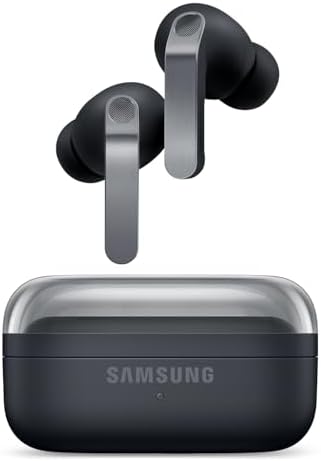
- EXCEPTIONAL AUDIO: Catch details like never before. Designed with a High-Res Audio¹ 24-bit hi-fi codec, the latest Galax…
- TWO-WAY SPEAKER: Enjoy every audio experience to the fullest with two speakers in both Buds, including a tweeter for ric…
- HD VOICE: Enjoy clear phone calls with Galaxy Buds4 Pro and Galaxy S26 Series² —they work together to deliver crisp and …
Design-wise, the Buds4 Pro is for users who want something modern and recognizable without going as visually radical as transparent earbuds.
Best for: Samsung users, clean Android ecosystem styling, stem-style fans.
Design mood: sleek, modern, tech-forward, refined.
Potential drawback: some features are most valuable inside the Samsung ecosystem.
7. Soundcore Liberty 5 Pro Series: Best Smart-Case Aesthetic
Soundcore’s Liberty 5 Pro line stands out because the case itself becomes part of the design. Recent coverage notes that the Liberty 5 Pro has a 0.96-inch exterior screen for settings control, a hands-on review also highlighted the case display differences and praised the series for standout call noise cancellation and feature density.

- Wirecutter’s Top Pick & Guinness World Record: Named the Top Pick in Wirecutter’s “The Best Noise-Cancelling Headphones”…
- Whisper-Clear Calls: Equipped with 10 sensors and the Thus AI Chip, enjoy crystal-clear calls in 100 dB+ noisy environme…
- Instant Pure Silence: 100% more effective noise cancellation than our previous flagship model. Powered by 8 sensors and …
For users who like visible technology, a screen case can feel more advanced than a plain pebble-shaped case.
Best for: feature lovers, smart-case fans, futuristic tech setups, call-heavy users.
Design mood: gadget-forward, functional, smart, dashboard-like.
Potential drawback: a screen case may look busier and less timeless than a minimalist case.
8. Shokz OpenFit / OpenFit 2+ Style: Best Sport-Open Design
Open-ear earbuds have become a major design category. TechRadar’s 2026 open-ear guide describes open earbuds as designs that do not seal the ear canal and may use hooks, clips, or bone-conduction-style approaches; it highlights Shokz OpenFit 2+ as a leading option for comfort, secure fit, sound, and long battery life in the open-ear category. (TechRadar)
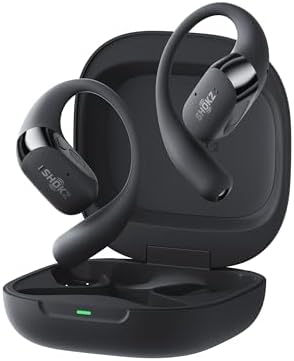
- Detail-Rich Audio, Dolby Audio Optimised Powered by Shokz DualBoost, the OpenFit 2+ ensures bright highs and deep lows. …
- All-Day Comfortable Fit Experience ultimate comfort for extended sessions thanks to our 9.4g lightweight design and Shok…
- Stay Aware, Rain or Shine Shokz OpenFit 2+ is IP55 waterproof, resistant to sweat and splashes for workouts or outdoor a…
This kind of design looks best when the goal is activity, movement, awareness, and comfort rather than hidden minimalism.
Best for: runners, walkers, outdoor users, open-ear comfort buyers.
Design mood: athletic, lightweight, practical, active.
Potential drawback: open-ear designs can look more visible and may leak more sound than in-ear models.
Best Looking Earbuds Comparison Chart
| Earbud Style | Design Personality | Best For | Visual Strength | Watch Out For |
|---|---|---|---|---|
| Nothing Ear / Ear (a) | Transparent futuristic | Aesthetic tech fans | Unique transparent identity | Not subtle |
| Bose Ultra Open | Jewelry-like open-ear | Fashion + awareness | Cuff design | Less isolation |
| Sony WF-1000XM5 | Premium minimal | ANC + professional use | Compact luxury finish | Fingerprints |
| Beats Studio Buds+ | Lifestyle color | Gym, casual fashion | Bold color and transparent option | Visible branding |
| AirPods Pro 3 | Iconic minimal | Apple users | Clean white ecosystem look | Very common look |
| Galaxy Buds4 Pro | Modern ecosystem | Samsung users | Sleek stem + case redesign | Ecosystem dependence |
| Soundcore Liberty 5 Pro | Smart-case tech | Feature lovers | Screen case | Busier aesthetic |
| Shokz OpenFit-style | Sport open-ear | Running/outdoors | Active design language | More visible on ear |
What Is This Guide For?
This guide is for people who want earbuds that look as good as they perform. Wireless earbuds are no longer judged only by battery life, Bluetooth stability, ANC strength, or sound quality. They are now part of everyday style, desk setup culture, fitness gear, travel carry, work communication, and personal tech identity. A pair of earbuds can be technically strong and still feel wrong if the shape is bulky, the case looks cheap, the finish scratches easily, or the color does not match the way you use and carry your devices.
This guide helps you understand what makes the best looking wireless earbuds worth buying. It is not only about choosing the most expensive pair or the most famous brand. Good earbud design is a mix of proportion, comfort, case quality, finish, visibility in the ear, material feel, color, and practical function. A stylish earbud should not only look beautiful in product photos; it should look natural when worn, feel good during long sessions, sit securely in the case, and make sense beside your phone, laptop, smartwatch, charger, and everyday accessories.
This page is designed for readers comparing stylish wireless earbuds, aesthetic earbuds, and best designed earbuds across multiple real-world situations. Some buyers want a clean professional look for work meetings. Others want transparent earbuds that feel futuristic. Some want open-ear fashion earbuds that look like wearable accessories. Others want a premium wireless earbuds design with a beautiful charging case, a smart display, metallic trim, or a luxury black-and-gold finish. The goal is to help you understand which visual direction fits your life without ignoring comfort, performance, and value.
It also covers earbuds for outfit matching. That may sound cosmetic, but earbuds are wearable. A matte black pair can look sharp with workwear. Cream or beige earbuds can feel softer and more lifestyle-oriented. White earbuds look clean and familiar. Transparent earbuds suit users who like visible tech and futuristic styling. Metallic earbuds can feel more premium. Open-ear earbuds can look sporty, active, or fashion-forward depending on the shape. The best choice depends on whether you want your earbuds to disappear visually, complement your outfit, or become a deliberate design statement.
This guide is also useful if you care about desk setups and aesthetic tech. Earbuds often sit beside your laptop, keyboard, phone stand, charging pad, notebook, smartwatch, and monitor. In that environment, the case becomes part of the visual experience. A cheap-looking case can weaken an otherwise beautiful setup, while a compact case with a clean finish, subtle LED, smart screen, transparent lid, or soft matte texture can make your whole workspace feel more intentional. For a broader look at how personal electronics, design, and lifestyle fit together, visit the EarsBud aesthetic tech guide.
This page also helps readers shopping for earbuds with the best charging cases. The case is often the most overlooked part of wireless earbud design, even though it is the object you touch the most. You open it, close it, charge it, place it on your desk, carry it in your pocket, and use it to judge battery status. A good case should look clean, feel compact, protect the earbuds, dock them securely, and communicate battery information clearly. Smart display cases, basic battery screens, minimalist LED indicators, and premium hinge designs all change how the product feels in daily use.
The guide also covers earbuds for gym style, travel style, and professional meetings. For workouts, the best-looking earbuds are not always the smallest; they are the ones that look secure, energetic, and durable. For travel, sleek ANC earbuds with a compact case and premium finish often make more sense. For work calls, earbuds should look clean, discreet, and professional on camera while still offering good microphones and stable connection. For casual daily use, the ideal pair may be affordable, comfortable, and visually simple rather than flashy.
It is also for people who want earbuds that look expensive without necessarily being expensive. Many buyers search for premium-looking earbuds, best earbuds under 100, or cheap earbuds that look good because they want value without the generic gadget look. A product does not need luxury pricing to feel polished. Better proportions, softer colors, smooth case design, subtle branding, and thoughtful details can make affordable earbuds feel more refined.
This guide also addresses futuristic earbud design. Transparent shells, smart charging cases, touchscreen displays, open-ear silhouettes, metallic trims, gemstone-inspired touch buttons, low-profile stems, and ergonomic faceplates are all part of the new visual language of wireless audio. Futuristic earbuds are not just about looking unusual. The best futuristic designs communicate function: battery status, ANC mode, Bluetooth connection, fit stability, touch controls, and device compatibility.
Most importantly, this guide is for anyone who wants earbuds that balance design, comfort, and function. Aesthetic earbuds should still sound good. Stylish wireless earbuds should still fit securely. Premium-looking earbuds should still have useful battery life. Open-ear fashion earbuds should still make sense for your environment. Transparent earbuds should still have reliable Bluetooth. A beautiful charging case should still charge both earbuds consistently.
In simple terms, this guide helps you choose earbuds that satisfy three questions at once: Do they look good? Do they feel good? Do they work well? The best looking wireless earbuds are not only visual accessories. They are wearable audio tools that should match your style, support your routine, and make your daily tech feel more intentional.
Who Needs This Guide?
This guide is for anyone who treats earbuds as more than a small audio accessory. Modern wireless earbuds are wearable tech: they sit on your body, appear in video calls, travel with your phone, rest beside your laptop, match or clash with your watch, and become part of your daily visual identity. That is why the best looking wireless earbuds are not only judged by sound quality. Design, comfort, case aesthetics, color, finish, fit profile, and everyday usability all matter.
You need this guide if you care how earbuds look when worn. Some earbuds sit cleanly and discreetly in the ear, while others stick out, look bulky, or create an awkward side profile. For style-conscious buyers, the shape of the earbud matters almost as much as the sound. A compact in-ear design can look professional and minimal, while open-ear earbuds can feel more like fashion tech or active lifestyle gear. If you want earbuds that look natural in photos, meetings, gym mirrors, travel shots, and everyday outfits, design should be part of your buying decision from the beginning.
You also need this guide if you want earbuds that match your wider tech setup. Many buyers now choose earbuds the same way they choose a phone case, smartwatch band, laptop sleeve, desk mat, keyboard, or charger. White earbuds often fit a clean minimalist setup. Black earbuds feel more professional and discreet. Transparent earbuds lean into futuristic aesthetic tech. Metallic, graphite, gold, silver, and soft beige finishes can make earbuds feel more premium without looking loud. If your earbuds sit next to your phone, laptop, smartwatch, tablet, and charging station every day, their design becomes part of your personal tech environment.
This guide is especially useful if you dislike generic earbuds. Many cheap wireless earbuds look almost identical: plastic shell, basic case, forgettable shape, and no visual identity. A better-designed pair does not always need to be expensive, but it should feel intentional. The best designed earbuds use proportion, surface finish, case shape, button placement, LED location, hinge quality, and color balance to create a more polished product. Even affordable earbuds can look better when the case is compact, the finish is clean, and the earbud faceplate does not look bulky or unfinished.
Gift buyers will also benefit from this guide. Earbuds are one of the easiest tech gifts to buy, but they can feel impersonal if the design is too plain. A pair of stylish wireless earbuds with a beautiful charging case, clean colorway, or distinctive open-ear design can feel more thoughtful. For birthdays, holidays, student gifts, work gifts, travel gifts, and fitness gifts, appearance matters because the recipient will actually wear the product in public. A visually appealing pair feels more personal than a random set chosen only by specs.
This page is also for people who want stylish earbuds for workouts, travel, work calls, commuting, studying, gaming, or everyday listening. Workout earbuds should look energetic and stay secure. Travel earbuds should look premium, feel comfortable, and offer strong battery life or ANC. Work earbuds should look clean on video calls and switch smoothly between phone and laptop. Gaming earbuds may lean more futuristic, with bold shapes or low-latency branding. The right style depends on how and where you use them.
You need this guide if bulky earbuds bother you. Some wireless earbuds have large housings because of bigger batteries, ANC microphones, drivers, or awkward internal layouts. That can make them look heavy in the ear, especially on smaller ears. If you want a cleaner appearance, pay attention to earbud size, stem length, faceplate shape, tip angle, and how far the body protrudes. The most attractive earbuds usually look balanced: visible enough to feel designed, but not so large that they dominate your face.
This guide is also for buyers who care about the charging case. The case is the part you touch most often. It lives in your pocket, bag, desk, car console, nightstand, and travel pouch. A beautiful charging case can make the entire product feel more premium. Look for smooth opening, clean hinge design, compact pocket shape, a clear battery indicator, a well-placed display screen if included, and a finish that resists scratches. Smart display cases, transparent cases, matte black cases, cream cases, metallic cases, and luxury-style black-and-gold cases all create different visual impressions.
If you are choosing between transparent earbuds, white earbuds, black earbuds, metallic earbuds, cream earbuds, open-ear earbuds, and sporty earbuds, this guide helps you compare more than color. Transparent earbuds usually appeal to users who like futuristic tech. White earbuds feel clean and familiar. Black earbuds look professional and understated. Metallic earbuds feel premium. Cream and beige earbuds feel softer and more lifestyle-oriented. Open-ear earbuds look active, modern, and awareness-focused. Sporty earbuds often look stronger and more secure but may feel less formal.
This guide is also for people who want a real balance of aesthetics, comfort, battery life, ANC, call quality, and price. A good-looking earbud should not become uncomfortable after 30 minutes. A beautiful case should not have poor charging reliability. A luxury finish should not distract from weak microphones. A transparent shell should not be the only selling point. The strongest earbuds combine design with practical daily performance: stable Bluetooth, useful battery life, clear calls, secure fit, and a case that feels good to use.
Most importantly, this guide is for readers who see earbuds as part of personal tech style. Your earbuds are not hidden inside a drawer like a spare cable. They are visible, wearable, and repeatedly handled throughout the day. That makes design more important than many buyers realize. The right pair should fit your ears, your routine, your devices, your budget, and your taste.
Benefits of Choosing Stylish Earbuds Carefully
Choosing stylish earbuds carefully is not vanity. It is practical product selection. Wireless earbuds are one of the few tech accessories you wear on your body, carry in public, place on your desk, and use several times a day. When the design is right, the product feels more natural in your routine. When the design is wrong, even good sound quality may not be enough to make you reach for them.
The right aesthetic earbuds can make your everyday carry feel more intentional. A clean pair of wireless earbuds beside your phone, watch, laptop, keys, charger, and case creates a more polished tech setup. This is especially true for people who care about aesthetic tech, desk setups, minimalist accessories, luxury tech, or matching their devices by color and finish. Earbuds are small, but they are visible often enough to influence how your daily gear feels.
Stylish wireless earbuds also look better during video calls, commuting, work sessions, and public use. Many people think only headphones are noticeable, but earbuds are visible in meetings, cafés, gyms, airports, coworking spaces, classrooms, and travel photos. A bulky earbud can look distracting. A clean, compact, well-proportioned design looks more professional and intentional. For work calls, interviews, online meetings, and creator content, the shape and color of your earbuds can subtly change your overall appearance.
Another benefit is matching your wider device ecosystem. If you use a silver laptop, black phone, cream case, gold watch, matte keyboard, or transparent tech accessories, your earbuds can either support that visual language or interrupt it. White earbuds can feel clean and familiar. Black earbuds look more understated. Cream earbuds feel softer and lifestyle-oriented. Transparent earbuds feel futuristic. Metallic earbuds feel premium. Open-ear earbuds feel active and modern. When your earbuds match your phone, laptop, watch, and accessories, your tech feels less random and more cohesive.
Good design can also improve comfort. Stylish earbuds are not only about color. Shape, weight distribution, shell size, stem angle, ear tip position, and how far the earbud protrudes all affect comfort. A better-shaped earbud can reduce pressure, sit more securely, and look smaller in the ear. This matters for long listening sessions, office calls, workouts, running, gaming, travel, and sleep-friendly use. The best looking wireless earbuds usually succeed because their design feels balanced, not because they are simply shiny or expensive-looking.
A carefully chosen pair also makes you more likely to use the earbuds consistently. People naturally use products they enjoy handling. A compact case with a smooth hinge, clean finish, battery display, soft matte texture, or attractive color can make the product feel better every time you open it. If the earbuds look good, feel good, and fit your routine, they become a daily tool rather than another gadget left in a drawer.
Stylish earbuds can reduce the “cheap gadget” effect. Many budget earbuds fail visually before they fail technically: oversized case, shiny plastic, awkward logo placement, visible seams, harsh LED lights, or bulky earbud bodies. A better design does not always require a premium price. Even best cheap earbuds and best earbuds under 100 can look more refined when they have clean lines, subtle branding, simple colorways, and a case that does not feel oversized or toy-like. For value buyers, this is important because appearance affects perceived quality.
The right earbuds can also add personality without becoming loud. Not everyone wants bright colors or aggressive gaming-style shapes. Aesthetic tech can be subtle: a transparent lid, soft beige finish, matte black shell, brushed metallic edge, small display screen, black-and-gold detail, or open-ear silhouette. These details allow you to express taste without wearing something that looks distracting. For people who prefer quiet luxury, minimalist tech, or professional everyday carry, restrained design is often more powerful than flashy design.
Stylish earbuds can fit different environments more naturally. A professional may want compact black or white earbuds for meetings. A runner may prefer open-ear designs or secure sporty earbuds. A student may like transparent earbuds or affordable earbuds with a unique case. A frequent traveler may want sleek ANC earbuds with a premium charging case. A fashion-forward user may prefer metallic finishes, cream tones, or jewelry-inspired open-ear earbuds. The best choice depends on where the earbuds will actually be seen and used.
A strong design also improves perceived value. Two earbuds with similar specs can feel very different if one has a better case, cleaner finish, tighter proportions, and more thoughtful controls. Buyers often judge quality before they hear a single note. The moment they open the case, see the earbud shape, feel the hinge, and notice the finish, they decide whether the product feels basic or premium. That visual and tactile impression matters, especially for affiliate buying guides, product comparisons, and gift recommendations.
Choosing stylish earbuds carefully can also help you keep the product longer. When a pair fits your taste, matches your devices, feels comfortable, and looks good in daily settings, you are less tempted to replace it quickly. This is better for your budget and better for long-term satisfaction. A trendy earbud may feel exciting for a week, but a well-designed earbud with balanced aesthetics and practical performance can stay useful for years.
A well-designed earbud should look good in three places: in your ear, in its case, and on your desk. In the ear, it should look balanced and comfortable. In the case, it should feel organized, protected, and easy to charge. On the desk, it should look like part of your setup rather than a random plastic accessory. That is the real benefit of choosing stylish earbuds carefully: you are not just buying sound, you are choosing a visible piece of everyday technology.
What Makes Premium Earbuds Look Good?
Premium earbuds look good because they feel designed, not assembled. The difference is visible before anyone hears the sound. A well-designed pair has controlled proportions, intentional curves, clean material transitions, balanced weight, attractive faceplates, subtle branding, and a charging case that feels like part of the product rather than an afterthought.
In the world of best looking wireless earbuds, visual quality comes from small decisions: how far the earbud sits out of the ear, whether the stem looks too long or too short, how the case opens, how the LED is placed, whether the finish looks cheap under light, and whether the product matches the lifestyle it is meant for. Premium earbud design is not always loud. Sometimes the most expensive-looking earbuds are quiet, compact, and simple. Other times, they stand out through transparent shells, open-ear cuffs, smart display cases, or luxury metallic details.
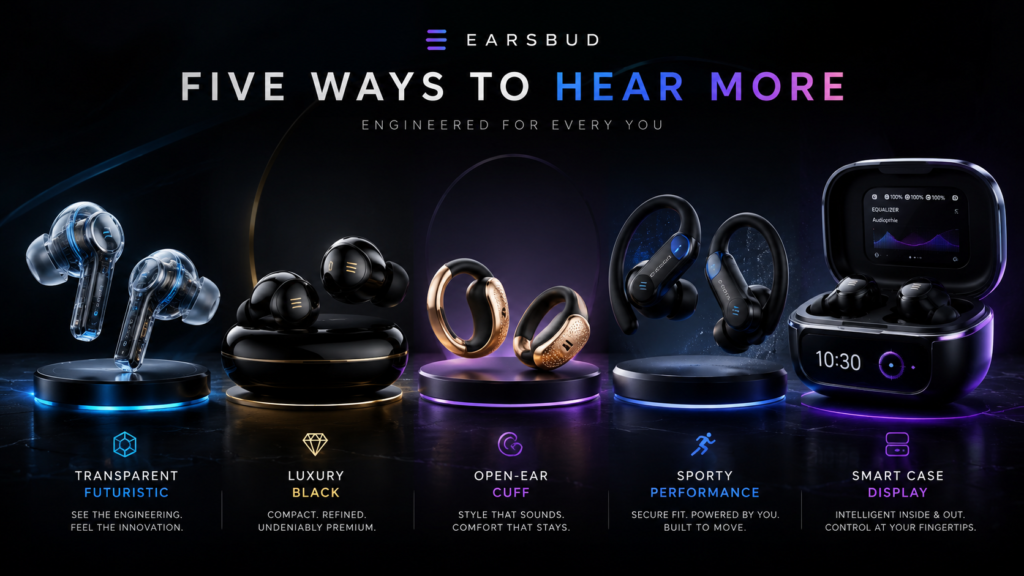
The first design factor is shape.
1. Shape
Shape decides whether earbuds look elegant, bulky, sporty, futuristic, or awkward. It is the foundation of earbud design because every other visual detail sits on top of it. Color can make earbuds more stylish, and materials can make them look more premium, but shape decides the first impression.
A good earbud shape should look balanced in the ear. It should not feel like a plastic lump sitting outside the ear canal. It should not look too large for the face, too heavy for the ear, or too generic to remember. The best earbud shapes feel purposeful: the shell follows the ear naturally, the faceplate has a clean visual identity, and the case shape supports the earbud design rather than fighting it.
Stem-Style Earbuds
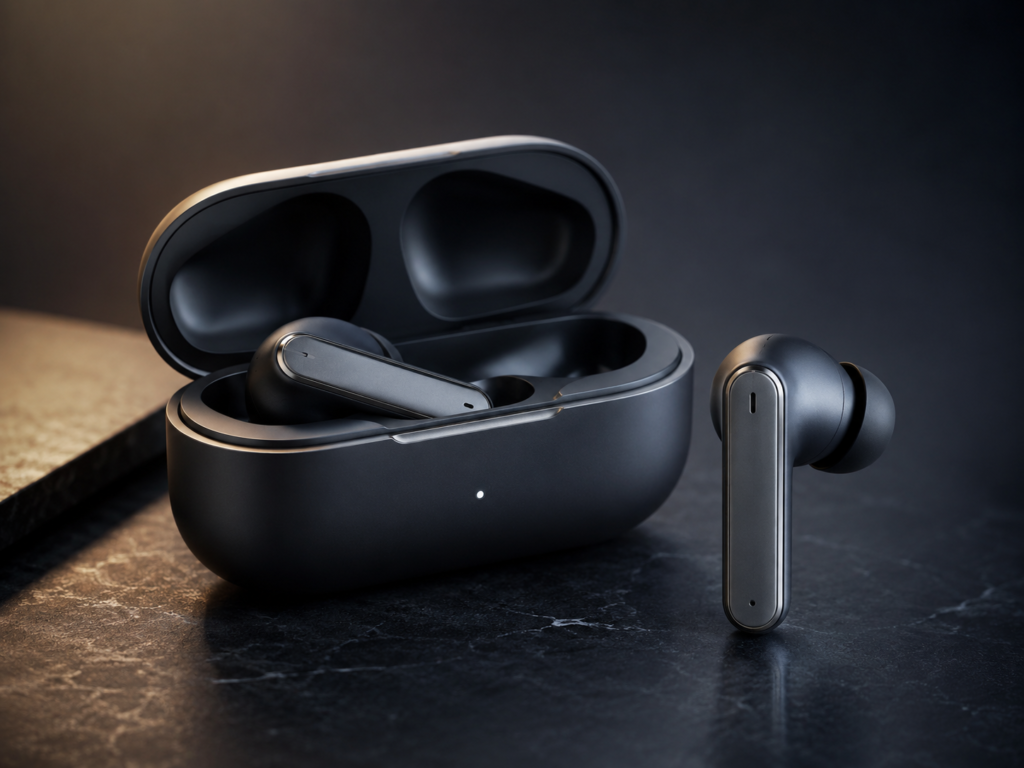
Stem-style earbuds are among the most recognizable wireless earbud shapes. The stem gives designers space for microphones, batteries, antennas, touch controls, and call pickup systems. Visually, a stem can make earbuds look clean and modern when the proportions are right.
Shorter stems often look more refined and less distracting. Longer stems can improve microphone placement but may feel more visible during video calls or public use. A premium stem-style earbud usually has a slim stem, smooth surface, subtle microphone openings, and a faceplate that does not look oversized.
Stem-style earbuds work especially well for users who want earbuds for work calls, commuting, travel, and multipoint Bluetooth use. They can look professional in meetings, familiar in public, and easy to handle when removing them from the case. The risk is that badly shaped stems can look cheap, especially when they are too thick, too glossy, or covered with large branding.
Bean-Shaped Earbuds
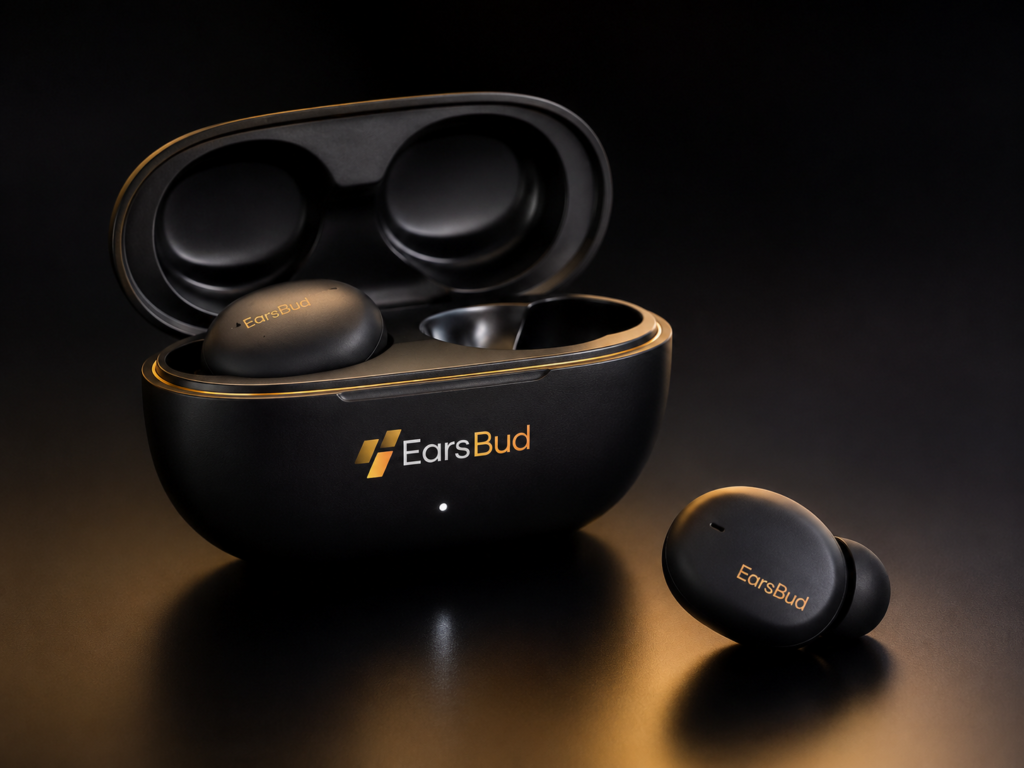
Bean-shaped earbuds have a softer, rounded profile. They usually avoid a visible stem and sit more compactly inside the ear. This shape can look elegant because it feels less mechanical and more organic. A good bean-shaped earbud can look minimal, smooth, and comfortable.
The challenge is proportion. If the bean shape is too large, it can bulge out of the ear and look bulky. If it is too small or too rounded, it may be harder to grip and remove from the case. Premium bean-shaped earbuds usually use gentle curves, controlled thickness, and a finish that does not make the body look like cheap plastic.
This shape is ideal for buyers who want stylish wireless earbuds that look less obvious than stem-style designs. It works well for minimalist earbuds, lifestyle earbuds, and compact in-ear models where the goal is to look clean rather than aggressive.
Compact In-Ear Buds
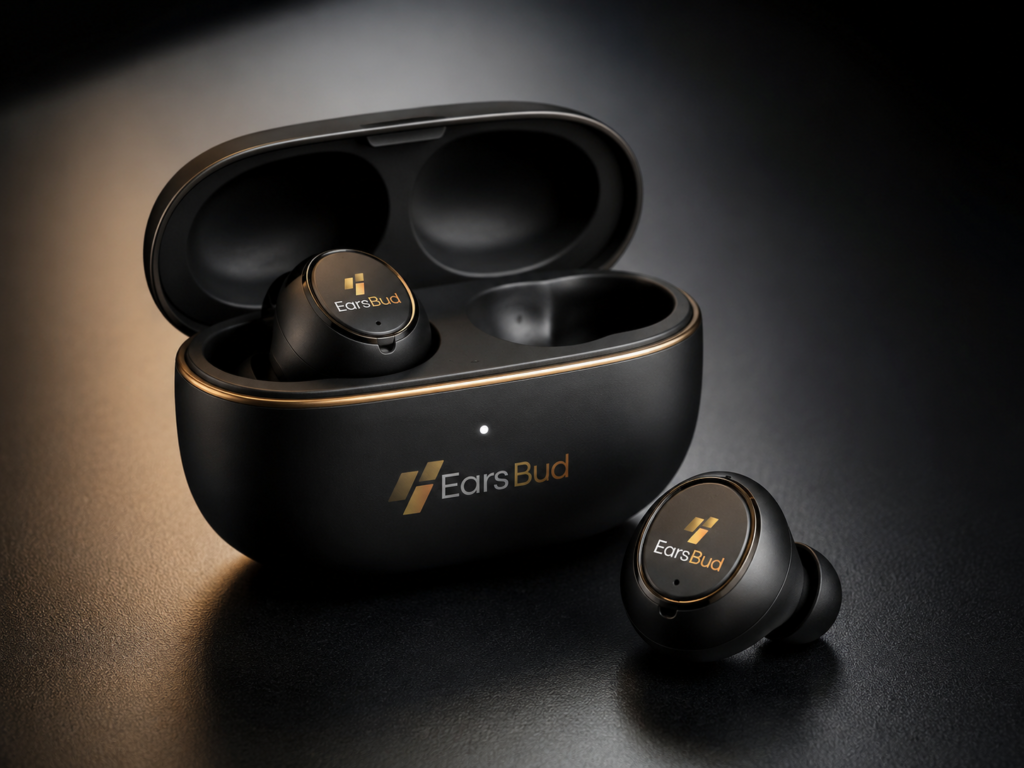
Compact in-ear buds are designed to sit close to the ear with as little visual bulk as possible. This is often the safest shape for people who want earbuds that look professional, discreet, and refined. They are also popular for ANC earbuds because the in-ear seal helps with passive isolation and bass response.
A premium compact in-ear design should have a small outer shell, comfortable tip angle, clean faceplate, and a case that does not feel oversized. The best compact earbuds almost disappear from certain angles while still looking polished up close.
This shape is especially useful for office users, commuters, travelers, and people who dislike earbuds that stick out. For style-conscious buyers, compact earbuds often look better in photographs, video calls, and daily wear because they do not dominate the side profile of the face.
Open-Ear Cuffs
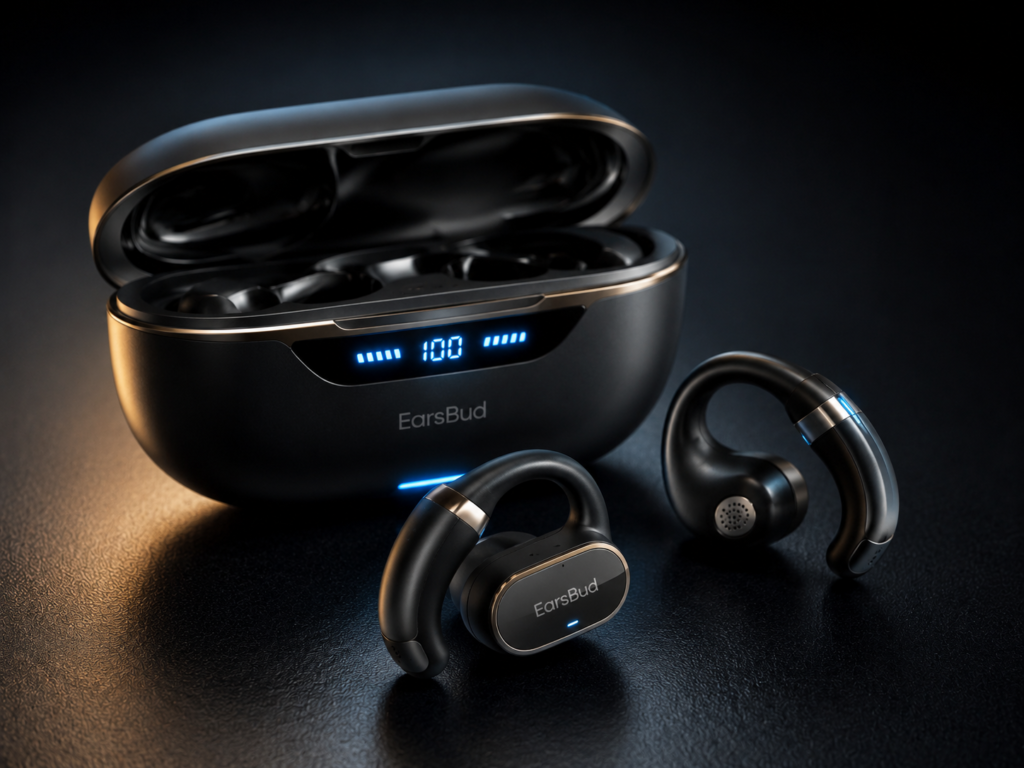
Open-ear cuffs are one of the most fashion-forward shapes in modern wireless audio. Instead of sealing the ear canal, they sit around or near the ear, often looking more like wearable jewelry than traditional earbuds. This makes them appealing for users who want comfort, awareness, and a distinctive aesthetic.
A well-designed open-ear cuff can look elegant, futuristic, and lifestyle-driven. It can pair well with fashion tech, activewear, city commuting, outdoor walking, and users who dislike silicone tips inside the ear. The best versions look intentional, not medical or awkward.
The main visual advantage is uniqueness. Open-ear cuffs do not look like ordinary earbuds, so they can create a strong design identity. The trade-off is that they are more visible. If the shape is too thick or poorly balanced, it can look unusual for the wrong reasons. Premium open-ear cuffs need refined curves, smooth edges, and a comfortable-looking fit.
Ear-Hook Sport Designs
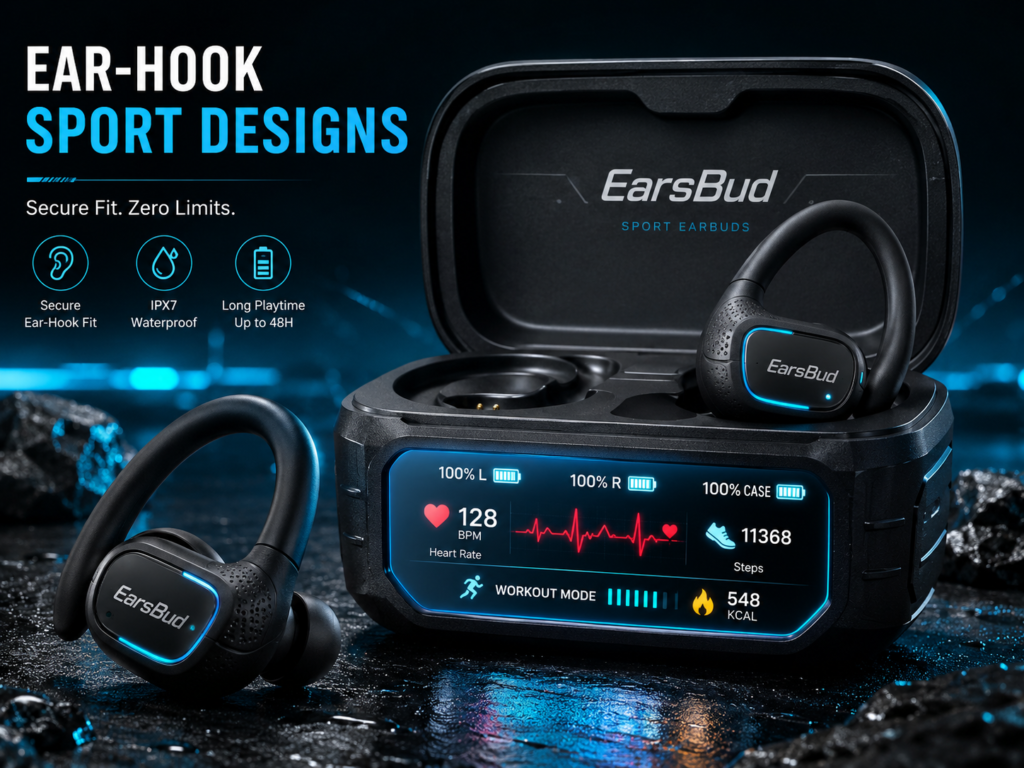
Ear-hook sport designs are built for security. They wrap around the ear to stay stable during workouts, running, cycling, and high-movement activity. Visually, they communicate performance and durability.
This shape is not always the most elegant, but it can look excellent when the design is athletic, balanced, and not overly bulky. A premium sport earbud should look secure without looking heavy. The hook should appear flexible, clean, and integrated with the main earbud body.
Ear-hook designs are ideal for gym users, runners, outdoor training, and people who prioritize fit stability over minimalism. They pair naturally with sporty earbuds, sweat-resistant earbuds, bass-heavy workout earbuds, and open-ear fitness audio. The risk is that large hooks can look too technical or uncomfortable for casual daily use.
Clip-On Open-Ear Designs
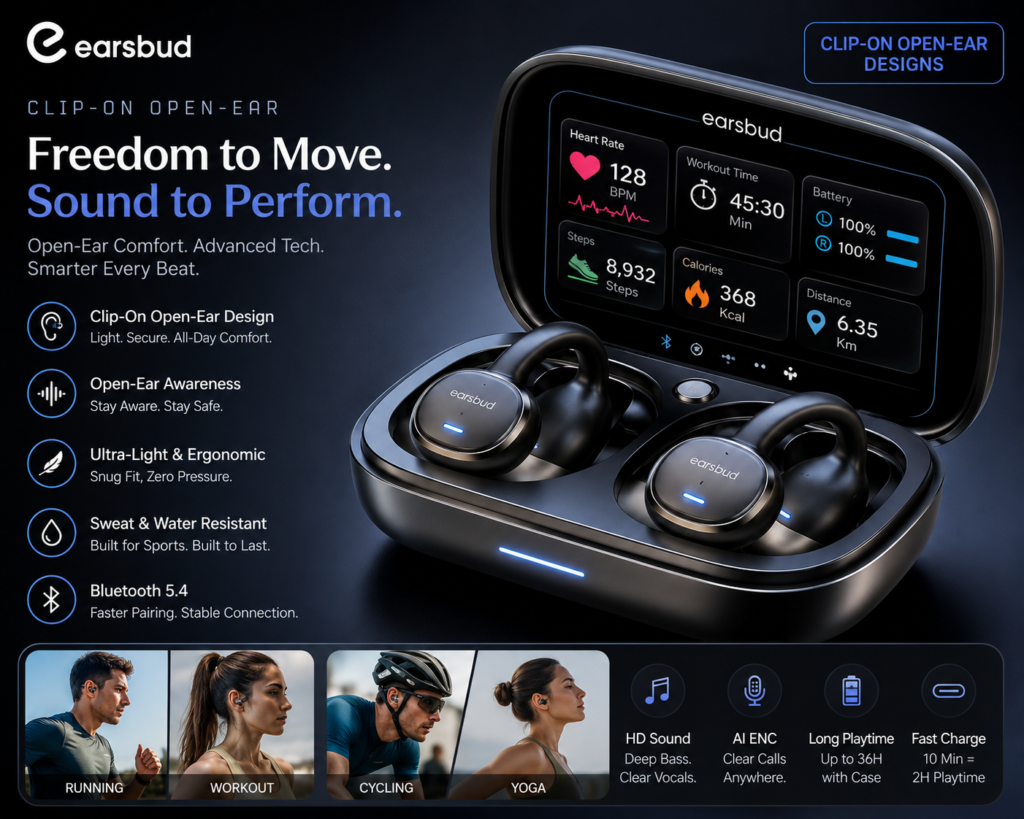
Clip-on open-ear earbuds sit around the ear without sealing the canal. They are often used by people who want awareness, comfort, and a fashionable wearable shape. These designs can look modern and expressive because they borrow from jewelry, cuff accessories, and lifestyle tech.
A strong clip-on design should look light, not bulky. The clamp or clip should feel soft and ergonomic. The visible part should have a clean curve, balanced color, and a finish that works with both casual clothing and activewear.
This shape is useful for people who want earbuds for walking, office awareness, light exercise, commuting, and all-day comfort. It also appeals to users searching for aesthetic earbuds or open-ear fashion earbuds. The visual risk is that clip-on earbuds can look strange if the proportions are too large or if the design does not follow the natural line of the ear.
Transparent-Shell Earbuds
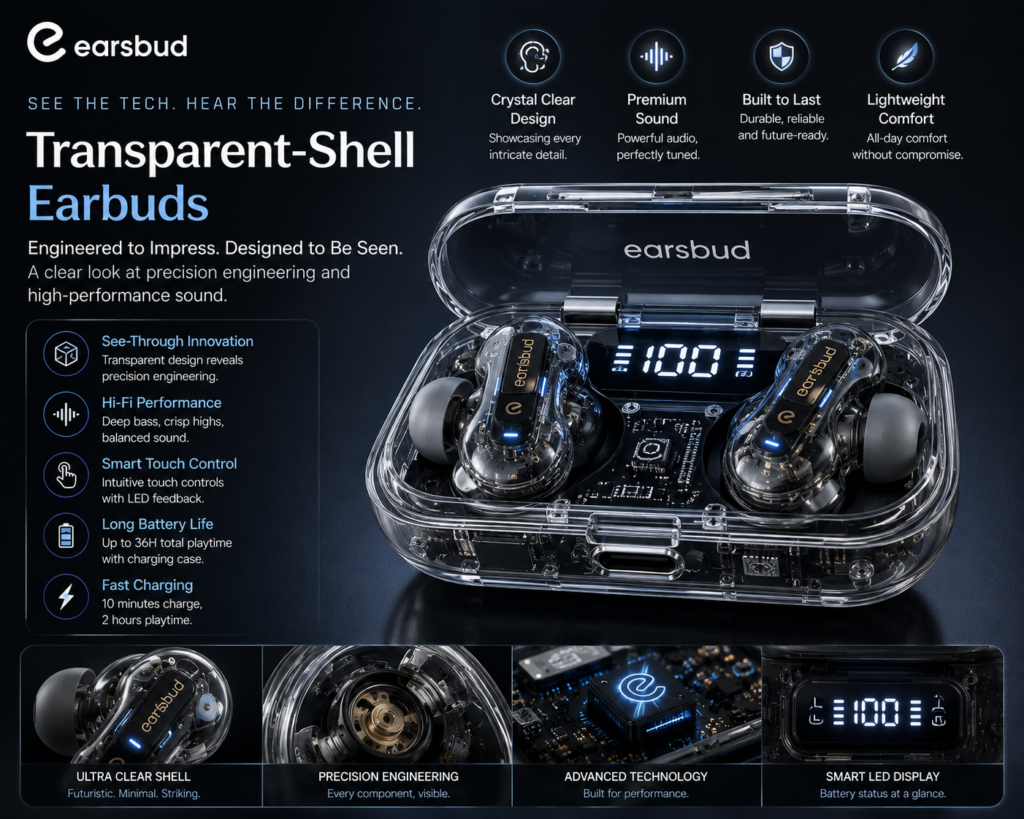
Transparent-shell earbuds use visible internals, translucent panels, or clear plastic housing as part of the design language. This shape category feels futuristic because it shows the product as a piece of technology rather than hiding everything behind a plain plastic surface.
Transparent earbuds can look especially good in desk setups, tech photography, aesthetic tech content, and modern everyday carry collections. They often appeal to people who want earbuds that stand out without relying only on bright colors.
The key is restraint. A transparent shell should look engineered, not messy. The visible components should feel arranged, balanced, and intentional. If the internal layout looks random or the plastic looks cloudy, the design can quickly feel cheap. Premium transparent earbuds usually combine clear materials with black, white, silver, or colored accents for contrast.
Smart-Case Earbuds
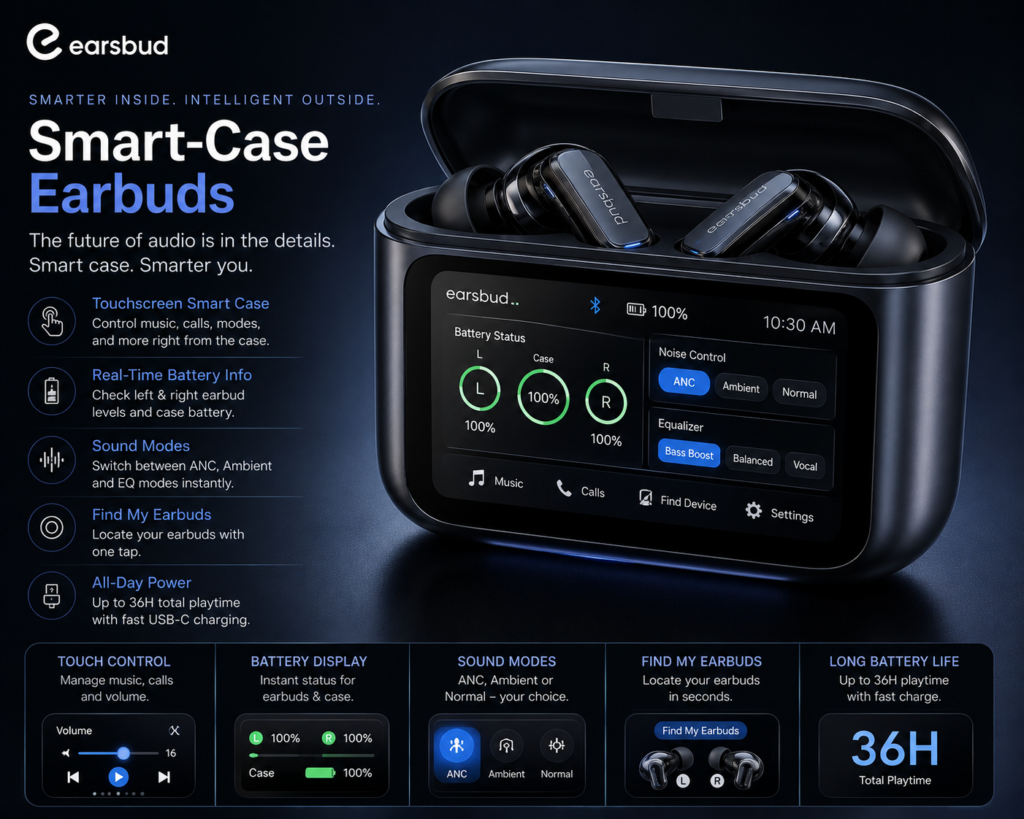
Smart-case earbuds shift part of the design attention from the earbuds to the charging case. The case may include a basic battery screen, touchscreen-style display, LED indicators, app-like interface, or front panel that shows left and right earbud battery levels.
This shape category matters because the case is the part users see and touch constantly. A smart case can make affordable earbuds feel more advanced, especially if the display is clean and useful rather than gimmicky. For premium earbuds, a smart case can create a futuristic product identity.
The case shape must still be practical. A beautiful display does not help if the case is too large, awkward in the pocket, or fragile. The best smart-case designs balance screen placement, hinge quality, pocket comfort, and clear battery information. They look good on a desk, in product photos, and in buying guides because the case itself becomes part of the visual story.
Why Shape Matters More Than Most Buyers Realize
Shape affects appearance, comfort, sound, and usability at the same time. A bulky earbud may look awkward and feel uncomfortable. A compact earbud may look clean but offer less battery space. A stem may improve call quality but change the visual profile. An open-ear cuff may look stylish and comfortable but may not isolate noise well. A smart case may look advanced but increase size.
That is why choosing premium wireless earbuds design is not just about picking the most beautiful product. It is about choosing the shape that fits your face, your ear, your routine, and your environment.
For professional users, compact in-ear or refined stem-style earbuds often make the most sense. For runners, open-ear hooks or sport shapes may be better. For fashion-forward users, open-ear cuffs or transparent earbuds may feel more distinctive. For desk setup enthusiasts, smart-case earbuds and transparent-shell designs can add visual interest. For budget buyers, a simple rounded case and clean compact earbuds can look far better than generic oversized plastic.
The best earbud shape should pass four tests:
It should look natural when worn.
It should fit comfortably for long sessions.
It should match the way you use earbuds.
It should still look good when placed in the case or on a desk.
When those four elements come together, earbuds stop looking like random electronics and start feeling like intentional wearable technology.
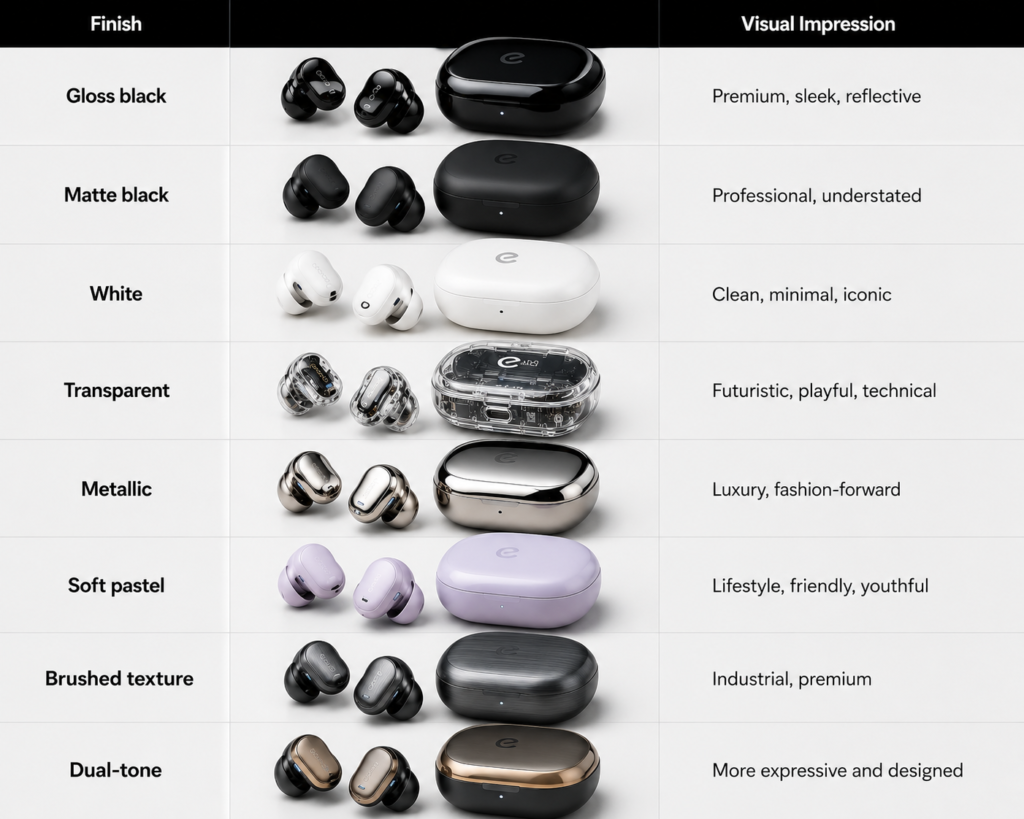
2. Finish
Finish changes the entire personality
3. Case Design
The charging case is not just a storage box. It is the part of your earbuds you see, touch, open, close, charge, carry, and place on your desk every day. A pair of earbuds can sound excellent, but if the case feels bulky, cheap, awkward, or fragile, the whole product feels less premium. That is why earbud case design has become one of the most important parts of modern wireless audio.
A beautiful charging case can make earbuds feel more expensive before you even wear them. The case creates the first impression: the hinge motion, the lid line, the pocket feel, the LED placement, the display, the finish, the texture, and the way the earbuds sit inside their charging bays. In many ways, the case is the “presentation layer” of the product. It turns wireless earbuds from loose tech into a complete everyday-carry object.
For buyers comparing the best looking wireless earbuds, the case should be judged with the same seriousness as the earbuds themselves. The best earbud cases feel compact, durable, smooth to open, easy to pocket, and visually aligned with the earbuds. A poorly designed case can make even premium earbuds feel generic. A well-designed case can make budget or mid-range earbuds feel far more polished.
Slim Profile
A slim earbud case immediately feels more modern. It slips into pockets more easily, sits cleaner in a bag, and looks better on a desk or nightstand. Bulky cases may offer more battery capacity, but they often feel less refined for everyday carry.
The best slim charging case earbuds balance battery life with portability. A case should be small enough to carry without thinking, but not so thin that it compromises hinge strength, charging reliability, or earbud docking. For travel, commuting, work, and gym bags, slimness matters because the case becomes part of your daily pocket system alongside your phone, wallet, keys, and watch.
A slim profile also improves perceived design quality. Rounded edges, controlled thickness, and a low rectangular or pebble-shaped case can make earbuds feel more premium, even if the specs are similar to a bulkier model.
Strong Hinge
The hinge is one of the most underrated signs of quality. A weak hinge makes the case feel cheap immediately. A strong hinge creates confidence. It gives the lid a smooth opening motion, keeps the case aligned, and protects the earbuds from dust, pressure, and accidental opening.
A premium earbud case should open smoothly and close with a clean, controlled snap. The lid should not wobble sideways, feel loose, or make the case seem fragile. For premium wireless earbuds design, hinge quality affects both the user experience and the visual impression.
A strong hinge is especially important for smart-case earbuds, transparent cases, and metallic cases because the case itself becomes a bigger part of the product story. If the hinge feels poor, the whole premium effect collapses.
Clean Lid Line
The lid line is the seam where the top of the case meets the bottom body. It may seem like a small detail, but it strongly affects how polished the case looks. A clean lid line makes the case look intentional. A thick, uneven, or poorly aligned lid line makes the product look cheap.
The best wireless earbuds charging cases have lid lines that follow the shape naturally. On a rounded pebble case, the seam should feel soft and balanced. On a rectangular smart case, the lid line should be crisp and symmetrical. On a transparent case, the lid line should not distract from the internal design.
A clean lid line also matters in product photography. When the case is open, it frames the earbuds. When the case is closed, it becomes the main visual boundary. Good case design should look elegant in both positions.
Small Footprint
Footprint is different from thickness. A case can be thin but still wide. It can be compact but thick. The footprint is the amount of desk, pocket, or bag space the case occupies.
A small-footprint case is easier to live with. It sits neatly beside a laptop, phone, charging pad, or smartwatch. It is less annoying in a jeans pocket and easier to fit into a small pouch or travel organizer. For users building a clean aesthetic tech setup, footprint matters because clutter ruins the visual effect.
The best earbud case designs do not waste space. The earbuds sit securely inside molded charging bays, the battery is integrated efficiently, and the outer shell does not feel oversized. A compact case feels more refined because every millimeter appears intentional.
LED Placement
LED placement can make a case feel clean or messy. A tiny LED in the wrong place can ruin an otherwise beautiful design. A well-placed LED gives useful information without looking like a random dot of light.
For minimalist earbuds, the LED should be subtle: small, centered, and not too bright. For sporty earbuds, a brighter LED may make sense because it communicates charging and readiness. For futuristic earbuds, LED strips, blue accents, or illuminated battery bars can create a stronger high-tech identity.
The key is restraint. The best LED display earbuds and charging cases use lighting as communication, not decoration alone. The light should tell the user something: charging status, pairing mode, low battery, case battery, left/right connection, or reset state.
Screen or Smart Display
Smart display cases are becoming one of the biggest visual trends in wireless earbuds. A screen can show left and right earbud battery levels, case battery, Bluetooth status, ANC mode, sound modes, EQ presets, volume controls, or even “find my earbuds” functions.
A smart charging case display can make earbuds feel futuristic and more interactive. It gives users information at a glance without opening an app. For buyers who like high-tech accessories, a display case can be a major design advantage.
But a screen should be useful, not just flashy. A good smart case display should be easy to read, logically arranged, and bright enough without looking cheap. The best examples feel like a tiny dashboard: battery on one side, sound mode in the center, connection status or controls in another area. Poor examples look cluttered, gimmicky, or too much like a toy.
For smart-case earbuds, the display becomes part of the identity. It shifts attention from the earbuds alone to the complete product system.
Magnetic Lid Feel
Magnets create emotional satisfaction. A clean magnetic closure makes a charging case feel more premium every time you use it. It gives the lid that quiet, confident “snap” that users associate with better engineering.
Magnetic strength must be balanced. Too weak, and the lid feels insecure. Too strong, and the case becomes annoying to open. The ideal magnetic lid feels secure but smooth. It should protect the earbuds in a pocket while still allowing easy one-hand use.
Magnetic docking also matters inside the case. The earbuds should drop into place naturally, align with the charging pins, and begin charging without adjustment. A beautiful case loses credibility if one earbud often fails to charge because the magnets or charging bay are poorly designed.
Pocket Comfort
Pocket comfort is a real design factor. A case may look beautiful on a product page but feel annoying in daily use if it is too thick, sharp-edged, slippery, or oversized. The best portable earbuds case should be easy to carry without creating pressure points.
Rounded corners help. Soft matte finishes help. A compact oval or pebble shape often feels better than a thick blocky case. For commuters and travelers, pocket comfort can matter as much as battery life because the case is always with you.
Pocket comfort also affects how often people use the earbuds. A case that feels easy to carry encourages daily use. A case that feels bulky gets left in a bag, desk drawer, or car.
Scratch Resistance
A charging case is handled constantly. It gets dropped into bags, rubbed against keys, placed on desks, pushed into pockets, and exposed to dust. That makes scratch-resistant earbud case design important.
Gloss black cases look premium but show fingerprints and micro-scratches quickly. Matte black cases hide smudges better and feel more professional. White cases look clean but may show dirt around seams. Transparent cases look futuristic but can reveal scratches and dust more easily. Metallic and brushed texture cases can feel luxury-driven and may hide wear better depending on the finish.
A beautiful case should age well. If it looks premium only for the first week, the design has failed. The strongest case finishes are those that still look good after months of daily handling.
Brand Mark Placement
Branding should feel intentional, not loud. A logo placed too large on the case can make the product look cheap or promotional. A subtle brand mark can make the case feel premium, especially when it is centered, balanced, embossed, debossed, or printed in a low-contrast finish.
For premium earbud case design, brand mark placement should respect the shape. On a rounded case, the logo should sit naturally on the front or top. On a smart display case, branding should not compete with the screen. On a transparent case, the logo should not block the visible internal design. On metallic cases, a small engraved or tone-on-tone mark often looks more refined than high-contrast printing.
Good branding helps the product feel complete. Bad branding makes the case feel like a generic shell with a logo pasted on.
The Case Should Look Good Open, Closed and in Use
A well-designed earbud case should pass three visual tests.
Closed, it should look clean, compact, and easy to carry. Open, it should frame the earbuds beautifully and make docking feel intuitive. In use, it should show useful information clearly, whether through an LED, battery screen, app-like display, or simple charging indicator.
The best cases also match the earbud design. Compact in-ear buds should not come in a giant case. Luxury metallic earbuds should not come in a dull plastic box. Transparent-shell earbuds need a case that supports the futuristic look. Sport earbuds need a rugged but not clumsy case. Open-ear earbuds need larger docking space, but the case should still feel balanced and intentional.
Why Case Design Changes Perceived Value
People often judge wireless earbuds before listening to them. The moment they see the case, they form an impression of value. A beautiful charging case suggests better engineering, better battery management, better durability, and better attention to detail. That perception may not always be perfectly accurate, but it affects buying behavior.
This is why earbuds with the best charging cases stand out in reviews, gift guides, homepage images, and product comparisons. The case is visible in product photos. It is central in unboxing. It appears on desks and in bags. It becomes a miniature brand object.
For EarsBud readers comparing aesthetic earbuds, smart-case earbuds, best looking wireless earbuds, and premium wireless earbuds design, the charging case should be treated as part of the product, not an accessory. The right case makes earbuds feel easier to carry, better to use, more attractive to own, and more likely to stay in your everyday rotation.
A beautiful case can make the earbuds feel premium before you wear them. A poorly designed case can make even good earbuds feel ordinary.
4. Proportion in the Ear
An earbud can look beautiful in product photos but bulky when worn. That is one of the biggest mistakes buyers make when choosing stylish wireless earbuds or premium earbud design. A product may look sleek inside a studio-lit charging case, but the real test happens when it sits in the ear. If the housing protrudes too far, the stem looks too long, or the outer shell overwhelms the side profile of the face, the design can quickly shift from premium to awkward.
Good earbud proportion is about visual balance. The earbud should look like it belongs in the ear, not like it is hanging from it. The best designs balance battery size, acoustic chamber, microphone placement, touch controls, ANC hardware, Bluetooth antenna layout, and ergonomic fit without making the earbud look swollen or heavy. This is why low-profile earbuds, compact in-ear earbuds, and well-shaped open-ear designs often feel more refined than earbuds that simply chase bigger batteries or larger drivers.
Why Earbud Proportion Matters
Proportion affects both appearance and comfort. A large earbud may hold a bigger battery or driver, but it can also create pressure, feel unstable, and look too visible when worn. A tiny earbud may look elegant, but it can sacrifice battery life, microphone performance, or physical controls. The best looking wireless earbuds sit between these extremes.
A well-proportioned earbud should pass three visual tests. It should look natural from the front, clean from the side, and balanced when viewed from behind or slightly above. Many earbuds fail the side-profile test. They look fine in the case, but once worn, they stick out too far from the ear and create a bulky “plugged-in” look. For people who care about aesthetic tech earbuds, video calls, travel photos, gym mirrors, or daily style, that protrusion matters.
Battery Size vs. Visual Bulk
Battery life is one of the main reasons earbuds become bulky. Larger batteries need physical space. That space often appears as a thicker shell, wider faceplate, longer stem, or deeper earbud body. The challenge for designers is to increase playtime without making the product look oversized.
This is especially important in premium wireless earbuds design. A premium earbud should not look like it became large by accident. If the body is bigger, the shape should still feel sculpted, smooth, and intentional. Rounded transitions, tapered edges, and balanced weight distribution can make a larger earbud look less bulky.
For buyers, the key is to avoid choosing battery life alone. A pair with extreme battery claims may be less comfortable or less attractive if the earbud body is too large. The better choice is often a pair with strong enough battery life and better in-ear proportion.
Acoustic Chamber and Driver Placement
Sound quality also affects proportion. Better bass, richer mids, and clearer audio often depend on driver size, chamber design, vent placement, and how the earbud seals in the ear. These components need room. However, a larger acoustic chamber does not automatically mean better sound, and a smaller earbud does not automatically mean weaker audio.
The most attractive sound quality earbuds use internal space efficiently. The driver chamber should support audio performance without creating a huge outer shell. The nozzle angle should guide sound naturally into the ear canal. The silicone tip should sit securely without forcing the main earbud body to stick outward.
A well-designed acoustic chamber feels invisible to the user. You notice the sound, not the size. That is the goal: strong audio performance inside a shape that still looks clean when worn.
Microphone Placement and Stem Proportion
Microphones are another reason earbud shapes vary. Stem-style earbuds often exist because the stem brings microphones closer to the mouth. This can improve call quality, wind handling, and voice pickup. But stem proportion is delicate.
A good stem should look slim, balanced, and integrated into the earbud body. If it is too long, it can look dated or distracting. If it is too thick, it can feel cheap or clumsy. If it is too short, call performance may suffer unless the microphone system is well engineered.
For earbuds for work calls, Bluetooth earbuds for meetings, and multipoint earbuds, stem design can be useful. The best versions keep the stem narrow, use subtle microphone openings, and avoid oversized branding. A refined stem-style earbud should look professional on camera, not like a large accessory hanging from the ear.
Fit Angle and Ear Shape Compatibility
Proportion is not only about size. It is also about angle. The same earbud can look elegant on one person and awkward on another because ear shapes vary. Ear canal angle, outer ear depth, concha size, and ear tip fit all affect how the earbud sits.
A well-designed earbud uses a natural insertion angle. The tip should enter the ear canal without forcing the body outward. The outer shell should rest close to the ear rather than floating away from it. If the angle is wrong, the earbud may look bulky even if it is technically small.
This is why ear tip options matter. A better ear tip fit can make earbuds look smaller and feel more secure. Too large a tip may push the earbud outward. Too small a tip may reduce seal and stability. For comfortable in-ear earbuds, proportion and fit work together.
Faceplate Size and Visual Identity
The faceplate is the visible outer surface of the earbud. It can make earbuds look premium, minimal, sporty, futuristic, or bulky. A small faceplate feels discreet. A larger faceplate can create stronger branding or style, but it must be shaped carefully.
Luxury earbuds often use metallic rings, gemstone-inspired buttons, brushed textures, or glossy panels on the faceplate. Transparent earbuds may show internal parts. Sport earbuds may use textured grip surfaces. These details can look excellent, but only if the faceplate is proportionate to the ear.
A large faceplate with poor curvature can look like a button stuck onto the ear. A well-proportioned faceplate follows the earbud body, catches light cleanly, and looks intentional from multiple angles.
Proportion in Open-Ear and Clip-On Designs
Open-ear earbuds and clip-on designs face a different proportion challenge. They do not hide inside the ear canal, so they are naturally more visible. Their design must look like wearable tech or jewelry rather than medical hardware.
For open-ear wireless earbuds, the loop, cuff, or clip should look light and balanced. A thick open-ear cuff can feel futuristic in product photography but awkward when worn. A thin, well-curved cuff can look more elegant and comfortable. The visible shape should follow the ear’s natural contour and avoid pulling visual attention too far away from the face.
Clip-on open-ear earbuds must also balance clamp size, speaker position, battery space, and comfort. If the clip is too large, it looks heavy. If it is too small, it may not stay secure. The best open-ear proportions look effortless: secure enough for daily movement, but light enough to feel wearable all day.
Sport Earbuds and Secure Fit Proportion
Sport earbuds often use ear hooks, fins, larger shells, or grip textures to stay secure. This can make them look more technical and less minimal. That is not necessarily a problem. Sport earbuds should look strong, stable, and ready for movement.
The challenge is avoiding excessive bulk. A good ear-hook sport design should wrap around the ear smoothly, with the hook feeling integrated rather than attached as an afterthought. The main body should look secure without appearing heavy. The battery section should not make the earbud pull visually downward.
For gym, running, cycling, and outdoor training, proportion should communicate confidence. The earbud should look like it will stay in place. But it should not look so large that it feels uncomfortable before the user even wears it.
How Proportion Affects Perceived Quality
Proportion strongly affects perceived value. When earbuds look balanced, people assume the product is better engineered. When they look awkward, people assume the product is cheap, even if the specs are good.
This is why best designed earbuds often have clean transitions between parts. The ear tip, shell, faceplate, stem, microphone area, and charging contacts feel like one product. Nothing looks randomly oversized. Nothing feels visually disconnected. The case also supports the proportions by holding the earbuds neatly and showing their shape clearly.
A premium earbud should look composed. It should not look like the designers simply packed components into plastic until everything fit.
What to Look for Before Buying
When judging earbud proportion, do not rely only on case photos. Look for images of the earbuds worn in the ear, side-profile shots, and close-up views of the housing. Pay attention to how far the earbud protrudes, whether the stem hangs naturally, whether the faceplate looks too large, and whether the tip angle appears comfortable.
For aesthetic earbuds, the key question is simple: would these still look good when worn, not just when photographed on a desk?
A well-proportioned earbud should:
Sit close to the ear without looking buried.
Avoid excessive outer-shell bulk.
Keep the stem slim if it has one.
Use a natural ear tip angle.
Balance battery size with comfort.
Place microphones without making the design awkward.
Look clean during video calls and public use.
Fit the case neatly without making the case oversized.
The Best Designs Feel Balanced, Not Tiny
Small does not always mean better. Some ultra-compact earbuds are hard to handle, difficult to remove from the case, or limited in battery life. The goal is not to find the smallest earbuds possible. The goal is to find the best proportion for the intended use.
For travel and ANC, slightly larger in-ear earbuds may be acceptable if they offer better noise control and battery life. For meetings, a slim stem may be worth it for clearer calls. For running, a visible ear hook may be better than a tiny bud that falls out. For style-first users, compact faceplates and clean curves may matter most.
The best earbud design balances all of these needs. It gives enough space for battery, microphones, acoustic engineering, and comfort while still looking elegant in the ear. That is the difference between earbuds that merely look good in a product render and earbuds that actually look premium in real life.
5. Brand Identity
Some earbuds are recognizable from across a room. Others are intentionally quiet. Both can be good design depending on the user. Brand identity in wireless earbuds is not only about a logo. It is the complete visual language: shape, color, case design, material finish, lighting, faceplate detail, stem profile, packaging feel, app interface, and the way the product fits into someone’s daily tech style.
A strong earbud brand identity makes the product memorable. It gives the earbuds a recognizable personality before the user reads the spec sheet. Some brands build identity through minimalism. Some use bold logos. Some rely on distinctive stems, transparent shells, luxury materials, open-ear silhouettes, sport hooks, smart display cases, or signature color combinations. In the world of best looking wireless earbuds, identity matters because earbuds are visible wearable tech. They are not just heard; they are seen.
Recognizable Earbuds vs. Quiet Design
There are two major directions in earbud identity: recognizable design and quiet design.
Recognizable earbuds are designed to be noticed. They may have a famous silhouette, strong logo placement, distinctive color, visible stem, transparent casing, metallic ring, smart case screen, LED accent, or unique open-ear shape. These earbuds appeal to users who want their tech to express taste, status, or personality. For people who enjoy aesthetic tech earbuds, futuristic design, luxury earbuds, or fashion-forward accessories, recognizability can be a strength.
Quiet design works differently. It is intentionally subtle. The earbuds may use matte black, soft white, cream, graphite, or a low-profile shape. The logo may be small or tone-on-tone. The case may avoid loud graphics and focus on smooth lines, compact size, and clean proportions. Quiet design appeals to professionals, minimalists, frequent callers, and users who want earbuds that blend into their routine without attracting attention.
Neither approach is automatically better. A bold design can feel premium when executed with restraint. A quiet design can feel luxurious when the proportions and materials are right. The mistake is when earbuds try to look distinctive without having a clear identity, or when minimalist earbuds become so generic that they feel unfinished.
Why Brand Identity Matters in Earbud Design
Brand identity helps users understand what the earbuds are for. A sporty earbud with textured grip, ear hooks, blue LED accents, and a rugged case communicates fitness before you read “workout mode.” A transparent-shell earbud communicates futuristic engineering. A compact matte black earbud communicates professionalism. A soft pastel earbud communicates lifestyle and casual comfort. A black-and-gold smart case communicates premium aesthetic tech.
This visual communication matters because buyers often compare earbuds quickly. On a product grid, many earbuds look similar: small black or white objects inside cases. Strong identity helps a product stand out. It gives the buyer a reason to remember it. For affiliate content, buying guides, comparison tables, and product roundups, recognizable design can improve attention because the reader can instantly separate one style category from another.
Logo Placement and Visual Trust
Logo placement is one of the easiest ways to ruin or improve earbud design. A logo that is too large can make earbuds look promotional or cheap. A logo that is too small may disappear entirely. The best premium wireless earbuds design uses branding with discipline.
On the earbud itself, a small logo or mark can work well on the faceplate, stem, or outer shell. The placement should follow the shape of the product. On stem-style earbuds, vertical branding may look natural if it is subtle. On bean-shaped earbuds, a small centered mark can feel clean. On sport earbuds, branding can be slightly bolder because the design language is more active. On transparent earbuds, branding should not hide the visible internal design.
On the charging case, the brand mark should feel balanced. A centered logo on the lid or front panel can look premium if the size is controlled. On smart-case earbuds, the brand should not compete with the display. On metallic or brushed cases, engraved or tone-on-tone branding often looks more refined than bright printed text.
The goal is not to remove branding. The goal is to make branding feel integrated.
Signature Shape as Brand Identity
Some earbuds are identifiable without reading the logo. That is the highest level of earbud brand identity. The shape itself becomes the brand.
A signature shape may come from a distinctive stem, a compact rounded shell, a futuristic transparent body, an open-ear cuff, an ear-hook loop, a smart display case, or a unique charging bay layout. When a product has a recognizable shape, it feels more designed and less generic.
For best designed earbuds, shape identity is especially powerful because it remains visible across colors and generations. A brand can update materials, improve battery life, add ANC, change the case, or refine the finish while keeping the same visual DNA. This gives users a sense of continuity.
However, signature shape must still serve comfort and function. A unique shape that looks exciting but feels uncomfortable will not create long-term loyalty. The best brand identities are memorable and usable at the same time.
Color as Brand Language
Color is one of the fastest ways to communicate identity. White suggests clean, minimal, familiar, and iconic. Matte black feels professional and understated. Gloss black feels sleek and premium. Transparent shells feel futuristic and technical. Metallic finishes suggest luxury and fashion. Soft pastel colors feel friendly, youthful, and lifestyle-focused. Dual-tone earbuds feel more expressive and designed.
A strong earbud brand does not choose colors randomly. It uses color to support a user type. For example, a professional earbud line may lean into black, graphite, white, or navy. A sport line may use black with blue, neon, orange, or reflective accents. A fashion-tech line may use cream, gold, silver, transparent, lavender, or soft green. A budget line may use simple colors but still avoid looking cheap through better texture and cleaner branding.
For stylish wireless earbuds, color should support the design rather than cover up weak proportions. A bad shape in a trendy color still looks bad. A good shape in a thoughtful color looks intentional.
Case Identity and the Brand Experience
The charging case is often the strongest part of earbud brand identity. Users see the case before they see the earbuds. They open it, close it, charge it, place it on a desk, and carry it in a pocket or bag. A case can make the whole product feel premium, futuristic, sporty, minimalist, or cheap.
A brand identity can be built through case shape: rounded pebble, slim rectangle, rugged sport box, transparent shell, metallic capsule, or smart display case. The hinge, LED placement, screen, lid line, texture, and brand mark all contribute to how the product feels.
Smart-case earbuds are especially strong for brand identity because the display gives the product a visual interface. Battery levels, ANC mode, EQ settings, left/right indicators, Bluetooth icons, and app-like panels can make the case feel like a mini device rather than a simple charger. This creates a strong high-tech identity if the interface looks clean and useful.
The risk is clutter. A smart case should not look like a cheap toy screen. It should have a clear layout, restrained icons, readable battery information, and a premium visual system.
Minimalist Brand Identity
Minimalist earbuds rely on proportion, surface quality, and restraint. There may be little or no visible branding. The case may be clean, compact, and soft-edged. The earbuds may use a simple matte finish, small faceplate, and subtle LED. This identity works well for professionals, students, commuters, and people who want earbuds that fit every environment.
Minimalist design is difficult because there is nowhere to hide mistakes. If the seam is uneven, the plastic looks cheap, the case is too bulky, or the shape is awkward, the product immediately feels generic. Premium minimalism requires discipline.
The best minimalist earbuds look quiet but not empty. They feel finished, not plain. They show design through curvature, texture, hinge quality, case compactness, and how naturally the earbuds sit in the ear.
Luxury and Fashion-Tech Identity
Luxury earbud identity uses materials, finish, and detail to create a more elevated impression. This can include metallic rings, brushed textures, gemstone-inspired buttons, black-and-gold finishes, glossy ceramic-like surfaces, compact cases, or jewelry-like open-ear forms.
The challenge with luxury earbuds is avoiding excess. Too much gold, too much shine, oversized logos, and overly dramatic shapes can make earbuds look less premium, not more. True luxury in earbud design often comes from controlled contrast: matte black with a thin gold trim, cream with soft metallic accents, transparent shell with polished internal layout, or a brushed case with subtle branding.
For users who search for earbuds that look expensive, luxury identity should still include comfort, battery life, Bluetooth reliability, call quality, and practical case design. A beautiful earbud that feels fragile or uncomfortable loses its luxury value quickly.
Sport Brand Identity
Sport earbuds use identity differently. They need to communicate durability, movement, sweat resistance, secure fit, and energy. Ear hooks, wing tips, textured surfaces, rugged cases, waterproof styling, bright LED accents, and fitness display screens can all support a sport identity.
The best sports earbuds design looks active without becoming bulky. A secure fit should be visible, but the product should not look heavy. The case can be more rugged than a lifestyle case, but it still needs pocket comfort and clean battery communication.
Sport identity works best when the design tells a clear story: these earbuds are built for running, gym sessions, cycling, outdoor training, or long workouts. A heart-rate display, step count, workout mode, or calorie indicator can strengthen that story if presented with a high-tech interface.
Futuristic Brand Identity
Futuristic earbuds often use transparent shells, blue LED accents, smart display cases, angular forms, low-latency gaming cues, or app-like interfaces. This identity appeals to users who want their earbuds to feel advanced and different.
The best futuristic design looks engineered, not chaotic. Transparent earbuds should show organized internal components. LED accents should have purpose. Smart displays should feel useful. Case shapes should still be comfortable to carry. Futuristic design fails when it becomes visually loud without adding clarity or function.
For aesthetic tech earbuds, futuristic identity is one of the strongest categories because it connects visual design with the idea of innovation.
Quiet Branding for Professional Use
Some users do not want earbuds that announce themselves. For work calls, video meetings, office settings, and formal environments, quiet branding can be the better design choice. Compact black earbuds, matte finishes, subtle logos, and low-profile stems often look more professional than bold colors or large case branding.
Professional identity is about trust. The earbuds should look reliable, clean, and appropriate. They should not distract during meetings or look like a gaming accessory unless that is the intended style. A small, restrained logo can be enough.
For Bluetooth earbuds for work calls, design should support confidence. The product should look like a serious tool without feeling boring.
How to Judge Earbud Brand Identity Before Buying
When evaluating earbud identity, ask what the product is trying to say. Is it minimal? Sporty? Luxury? Futuristic? Budget-friendly? Professional? Fashion-forward? If you cannot tell, the identity may be weak.
Then ask whether the design supports that message. A sporty earbud should look secure and durable. A luxury earbud should feel refined, not flashy. A minimalist earbud should look polished, not plain. A transparent earbud should look engineered, not messy. A smart-case earbud should have a display that feels useful, not decorative.
Strong identity is consistent across every part of the product: earbuds, case, logo, finish, color, LED placement, hinge, app interface, packaging, and photography.
The Best Identity Matches the User
Earbud design is personal because earbuds are wearable. A bold recognizable design may be perfect for someone who wants expressive tech. A quiet design may be better for someone who wants professional simplicity. A transparent shell may appeal to a tech enthusiast. A black-and-gold case may appeal to a luxury buyer. A soft pastel finish may appeal to lifestyle users. A rugged hook design may appeal to athletes.
The best brand identity is not the loudest one. It is the one that matches the user’s routine, taste, and environment.
Some earbuds should be recognized from across a room. Others should blend in elegantly. Both can be excellent design when the identity is intentional, consistent, and honest about the user it is serving.
Which Earbud Style Fits You?
Minimalist Professional
Choose small black, white, or neutral earbuds with a clean case and subtle logo.
Best style direction:
- Sony WF-1000XM5-style compact earbuds
- AirPods Pro-style white earbuds
- Galaxy Buds-style neutral earbuds
- Matte or soft-gloss finishes
Futuristic Transparent
Choose transparent stems, visible internals, clear cases, or metal accents.
Best style direction:
- Nothing Ear / Ear (a)
- Beats Studio Buds+ transparent version
- Clear-case or translucent design language
Sporty and Active
Choose secure-fit, hook, clip, or sweat-ready earbuds.
Best style direction:
- Open-ear hooks
- Beats sport-style earbuds
- Shokz open-ear designs
- Lightweight case and high IP rating
Luxury Open-Ear
Choose cuff-style or jewelry-like earbuds.
Best style direction:
- Bose Ultra Open-style design
- Metallic finishes
- Minimal visible casing
- Open-ear comfort
Smart Case / Gadget Aesthetic
Choose earbuds where the case screen is part of the appeal.
Best style direction:
- Soundcore Liberty 5 Pro-style screen case
- Dashboard-like cases
- Battery and ANC controls visible on case
Design vs Function: Do Good-Looking Earbuds Perform Well?
They can, but design should not be evaluated alone.
A beautiful earbud still needs:
- Comfortable fit
- Stable Bluetooth
- Good microphones
- Reliable battery
- Clean app experience
- Good charging case
- Strong hinge
- Realistic ANC expectations
- Water/sweat resistance if used outdoors
- Repair/replacement support
- Firmware updates
If a pair looks good but behaves poorly, use how to fix earbuds not connecting.
Best Looking Wireless Earbuds by Use Case
Fashion Earbuds: When Wireless Audio Becomes Part of Personal Style
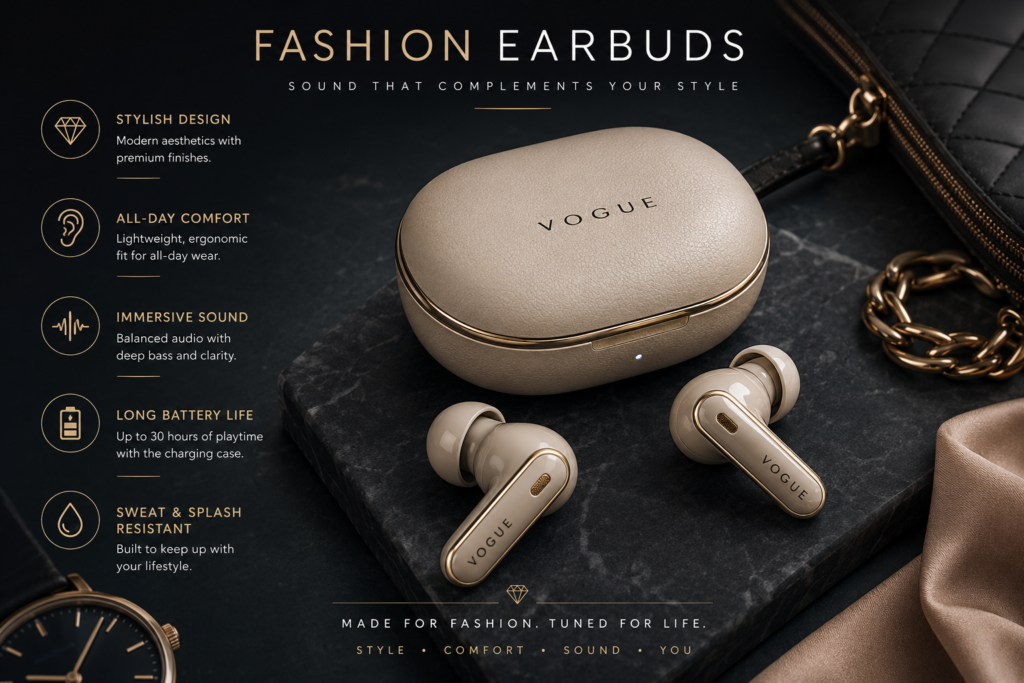
Fashion earbuds are designed to do more than play music. They function as visible accessories that can complement clothing, jewelry, watches, phones, bags, and other personal technology. The best fashionable earbuds balance distinctive design with comfort, dependable audio performance, and a charging case that feels considered rather than purely functional.
Unlike conventional models that try to disappear inside the ear, stylish wireless earbuds may use polished surfaces, transparent materials, sculpted stems, metallic detailing, jewelry-inspired shapes, or carefully selected colors. These visual choices help the earbuds become part of an outfit without making them look impractical or overly decorative.
The strongest fashion earbuds usually combine:
- A recognizable but refined silhouette
- Colors that coordinate with clothing and accessories
- Premium matte, polished, metallic, or transparent finishes
- A compact charging case with a distinctive visual identity
- Comfortable proportions that suit extended wear
- Subtle branding rather than oversized logos
- Consistent design across the earbuds, case, app, and accessories
Color is especially important when choosing the best looking wireless earbuds. Black, white, silver, graphite, and neutral beige finishes are easier to match with professional and everyday clothing. Bright red, blue, green, pink, gold, and transparent designs create a stronger fashion statement and may suit streetwear, gym clothing, creator setups, or expressive personal styles.
Shape also changes how fashionable earbuds appear when worn. Small rounded earbuds create a discreet, jewelry-like look, while stem-style earbuds appear more technical and immediately recognizable. Clip-on and open-ear models can resemble ear cuffs, making them particularly relevant for buyers who want audio technology that feels closer to wearable fashion.
However, appearance should not come at the expense of usability. A visually striking pair can quickly become frustrating if the earbuds feel heavy, loosen while walking, collect fingerprints, scratch easily, or come with an oversized case. The best fashion earbuds retain their appeal during real use by combining thoughtful materials, secure ergonomics, reliable controls, and a case that remains practical in a pocket or bag.
When comparing fashionable earbuds, consider how the design will fit into your normal environment. A restrained metallic model may suit business clothing and office meetings, while a transparent or brightly colored pair may work better with casual outfits, creative workspaces, or trend-focused streetwear. The most successful choice is not necessarily the loudest design; it is the pair that feels visually consistent with how you already dress, work, travel, and use technology.
Best Looking Earbuds for Work and Meetings
Choose earbuds that look clean, small, and professional. Black, white, graphite, silver, and dark blue finishes usually work well.
Best design traits:
- Low-profile shape
- Subtle logo
- Strong microphone system
- Good laptop switching
- Simple case
- No overly loud colors
If you work across a phone and laptop, pair your style choice with Auracast so the earbuds look good and switch cleanly.
Best Looking Earbuds for Gym and Fitness
Gym earbuds can be more expressive. Color, branding, and secure-fit shapes feel natural in active settings.
Best design traits:
- Sporty silhouette
- Sweat resistance
- Secure fit
- Bright or bold color
- Easy-to-grip case
- Good battery
Apple says AirPods Pro 3 are IP57 certified for dust, sweat, and water resistance, and they include heart rate sensing during workouts. (Apple) Beats Studio Buds+ also emphasize ANC, Transparency mode, upgraded microphones, and strong total listening time with the case. (beatsbydre.com)
Best Looking Earbuds for Outdoor Awareness
Open-ear designs often look more like active wear or ear jewelry. Their visual identity is built around visibility and awareness rather than hiding inside the ear.
Best design traits:
- Open-ear hook or clip
- Lightweight body
- Secure fit
- Soft curves
- Weather-friendly build
- Minimal ear-canal contact
For a deeper design-and-function comparison, readers should goto open-ear vs in-ear earbuds.
Best Looking Earbuds for Desk Setups
If your setup includes a mechanical keyboard, monitor light bar, MagSafe stand, tablet, or aluminum laptop, case design matters.
Best design traits:
- Transparent case
- Metallic finish
- Matte black case
- Screen case
- Compact charging dock look
- Strong LED language
- Matching cable and accessory colors
This is where aesthetic tech becomes important: earbuds are not isolated products; they become part of a visual ecosystem with your phone, laptop, watch, charger, desk mat, speakers, and lighting.
Best Looking Earbuds for Travel
Travel earbuds should look premium but remain practical.
Best design traits:
- Compact case
- Scratch-resistant finish
- Strong hinge
- ANC or strong passive isolation
- Easy pocket shape
- Neutral color
- Good battery with case
Sony’s WF-1000XM5 design focuses on a smaller earbud body and smaller case compared with its predecessor, which helps pocketability and travel use. (Sony)
Charging Case Aesthetics: The Most Underrated Design Feature
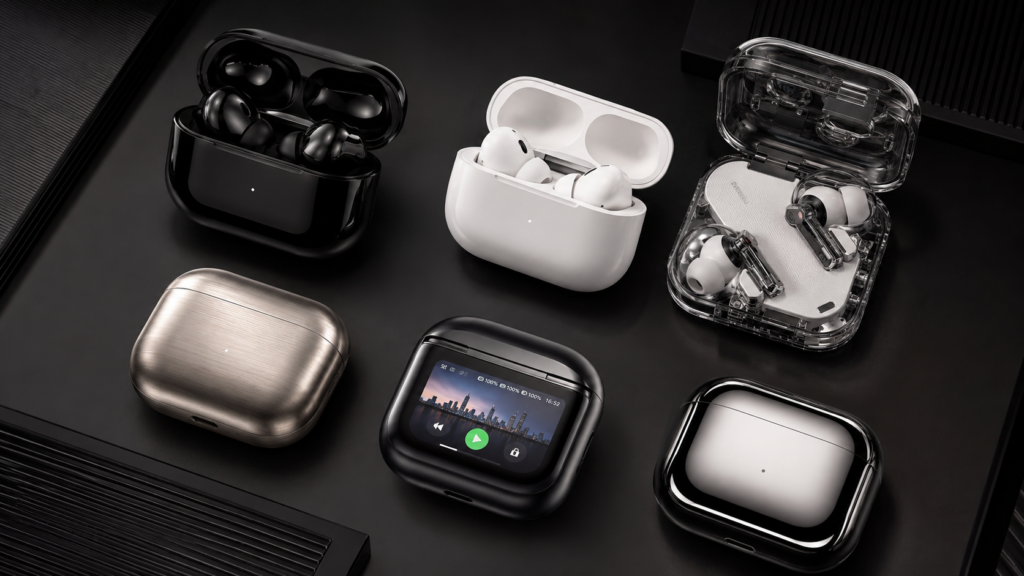
Many buyers focus only on the earbud, but the case is the object you touch most.
What Makes a Case Look Premium?
| Case Feature | Why It Matters |
|---|---|
| Smooth hinge | Feels expensive |
| Compact size | Better pocket carry |
| Screen display | Futuristic and functional |
| Transparent lid | Adds visual interest |
| Wireless charging | Clean desk use |
| Strong magnet | Better daily experience |
| Clean LED placement | Reduces cheap look |
| Scratch-resistant texture | Keeps product looking new |
| Flat bottom | Sits nicely on a desk |
| Good logo placement | Looks intentional |
Soundcore’s newer Liberty 5 Pro series is a strong example of the case becoming a visible product feature because of its built-in display controls and larger AMOLED screen option on the Max model. (The Verge)
Which Earbud Color Looks Best?
| Color / Finish | Best For | Style Impression |
|---|---|---|
| White | Apple-like minimalism, clean setups | Fresh, simple, recognizable |
| Matte black | Professional use | Serious, quiet, modern |
| Gloss black | Premium tech look | Sleek, reflective, luxurious |
| Transparent | Aesthetic tech | Futuristic, playful, engineered |
| Silver | Laptop matching | Clean, metallic, refined |
| Rose gold / pink gold | Fashion-forward styling | Soft luxury |
| Navy / dark blue | Subtle personality | Calm, modern |
| Red / bright colors | Sport and streetwear | Bold, energetic |
| Beige / sand | Lifestyle minimal | Warm, soft, neutral |
| Graphite / gray | Professional tech | Balanced, understated |
Samsung lists Galaxy Buds4 Pro in black, white, and pink gold depending on market availability, showing how mainstream earbud design is moving beyond only black and white. (Samsung Global Newsroom)
Aesthetic Earbuds vs Performance Earbuds
| Buying Priority | Choose Aesthetic-First Earbuds If… | Choose Performance-First Earbuds If… |
|---|---|---|
| Design | You want a visible style statement | You do not care how they look |
| ANC | Moderate ANC is enough | You need top-tier silence |
| Case | Case design matters daily | Case only needs to charge |
| Calls | You need decent everyday calls | You take calls in loud places |
| Battery | You want good all-day use | You need maximum runtime |
| Fit | Comfort and shape matter most | Seal and stability matter most |
| Brand | Visual identity matters | Audio engineering matters more |
| Longevity | You want a product you enjoy carrying | You want specs above all |
The best option is not purely aesthetic or purely technical. The strongest earbuds make good design feel useful.
If battery life matters as much as design, read battery life tips for earbuds.
| User Type | Best Design Direction | Why |
|---|---|---|
| Minimalist | White, black, compact in-ear | Clean and timeless |
| Fashion-forward | Bose Ultra Open-style cuff | Ear jewelry effect |
| Tech enthusiast | Nothing or smart-case earbuds | Visual engineering language |
| Gym user | Beats or sport-open designs | Energetic and secure |
| Office worker | Sony, AirPods, Samsung neutral designs | Professional and low-profile |
| Runner | Open-ear hook design | Visible, secure, aware |
| Traveler | Compact ANC earbuds | Practical and premium |
| Student | Nothing Ear (a)-style value design | Style plus affordability |
| Android power user | Samsung / Nothing / Sony | App and codec flexibility |
| iPhone user | AirPods / Beats | Ecosystem and clean pairing |
What Stylish Wireless Earbuds Usually Cost
| Price Range | Design Quality You Can Expect |
|---|---|
| Under $50 | Basic colors, generic cases, limited finish quality |
| $50–$100 | Better shapes, some transparent or colorful options |
| $100–$180 | Strong design identity, better case, better finish |
| $180–$300 | Premium ANC, advanced case, luxury materials, stronger apps |
| $300+ | Niche luxury, special editions, advanced smart-case features |
Cost Insight
You do not need to buy the most expensive earbuds to get good design. Nothing Ear (a)-style transparent earbuds show how design identity can exist below flagship pricing, while Bose Ultra Open-style designs show how form factor itself can create premium fashion value. (Nothing)
Risks: What to Avoid When Buying Stylish Earbuds
1. Buying Looks Without Fit
The best-looking earbuds are useless if they hurt after 20 minutes.
2. Choosing Glossy Finishes Without Considering Scratches
Gloss looks premium, but it can show fingerprints, dust, and micro-scratches.
3. Ignoring Case Size
A beautiful case that is bulky in the pocket becomes annoying quickly.
4. Overvaluing Transparent Design
Transparent earbuds look great, but sound, microphones, firmware, and battery still matter.
5. Choosing Open-Ear for Noisy Commutes
Open-ear earbuds may look elegant and feel comfortable, but they are not ideal for buses, trains, flights, or loud streets if you need isolation.
6. Choosing In-Ear ANC for Awareness
In-ear ANC earbuds look sleek but may reduce awareness unless transparency mode works well.
7. Buying for Photos, Not Daily Use
Aesthetic tech should improve your life, not only your product photos.
Trends & Aesthetic Technology in 2026
1. Transparent Design Is Now Recognizable
Nothing helped make transparent earbuds a mainstream design language. Its Ear (a) page directly connects signature design with ANC, playback time, and dual connection support. (Nothing)
2. Open-Ear Earbuds Are Becoming Fashion Objects
Bose Ultra Open Earbuds use a cuff-like fit that leaves the ears open, which makes them feel closer to jewelry than traditional earbuds.
3. Smart Charging Cases Are Becoming Design Centers
Soundcore’s Liberty 5 Pro series shows how a case screen can become a major visual and functional feature, with display controls and a larger AMOLED screen option on the Max version.
4. Ecosystem Earbuds Are Becoming More Visually Consistent
Apple, Samsung, Nothing, Bose, Beats, and Sony increasingly use earbuds as part of wider product ecosystems. Color, case shape, finish, app UI, and accessory compatibility all contribute to the final aesthetic.
5. Earbuds Are Moving Toward Wearable Computing
Research into camera-integrated earbuds suggests future earbuds may become broader wearable computing platforms, not only audio devices. The VueBuds research prototype integrated low-power cameras into wireless earbuds for visual intelligence tasks, showing how future designs may become more technically ambitious. (arXiv)
Upcoming Models: Earsbud Original Earbuds Design
Future good-looking earbuds will not only be judged by color and Earsbud knows it.
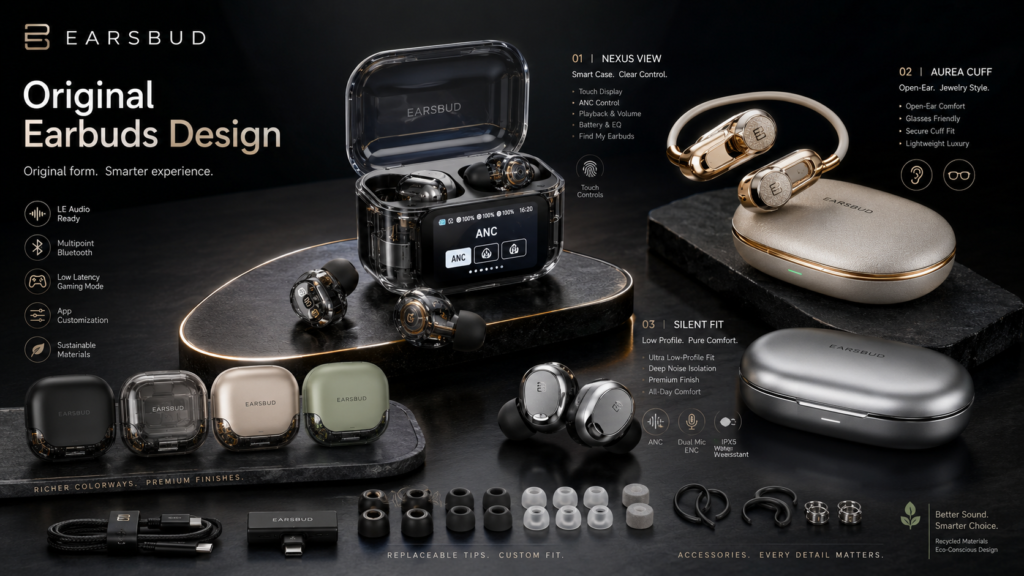
Look for:
- Transparent or semi-transparent case design
- Better scratch-resistant finishes
- Smaller ANC bodies
- Open-ear jewelry-style designs
- Smart case screens
- Case-based controls
- Better colorways
- More sustainable materials
- Lower-profile ear fit
- Glasses-friendly open-ear forms
- LE Audio support
- Multipoint Bluetooth
- App-based customization
- Replaceable ear tips and accessories
- Better case hinge and magnet feel
Design Buying Rule
A stylish earbud should pass four tests:
- It looks good in the ear.
- It looks good in the case.
- It feels good after one hour.
- It still looks good after six months.
FAQs For Best Looking Wireless Earbuds
What are the best looking wireless earbuds?
The best looking wireless earbuds depend on your preferred style. Nothing Ear and Nothing Ear (a) are strong choices for transparent futuristic design. Bose Ultra Open Earbuds stand out for a jewelry-like open-ear cuff shape. Sony WF-1000XM5 offers a compact premium ANC look. Beats Studio Buds+ works well for colorful lifestyle styling. AirPods Pro remains the iconic minimal white option, while Soundcore Liberty 5 Pro-style earbuds appeal to users who like smart charging cases with screens.
Are transparent earbuds worth buying?
Transparent earbuds are worth buying if you like futuristic, visible technology and want earbuds that stand out visually. They are especially strong for desk setups, aesthetic tech collections, and users who want design personality. The main caution is that transparent design should not be the only reason to buy. Check comfort, battery life, ANC, microphones, app support, and warranty as well.
Which wireless earbuds look most premium?
Premium-looking earbuds usually have clean proportions, compact cases, refined finishes, subtle branding, strong hinge feel, and good material texture. Sony WF-1000XM5-style earbuds look premium because of their compact glossy finish. Bose Ultra Open-style earbuds look premium because of their jewelry-like form. AirPods Pro looks premium through minimalism and ecosystem polish. Soundcore Liberty 5 Pro-style earbuds look premium in a more gadget-forward way because of the display case.
Do stylish earbuds have worse sound quality?
Not necessarily. Many stylish earbuds also perform well. The issue is not style itself; it is whether design compromises fit, seal, driver placement, microphone position, or battery size. Transparent earbuds, open-ear earbuds, and compact earbuds can all sound good, but each design has trade-offs. In-ear ANC designs usually provide stronger bass and isolation, while open-ear designs favor comfort and awareness.
What color wireless earbuds should I buy?
Choose white for clean minimalism, black for professional use, transparent for futuristic style, silver or gray for laptop matching, rose gold or pink gold for softer fashion styling, and bold colors for gym or streetwear. If you want earbuds that age well visually, matte black, white, graphite, and dark metallic finishes are usually safer than very bright colors.
People Also Ask about Stylish Earbuds
Are white or black earbuds better looking?
White earbuds look clean, minimal, and recognizable, especially in Apple-style ecosystems. Black earbuds look more discreet, professional, and premium, especially with dark phones, laptops, and desk setups. White is better for a fresh, simple look. Black is better for understated tech style.
What earbuds look best for work?
For work, choose earbuds that are compact, neutral, and professional. Matte black, white, graphite, silver, and dark blue are usually safe. Avoid overly bulky earbuds if you are often on video calls. Also check microphone quality, multipoint Bluetooth, and laptop compatibility because work earbuds need to look good and behave reliably.
Are open-ear earbuds more stylish than in-ear earbuds?
Open-ear earbuds can look more fashion-forward because some use cuff, hook, or clip shapes that resemble wearable accessories. In-ear earbuds usually look more traditional and discreet. Open-ear is better if you want visible style and awareness. In-ear is better if you want minimal visibility, ANC, bass, and sound privacy.
Do charging cases matter for earbud design?
Yes. The charging case is a major part of the design experience because you carry it, open it, place it on desks, and interact with it daily. A premium case should feel compact, durable, balanced, and visually intentional. Smart display cases, transparent cases, and metallic cases can all make earbuds feel more distinctive.
What makes earbuds aesthetic tech?
Earbuds become aesthetic tech when their design contributes to a broader visual lifestyle: desk setup, outfit, phone, laptop, watch, case, lighting, and everyday carry. It is not only about performance; it is about how technology looks and feels in daily life. That is why transparent earbuds, smart cases, soft colorways, and open-ear jewelry-style designs have become more important.
The Best Looking Earbuds Are the Ones You Want to Carry Every Day
The best looking wireless earbuds are not always the most expensive or the most technically powerful. They are the ones whose design fits your life: your clothes, your phone, your desk, your workouts, your meetings, your travel, and your daily listening habits.
Choose transparent earbuds if you love futuristic design. Choose Bose Ultra Open-style earbuds if you want a fashion-forward open-ear look. Choose Sony-style compact ANC earbuds if you prefer quiet luxury. Choose AirPods if you want iconic minimalism. Choose Beats if you want lifestyle color. Choose Soundcore-style smart-case earbuds if you want your case to feel like part of the interface.
Aesthetics matter because earbuds are wearable. But the best design is not just what looks good in a product photo. It is what remains comfortable, reliable, useful, and visually satisfying after months of daily use.