
Sony WF-1000XM6 Review: Exceptional Sound and ANC, but Are They Worth $330?
Affiliate disclosure: Earsbud.com may earn commissions from qualifying purchases made through affiliate links where present, at no additional cost to the buyer. Editorial recommendations are based on product suitability rather than commission rates.
Earsbud.com · Sony WF-1000XM6 · U.S. market · Research verified October 19, 2026
The Sony WF-1000XM6 are among the most capable premium wireless earbuds available, combining powerful noise cancellation, highly customizable sound, improved microphones and long single-charge battery life. They are particularly attractive to Android users, frequent travelers and listeners who want control over how their music sounds.
The catch is the price. At a $329.99 U.S. launch MSRP, the XM6 cost more than several excellent alternatives, while their larger design may be uncomfortable for smaller ears. Battery life and water resistance have also changed little from the previous generation.
Quick Picks — Jump to a Section
- Our Verdict
- Sound Quality
- Noise Cancellation
- Design & Comfort
- Battery Life
- Microphone & Calls
- Sony vs. Bose & Apple
- XM6 vs. XM5
- Price & Value
- Who Should Buy It
- Frequently Asked Questions
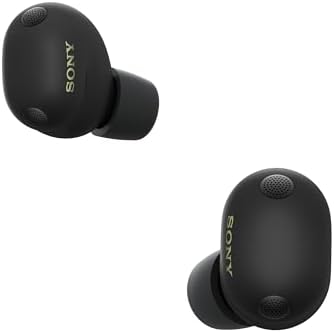
- THE BEST NOISE CANCELLATION: Experience powerful, adaptive noise cancelling that keeps distractions out and your music f…
- CO-CREATED WITH MASTERING AUDIO ENGINEERS: Developed in collaboration with mastering audio engineers, the WF-1000XM6 ear…
- HD NOISE CANCELLING PROCESSOR: The HD Noise Cancelling Processor QN3e is 3x faster than the QN2e (found in our WF-1000XM…
Our verdict: The WF-1000XM6 are a convincing upgrade for owners of older Sony earbuds and buyers who prioritize audio performance, but most satisfied WF-1000XM5 owners can keep their existing pair. iPhone users should also compare Apple’s AirPods Pro 3 before spending more.
Sony WF-1000XM6 Review Verdict
| Category | Editorial assessment |
|---|---|
| Best for | Android users, commuters, travelers and music enthusiasts |
| Not ideal for | Small ears, tight budgets and dedicated gaming |
| Biggest advantage | Excellent isolation combined with flexible audio customization |
| Biggest drawback | Premium pricing and potentially divisive fit |
| Battery endurance | Competitive, with strong independently reported results |
| Value for money | Good for buyers who use its advanced features regularly |
| Overall verdict | One of the strongest all-around flagship earbuds, but not the automatic best purchase |
We have not assigned an Earsbud numerical review score because no standardized first-hand testing dataset has been provided.
What we like
- Outstanding combined passive isolation and active noise cancellation across a broad frequency range.
- A detailed, adjustable sound signature supported by a ten-band equalizer.
- Approximately nine hours and forty minutes of playback in SoundGuys’ controlled battery test.
- LDAC support for compatible Android hardware, alongside multipoint connectivity.
- Meaningful microphone and ambient-sound improvements over the WF-1000XM5.
- USB-C charging, Qi wireless charging and adjustable transparency controls.
What could be better
- The $329.99 reference price is difficult to justify for casual listeners.
- The wider earbud bodies may be uncomfortable or unstable in smaller ears.
- ANC-on and ANC-off listening modes do not produce identical sound tuning.
- IPX4 splash resistance is modest compared with some premium competitors.
- The XM5-to-XM6 improvement is not equally significant in every category.
- Ordinary Bluetooth connections are not ideal for latency-sensitive competitive gaming.
These findings draw on Sony’s specifications and the published evaluations of SoundGuys, RTINGS and What Hi-Fi?.
For additional options across different budgets, see our Best Earbuds reviews.
Sony WF-1000XM6 Specifications
Sony WF-1000XM6 Wireless Noise-Canceling Earbuds
Released February 12, 2026. Available in Black and Platinum Silver at launch.
| Specification | Sony WF-1000XM6 |
|---|---|
| Product type | True wireless in-ear earbuds |
| U.S. launch price | $329.99 |
| Driver | 8.4 mm dynamic |
| Bluetooth | 5.3 |
| Audio codecs | SBC, AAC, LDAC, LC3 |
| Active noise cancellation | Yes, adaptive |
| ANC microphones | Four per earbud |
| Noise-canceling processor | HD Noise Cancelling Processor QN3e |
| Additional processor | Integrated Processor V2 |
| Battery, ANC on | Up to 8 hours, manufacturer-rated |
| Total battery, ANC on | Up to 24 hours including case |
| Fast charging | Up to 60 minutes playback from 3 minutes charging, Sony claim |
| Charging | USB-C and Qi wireless |
| Multipoint | Two devices |
| Equalizer | 10-band EQ |
| Water resistance | IPX4 |
| Earbud weight | Approximately 6.2 g each |
| Colors at launch | Black, Platinum Silver |
| Companion app | Sony Sound Connect |
| Wireless lossless audio | Not universally supported; depends on codec and source |
| Latest identified firmware | Version 2.0.5, October 15, 2026 |
Sources: Sony’s specifications, support pages and contemporary product documentation; measurements and characteristics cross-checked against independent publications.
Design and Comfort: A Better Grip, but Not Necessarily a Better Fit
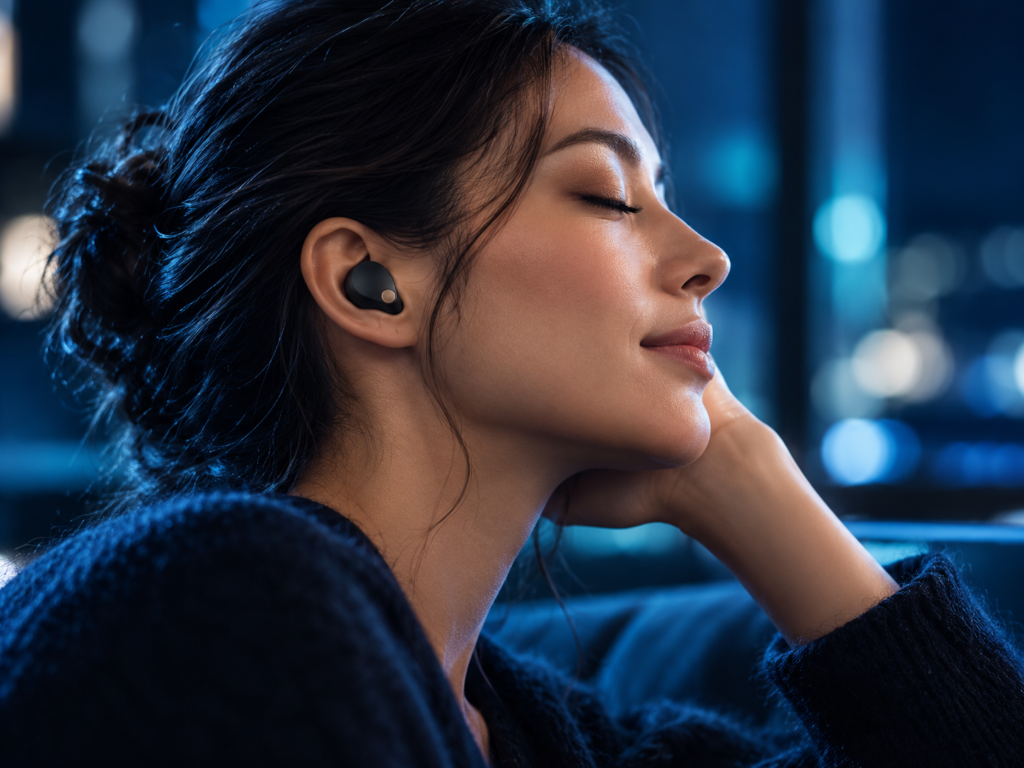
Sony has considerably revised the physical shape of its flagship earbuds. The WF-1000XM6 move away from the rounder, glossy appearance of the XM5 toward a more elongated design with a matte, textured finish.
That change addresses a practical problem: tiny, slippery earbuds can be awkward to remove from their charging case and position inside the ear.
Sony also redesigned the earbud’s internal ventilation structure to help reduce the occlusion effect—the sensation of hearing your own footsteps, chewing or voice amplified inside your head when your ears are sealed.
These changes are meaningful, but shape and size are not the same thing. An earbud can become easier to grip while becoming less comfortable for a particular ear.
RTINGS found that the XM6’s larger design may cause fit problems in smaller ears, including instability during movement.
Why ear-tip fit matters more than many specifications
The WF-1000XM6 use noise-isolating ear tips designed to create a strong acoustic seal.
A good seal has three consequences:
- It preserves low-frequency bass that otherwise escapes.
- It provides passive isolation against outside sounds.
- It allows the active noise-canceling system to operate under more predictable acoustic conditions.
An imperfect seal can make expensive earbuds sound thinner and block less noise, even when the electronics are functioning correctly.
The best approach is to try every supplied tip size rather than automatically selecting the size used with a previous pair of earbuds. Different ear-canal shapes may even require different tip sizes for the left and right ears.
Are the WF-1000XM6 comfortable for long listening sessions?
They can be, provided their larger shells fit the outer ear properly.
Sony’s redesigned ventilation may reduce pressure-related sensations for some wearers, and its foam-style tips help distribute contact within the ear canal.
However, the tips also create a relatively substantial seal. Someone sensitive to in-ear pressure may still prefer conventional silicone tips or a less intrusive earbud design.
Comfort after five minutes does not necessarily predict comfort after three hours. The most useful fit assessment includes extended listening, walking, speaking and jaw movement.
Build quality and water resistance
The WF-1000XM6 carry an IPX4 water-resistance rating, meaning they are designed to withstand water splashes.
That is useful for sweat, light rain and everyday commuting. It is not certification for swimming, immersion or pressurized washing.
The X in IPX4 also means the rating does not specify tested dust protection.
Both Sony and independent reviewers identify IPX4 as a continuing limitation relative to some flagship competitors.
Sound Quality: Detailed, Full-Bodied and Unusually Adjustable
Sound quality is one of the Sony WF-1000XM6’s strongest reasons to exist.
The earbuds use a redesigned 8.4 mm driver, updated processing and audio tuning developed with input from professional mastering engineers. Those design features do not, by themselves, prove audio fidelity. Independent acoustic measurements give a more useful indication of the audible result.
SoundGuys’ frequency-response analysis describes a generally balanced presentation with some bass and lower-midrange emphasis, along with additional energy in parts of the treble. RTINGS similarly reports a warm tonal balance with comparatively even midrange reproduction.
Bass: Powerful without requiring exaggerated tuning
Bass quality is more complicated than how loudly an earbud reproduces low notes.
Useful bass reproduction requires adequate extension into the sub-bass frequencies, controlled energy in the mid-bass, and sufficient separation from the lower midrange.
In the WF-1000XM6, the published measurements indicate an elevated low-frequency response. This suggests that kick drums and basslines should sound substantial without necessarily overwhelming vocals.
However, Sony’s bass presentation changes according to whether ANC is enabled.
That matters especially for listeners who switch between quiet indoor listening and noisy outdoor environments.
Midrange: The part of the spectrum that makes music understandable
The midrange carries much of the information needed to recognize voices, guitars, piano notes and other instruments.
If an earbud exaggerates bass and treble while recessing the midrange, music may initially sound exciting but become less natural over time.
RTINGS reports relatively flat midrange response and strong channel matching in the WF-1000XM6. SoundGuys also identifies good vocal and instrumental balance in its acoustic evaluation.
This makes the XM6 especially promising for listeners who move frequently between podcasts, vocal recordings, jazz, acoustic music and modern pop.
Treble: Detail versus listening fatigue
Treble represents the upper portion of the audible frequency spectrum. It contributes to cymbal definition, vocal consonants and the fine edges of instrumental sounds.
Too little treble can make a recording seem dull. Too much energy in narrow frequency regions can make certain consonants or cymbals sound sharp.
SoundGuys identifies some added emphasis around the upper treble, but its overall assessment remains favorable.
The ten-band EQ is a useful advantage here: users can adjust specific frequency regions rather than accepting the factory tuning. Any adjustments should be incremental, because hearing sensitivity and ear-canal acoustics differ substantially between people.
The hidden difference: Sound changes with ANC enabled
Original analysis of published measurements
One of the more interesting findings comes from SoundGuys’ frequency-response research: the WF-1000XM6 do not maintain exactly the same tonal response with active noise cancellation switched on and off.
In particular, enabling ANC increases the prominence of bass and parts of the lower midrange.
This creates a subtle purchasing consideration.
An earbud that sounds excellent while sitting quietly at home with ANC disabled may have a fuller, warmer character once ANC is activated on a crowded train.
Neither setting is necessarily wrong. The important issue is whether the listener prefers one presentation consistently.
It also means that equalizer recommendations should specify the listening mode used to develop them. A supposedly universal XM6 EQ preset may behave differently when ANC is switched off.
Soundstage, imaging and instrument separation
Soundstage describes the impression that sounds occupy a space rather than originating from one small point. Imaging describes how precisely individual sounds appear positioned within that space.
In-ear earbuds have physical limitations compared with traditional stereo speakers, but appropriate frequency response, channel matching and processing can support a convincing sense of separation.
SoundGuys’ published multidimensional audio-quality assessment gives the Sony an overall MDAQS result of 4.8 out of 5, including an immersiveness result of 4.5. These are third-party model-based assessments, not Earsbud listening scores.
The published evidence supports treating the XM6 as a strong music-listening product, although spatial perception remains subjective and varies with recordings and individual hearing.
Does LDAC make the WF-1000XM6 sound better?
The Sony WF-1000XM6 support LDAC, a Bluetooth audio codec capable of higher data rates than conventional SBC and many AAC configurations.
But the presence of LDAC does not guarantee an audible improvement in every listening situation.
A high-quality source, compatible transmitting device, suitable connection conditions and appropriate playback configuration all matter.
Furthermore, LDAC is still a lossy Bluetooth codec. It should not be confused with an unconditional lossless signal path.
For most users, the largest audible differences may come from the ear-tip seal and EQ settings rather than changing from a competent AAC connection to LDAC.
Active Noise Cancellation: How Much Noise Do the WF-1000XM6 Actually Remove?
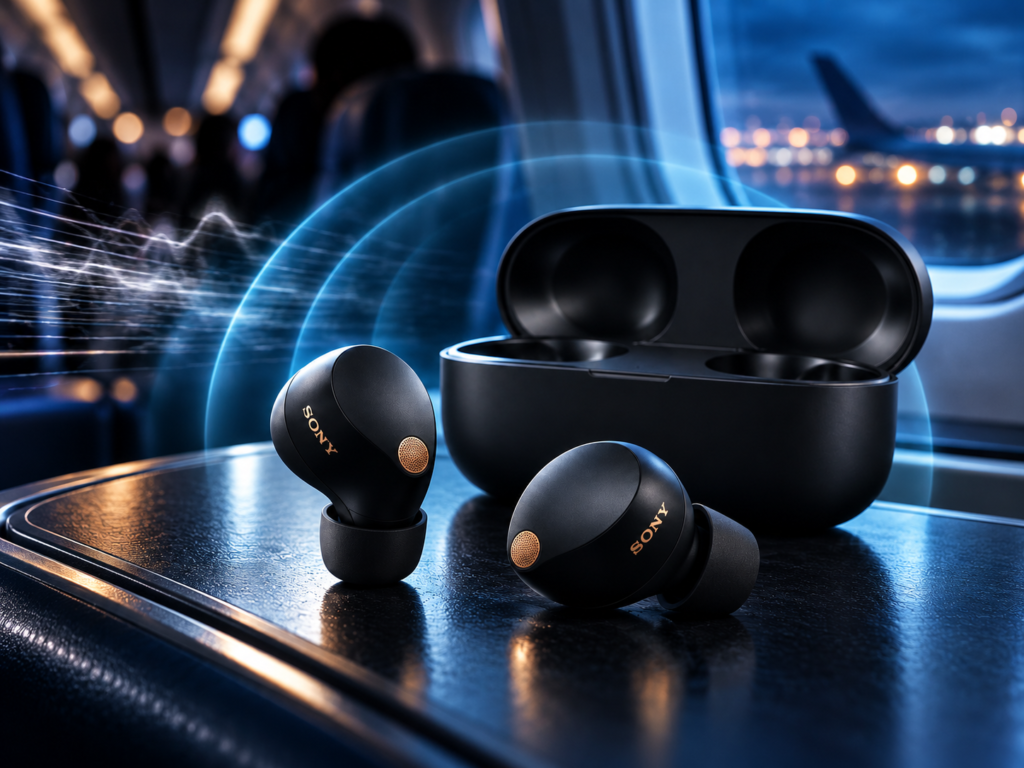
The WF-1000XM6’s noise reduction is a major selling point.
Sony upgraded the system to four microphones per earbud and introduced its QN3e noise-canceling processor. Its advertised noise-cancellation improvement over the XM5 is 25%, according to launch documentation. That figure is a manufacturer claim, not directly interchangeable with results from another test methodology.
Independent ANC measurements
SoundGuys reports the following average external-noise attenuation figures under its testing methodology:
Average reduction in perceived loudness
SoundGuys published results; same review methodology. Higher is better.
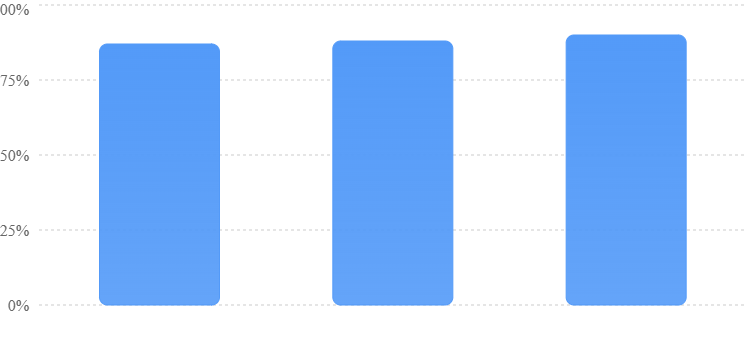
Third-party measurements: SoundGuys. Values describe its combined attenuation testing, not a separately measured ANC-only contribution.
The XM6 produces an excellent measured outcome, but the comparison deserves care.
An increase in average noise attenuation from 87% to 88% represents a one-percentage-point improvement.
To understand the relative difference, consider the proportion of noise remaining after attenuation:
- Sony WF-1000XM5: 13% residual noise (100% − 87%)
- Sony WF-1000XM6: 12% residual noise (100% − 88%)
Calculating the relative reduction:
Relative reduction = (Difference in residual noise ÷ Original residual noise) × 100
(13 − 12) ÷ 13 × 100 = 7.69%
Original analysis: Under this simplified interpretation of the published percentages, the XM6 leaves approximately 7.7% less residual loudness than the XM5.
What this means for buyers: Although the numerical improvement appears modest, the XM6 demonstrates a measurable advantage under the published testing methodology. However, these percentages should not be interpreted as direct measurements of acoustic energy or sound pressure. Actual perceived improvements depend on noise frequency, ear-tip fit and environmental conditions.
This calculation is not a new acoustic measurement. Nor does it disprove Sony’s advertised 25% improvement: the two figures can involve different frequency weighting, test conditions and definitions of noise reduction.
The main takeaway is that Sony’s generational ANC improvement is real in the independently published research, but it should not be interpreted as a dramatic advantage in every listening environment.
Low-frequency noise: Airplanes, buses and air conditioners
ANC systems often perform especially well against sustained low-frequency sounds, such as engine rumble and ventilation systems.
SoundGuys reports particularly strong attenuation around 100 Hz. RTINGS also describes excellent isolation from low-frequency environmental sounds.
This makes the Sony a strong candidate for travelers who regularly face persistent mechanical noise.
Voices, conversations and office distractions
Human speech spans a broad range of frequencies and changes rapidly.
Low-frequency components of a voice may be reduced effectively, while certain midrange details remain perceptible. This is why even very powerful ANC earbuds rarely create complete silence in a busy café.
The XM6’s foam-style tips contribute meaningful passive isolation, especially against some higher-frequency sounds.
That distinction matters: a person may experience excellent combined isolation without all of that reduction coming from active electronic cancellation.
Sudden and unpredictable sounds
A door slamming, dropped object or car horn is fundamentally different from a continuous engine hum.
Short-duration sounds provide less opportunity for a cancellation system to adapt. Passive isolation may contribute more strongly in these circumstances, while active cancellation can vary with the sound’s frequency and timing.
Do not expect the WF-1000XM6—or any conventional consumer ANC earbuds—to eliminate every sudden noise.
Is Sony’s ANC better than Bose’s?
The answer depends on frequency, fit and testing methodology.
SoundGuys’ comparison favors Sony’s average measured attenuation, while What Hi-Fi?’s listening-based comparison gives Bose an advantage in some low-frequency situations. RTINGS finds both products excellent, with differences in comfort, seal and microphone performance.
These findings are not necessarily contradictory.
One product can perform better across a broad weighted average while another suppresses a particular type of low-frequency noise more effectively.
For someone buying earbuds exclusively for flying, fit and airplane-noise performance are more important than a single aggregate percentage.
Transparency Mode: How Naturally Can You Hear Your Surroundings?
Sony includes adjustable ambient-sound functionality, allowing outside sounds to pass through the microphones and into the earbuds.
The XM6 offers 20 levels of ambient-sound adjustment and a voice-focused passthrough option, according to SoundGuys’ product evaluation.
This flexibility is valuable when the same earbuds are used across several environments.
At a low ambient setting, the listener can maintain some environmental awareness without fully exposing every background sound. At higher settings, the system lets more outside sound through.
Voice passthrough can help when making a brief purchase at a store or speaking to a colleague.
However, transparency mode should not be treated as identical to natural unaided hearing. Microphone placement, digital processing, wind and fit can influence how outside sounds are perceived.
For road crossings or situations requiring full awareness, removing an earbud may still be the safer option.
Microphone and Call Quality: A Meaningful Upgrade for Work
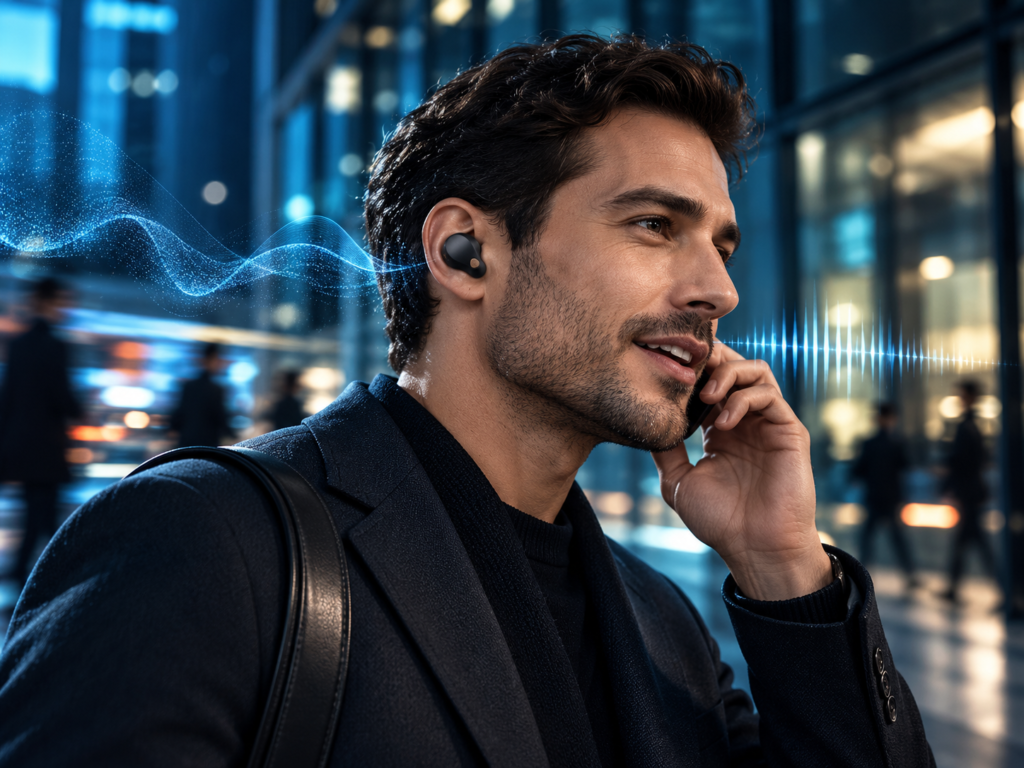
Sony has invested in microphone processing for the WF-1000XM6.
The company combines multiple microphones, beamforming techniques and a bone-conduction sensor intended to help identify the wearer’s voice separately from ambient noise.
Sony Pakistan
The aim is straightforward: preserve understandable speech while suppressing competing sounds.
Quiet indoor calls
In quiet conditions, modern flagship earbuds can usually capture intelligible speech without major difficulty.
The more meaningful difference between products is often voice naturalness: whether speech retains adequate low-frequency body, clear consonants and consistent volume.
RTINGS reports improved voice detail and clarity compared with the XM5, although it does not treat the XM6 microphone as flawless.
Busy offices and background conversations
Beamforming attempts to emphasize the direction of the wearer’s voice while reducing sound arriving from elsewhere.
The technology is helpful, but background voices are challenging because they share many frequency characteristics with the speaker’s own voice.
Sony’s processing is promising for work calls, but buyers should not assume that every nearby conversation will disappear.
Traffic and wind noise
Outdoor calling is more demanding.
Microphones must distinguish speech from low-frequency wind turbulence, traffic noise and occasional loud interruptions.
SoundGuys reports strong outdoor microphone performance. RTINGS is more cautious, noting that very loud environmental sounds can sometimes interfere with voice capture.
The safest conclusion is that the XM6 represents a meaningful upgrade for calls over the XM5, but microphone processing can still struggle with extreme background noise.
Battery Life: Sony’s Eight-Hour Claim Versus Independent Testing
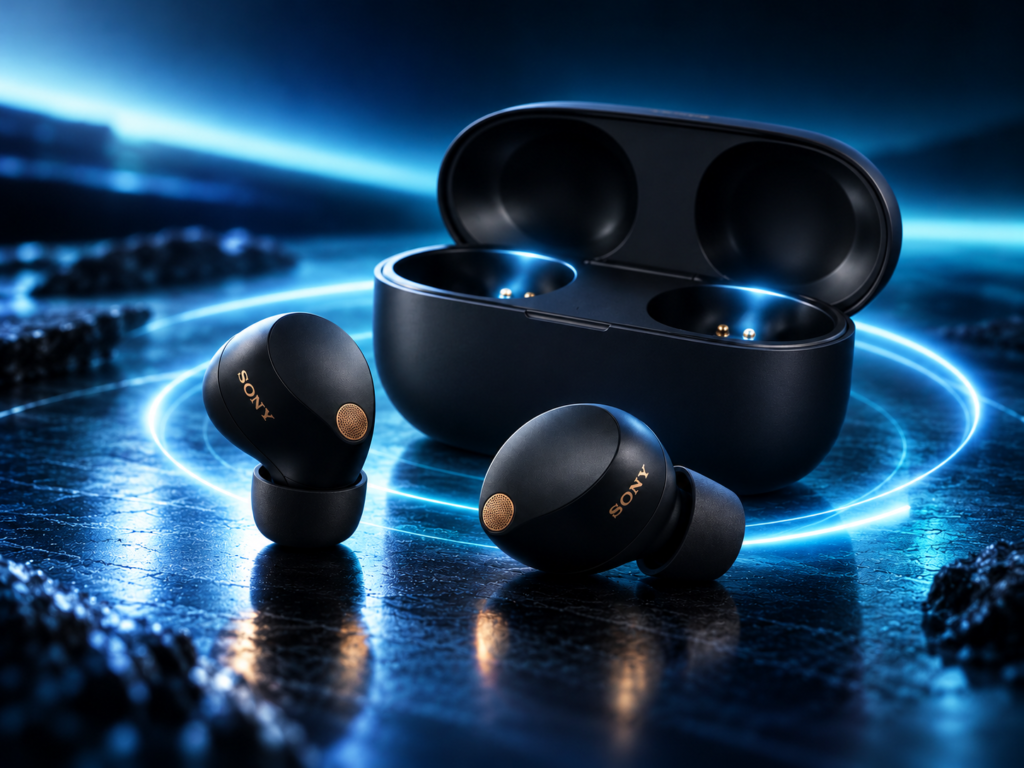
Sony advertises up to eight hours of earbud playback with active noise cancellation enabled and up to 24 hours including the charging case.
These are manufacturer-rated figures.
SoundGuys reports a longer result from its own standardized test: 9 hours and 41 minutes of continuous playback.
Manufacturer rating versus independent result
Sony’s rated playback compared with the independent SoundGuys standardized result.

SoundGuys recorded 9 hours and 41 minutes. The figure is shown as 9.683 hours for calculation purposes.
Original Battery-Life Analysis
Step 1: Convert the measured battery life into minutes.
SoundGuys recorded 9 hours and 41 minutes of continuous playback.
(9 × 60) + 41 = 581 minutes
Step 2: Convert Sony’s advertised battery life into minutes.
Sony officially rates the WF-1000XM6 for up to eight hours of playback with active noise cancellation enabled.
8 × 60 = 480 minutes
Step 3: Calculate the additional playback time.
Subtracting Sony’s advertised battery life from SoundGuys’ measured result gives:
581 − 480 = 101 additional minutes
That is 1 hour and 41 minutes of additional playback under SoundGuys’ testing conditions.
Step 4: Calculate the percentage difference.
Percentage improvement = (Additional playback time ÷ Advertised playback time) × 100
(101 ÷ 480) × 100 = 21.04%
What Does This Mean for Buyers?
Under SoundGuys’ controlled testing conditions, the Sony WF-1000XM6 delivered approximately 21% more playback time than Sony’s advertised eight-hour reference, equivalent to an additional 101 minutes.
That does not mean every buyer will consistently receive 21% more battery life. Listening volume, Bluetooth codec, ANC processing, software settings and battery age can all influence endurance.
The practical takeaway is that the WF-1000XM6 can offer enough continuous playback for long flights, extended work sessions and daily commuting without frequent recharging.
Under SoundGuys’ conditions, playback exceeded the manufacturer’s eight-hour reference by approximately 101 minutes, or 21%.
That does not mean every buyer will consistently receive 21% more battery life than advertised. Listening volume, codec, ANC processing, software settings and battery age all influence endurance.
The strongest practical implication is that the XM6 can comfortably cover many workdays and medium-duration flights without needing a case recharge.
What about the charging case?
Sony rates the case-assisted total at up to 24 hours under the stated conditions.
A useful distinction is that case capacity and earbud-only endurance are different measurements.
Someone who listens for two hours daily may rarely notice the distinction. Someone traveling on a long international flight will care far more about how long the earbuds can operate continuously without being returned to the case.
The published 9-hour-41-minute earbud test should not automatically be extrapolated into a new measured case-assisted total. Doing so would require information about usable case energy and charging efficiency.
Fast charging
Sony advertises up to one hour of playback from three minutes of charging.
SoundGuys reports closer to 45 minutes of playback after that three-minute charge under its tested conditions.
That amounts to 75% of the advertised 60-minute reference, although differences in usage conditions matter.
For buyers who frequently forget to charge their earbuds, this remains a useful feature. It should simply not be treated as a guaranteed hour of listening in every scenario.
Bluetooth, Multipoint and Companion App Features
The WF-1000XM6 use Bluetooth 5.3 and support SBC, AAC, LDAC and LC3.
Each codec serves a different purpose.
| Codec | Practical implication |
|---|---|
| SBC | Broad basic Bluetooth audio compatibility |
| AAC | Widely relevant for Apple devices and other compatible sources |
| LDAC | Higher-bitrate audio on supported devices |
| LC3 | Designed for compatible Bluetooth LE Audio implementations |
| aptX | Not supported by the XM6 |
The ability to use a codec depends on both the earbuds and the device transmitting audio.
For example, an iPhone can connect to the WF-1000XM6, but it cannot automatically take advantage of Sony’s LDAC capability merely because the earbuds support it.
Multipoint connectivity
The earbuds can connect to two compatible devices simultaneously.
For someone working with a laptop and smartphone, this is particularly useful. It reduces the need to manually disconnect and reconnect between meetings and calls.
Multipoint does not mean that two different audio streams are always mixed together. It is primarily a convenience feature for managing connections and switching playback sources.
Sony Sound Connect
Sony’s companion app provides access to sound customization, device settings, firmware updates and listening features.
The most practically valuable controls are the ten-band EQ, ambient-sound settings and connection-management options.
The ten-band equalizer deserves special attention because it gives users more granular control than a basic three-band bass/mid/treble interface.
However, the presence of additional adjustments does not guarantee better sound. Incorrectly boosting several neighboring frequency bands can lead to excessive emphasis or reduced headroom.
Spatial audio and adaptive listening
The XM6 supports spatial-listening and adaptive features, although their availability and behavior can depend on compatible services and software.
SoundGuys updated its review in April 2026 to cover post-launch Scene-Based Listening and Spatial Sound Optimization with Head Tracking.
Such features are useful only when they improve the listener’s actual experience. For buyers primarily interested in conventional stereo music, they should not outweigh fit, isolation and sound quality.
Gaming and Bluetooth latency
The WF-1000XM6 are suitable for ordinary mobile video and casual listening, but dedicated gaming is a different requirement.
Competitive gaming needs predictably low audio latency, especially when sound timing is relevant to gameplay.
RTINGS considers the XM6 unsuitable for demanding wireless gaming because of ordinary Bluetooth latency and console compatibility limitations.
For serious PC or console gaming, a dedicated low-latency headset or compatible wireless dongle system is the more appropriate category.
Real-World Performance: Who Benefits Most?
| Scenario | Suitability | Main consideration |
|---|---|---|
| Air travel | Excellent | Strong isolation and long earbud-only endurance |
| Public commuting | Excellent | ANC, compact portability and ambient adjustment |
| Office work | Excellent | Multipoint and improved microphone processing |
| Music listening | Excellent | Detailed sound and comprehensive EQ |
| iPhone use | Good | Some Apple-native features are absent |
| Gym workouts | Good, fit-dependent | IPX4 resistance but no secure fit guarantee |
| Running | Conditional | Larger shells may move in smaller ears |
| Competitive gaming | Not recommended | Latency and compatibility limitations |
| Budget purchasing | Weak | Premium price with less expensive alternatives |
These are Earsbud editorial suitability judgments based on published evidence, not results of original field testing.
For a broader selection across price ranges, see our Best Earbuds buying guide.
Sony WF-1000XM6 Problems and Limitations
Premium earbuds should be judged as much by what they fail to do as by the features they offer.
The following limitations deserve particular attention before purchasing.
1. Fit remains a genuine purchasing risk
A redesigned body does not automatically mean a universal fit.
RTINGS notes that the XM6 may be less stable in smaller ears, despite the improvements Sony has made to its external shape. This affects more than comfort: a poor seal can reduce bass consistency and undermine isolation.
Buyers concerned about fit should prioritize retailers offering an appropriate return policy and check that policy before opening the product.
2. The case is larger than the XM5’s
Although the earbuds have been redesigned, the case has not become more compact.
What Hi-Fi? specifically notes the bulkier case and questions whether its increased size brings a corresponding practical benefit.
That may be relatively unimportant for commuters who carry a backpack, but it matters more when the charging case spends much of the day in a trouser pocket.
3. ANC cannot replace adequate ear-tip isolation
The XM6’s excellent noise cancellation depends partly on the foam-style ear tips.
If the tips become worn, dirty or poorly seated, performance may change. Replacement tips are therefore not merely a cosmetic accessory; they are relevant to maintaining consistent sound and isolation.
Users should follow Sony’s cleaning instructions and avoid soaking or aggressively scrubbing the ear tips.
4. Water resistance is relatively conservative
IPX4 is useful for sweat and splashes, but these earbuds are not intended for swimming or immersion.
Anyone whose main activity is outdoor running in heavy rain, watersports or prolonged exercise in harsh environments should consider earbuds designed more specifically for those conditions.
5. Audio performance depends on playback settings
The XM6’s sound changes when ANC is disabled, and certain advanced codecs depend on source-device support.
This makes it worthwhile to check settings rather than assuming that the factory configuration automatically provides the best combination of sound quality, battery life and connectivity.
6. There is no wired listening fallback
The XM6 are true wireless earbuds. The USB-C connection is for charging, not ordinary wired audio playback.
For buyers who require guaranteed zero-latency wired listening, a different product category is necessary.
7. Long-term ownership costs need consideration
Premium earbuds contain small rechargeable batteries that gradually lose capacity through use and aging.
Sony provides repair and parts-support resources, but the practical availability and cost of battery service should be confirmed for the buyer’s region. An available repair-support page does not automatically establish inexpensive, user-replaceable batteries.
8. Firmware updates may alter the experience
Sony’s U.S. support site lists firmware version 2.0.5, released on October 15, 2026.
Its availability is confirmed, but this research did not establish new, independent acoustic and battery measurements using that specific version. Consequently, older third-party measurements should be understood as results obtained under the firmware and settings documented by their respective reviewers.
Sony WF-1000XM6 vs AirPods Pro 3 vs Bose QuietComfort Ultra Earbuds
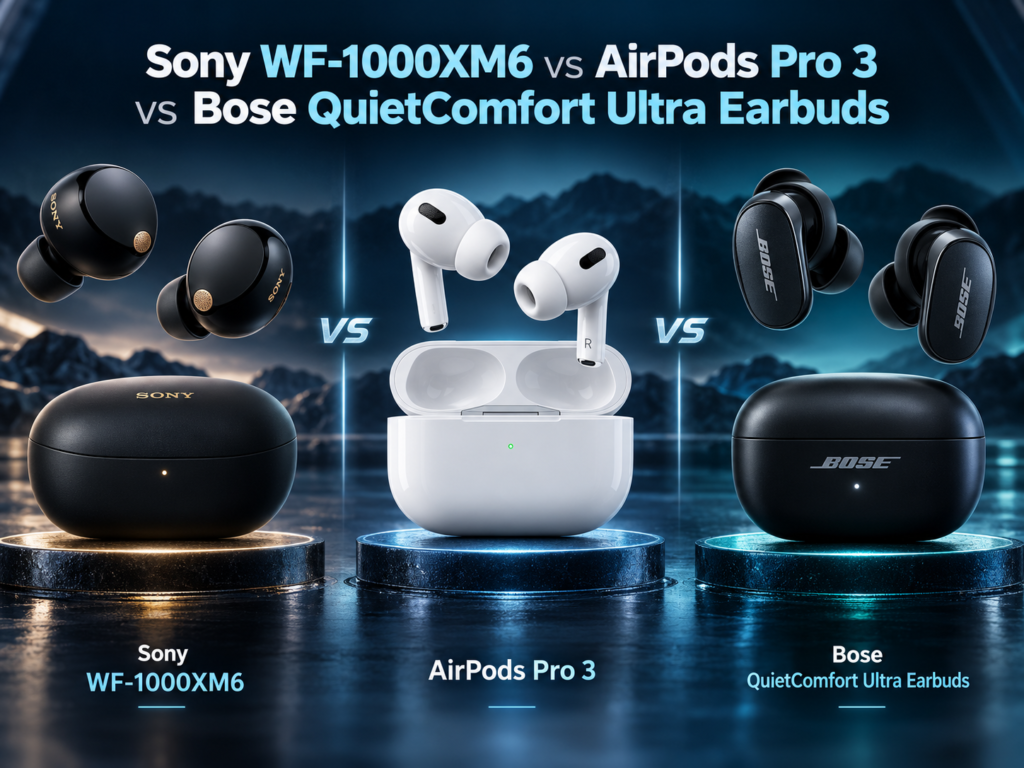
The XM6’s toughest rivals are the Apple AirPods Pro 3 and Bose QuietComfort Ultra Earbuds (2nd Gen).
All three compete for buyers who want exceptional noise reduction and everyday convenience, but they emphasize different strengths.
Sony WF-1000XM6
Best suited to sound customization, Android users and long listening sessions.
Apple AirPods Pro 3
Most compelling for iPhone owners who use Apple’s integrated features.
Bose QuietComfort Ultra Earbuds (2nd Gen)
A strong alternative for comfort, secure fitting and effective ANC.
Key differences
| Feature | Sony WF-1000XM6 | AirPods Pro 3 | Bose QC Ultra 2 |
|---|---|---|---|
| U.S. launch price | $329.99 | $249 | $299 |
| ANC | Excellent | Excellent | Excellent |
| Sound customization | 10-band EQ | More limited manual EQ | 3-band EQ |
| High-bitrate codec advantage | LDAC on compatible devices | Primarily AAC for conventional Bluetooth playback | aptX features on compatible devices |
| iPhone integration | Standard Bluetooth plus Sony app | Extensive native integration | Standard Bluetooth plus Bose app |
| Water resistance | IPX4 | IP57 | IPX4 |
| Main strength | Sound control and overall versatility | Apple ecosystem | Comfort and stability |
| Main limitation | Price and fit | Advanced features favor Apple devices | Shorter measured endurance |
Reference prices are launch prices, not verified October 19 checkout prices. The comparative judgments are drawn from SoundGuys, RTINGS and manufacturer documentation.
Original Battery-Life Comparison: Sony vs. Bose
One of the most useful comparisons comes from RTINGS, which evaluated the Sony and Bose using the same methodology.
Independent continuous battery life
RTINGS standardized measurements, rounded to one decimal hour. These are different test results from SoundGuys.
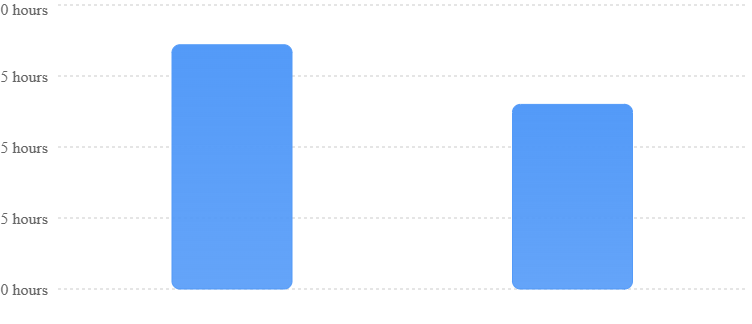
Source: RTINGS side-by-side comparison.
Step 1: Calculate the difference in battery endurance.
Using the rounded battery-life measurements reported by RTINGS:
- Sony WF-1000XM6: 8.6 hours
- Bose QuietComfort Ultra Earbuds (2nd Gen): 6.5 hours
Subtracting Bose’s battery life from Sony’s:
8.6 − 6.5 = 2.1 hours
The Sony WF-1000XM6 lasted approximately 2.1 hours (2 hours and 6 minutes) longer than the Bose in this test.
Step 2: Calculate the percentage difference.
To determine how much longer Sony’s battery lasted relative to Bose:
Percentage difference = (Battery-life difference ÷ Bose battery life) × 100
(2.1 ÷ 6.5) × 100 = 32.31%
This means the Sony WF-1000XM6 delivered approximately 32.3% longer continuous battery endurance than the Bose QuietComfort Ultra Earbuds (2nd Gen) under RTINGS’ comparable testing conditions.
What Does This Mean for Buyers?
An additional 2.1 hours of continuous playback is a meaningful advantage for long flights, extended work sessions and daily commuting.
Unlike comparisons based on unrelated manufacturer battery claims, these results come from the same independent testing publication using a consistent evaluation framework.
The practical takeaway: If uninterrupted listening time is a purchasing priority, the Sony WF-1000XM6 have a measurable battery-life advantage over the Bose QuietComfort Ultra Earbuds (2nd Gen), based on RTINGS’ reported results.
Sony WF-1000XM6 vs AirPods Pro 3
The buying decision depends heavily on your phone.
The AirPods Pro 3 make particular sense for users who rely on Apple’s integrated functionality, including compatible hearing-related features, fitness capabilities, and interactions with other Apple devices.
Sony offers a more comprehensive manually adjustable EQ and LDAC support for compatible non-Apple sources.
SoundGuys reports 90% average noise attenuation for AirPods Pro 3 and 88% for the Sony under its methodology. That is a narrow aggregate difference, and it should not be interpreted as proof that Apple’s earbuds will always outperform Sony’s in every environment.
For an iPhone user who values seamless integration more than advanced sound adjustment, the AirPods Pro 3 may provide the better overall experience at a lower reference price.
For more context on device compatibility and alternatives, read our guide to the best wireless earbuds for iPhone.
Sony WF-1000XM6 vs Bose QuietComfort Ultra Earbuds (2nd Gen)
Bose presents a different challenge.
Its stability-band fitting system gives buyers an additional way to secure the earbuds inside the outer ear. RTINGS considers the Bose more comfortable and stable for most people, while Sony provides longer measured battery life and more extensive sound customization.
SoundGuys favors Sony for balanced sound reproduction and microphone performance in its direct comparison, while RTINGS finds the Bose microphone slightly better. This disagreement is a useful reminder that microphone testing methods and environments can influence rankings.
Choose the Sony if battery endurance, LDAC and detailed EQ are important. Choose Bose if its fitting system is more comfortable or if its particular sound signature is preferable.
Neither can be declared universally superior without considering the wearer.
Sony WF-1000XM6 vs WF-1000XM5: Is Upgrading Worth It?
The Sony WF-1000XM5 remain a meaningful competitor to their successor.
Sony redesigned significant parts of the XM6, but not every specification represents a generational leap.
| Feature | WF-1000XM5 | WF-1000XM6 |
|---|---|---|
| U.S. launch MSRP | $299.99 | $329.99 |
| ANC microphones | Six total | Eight total |
| ANC processing | Previous-generation system | QN3e processor |
| Equalizer | 5-band | 10-band |
| ANC-on rated battery | 8 hours | 8 hours |
| Total rated battery | 24 hours | 24 hours |
| Water resistance | IPX4 | IPX4 |
| Fit | Smaller, rounder body | Wider, elongated body |
| Microphone system | Earlier generation | Improved voice-processing system |
| Sound tuning | Previous tuning | Revised driver and tuning |
Sources: Sony and published generational comparisons from SoundGuys and RTINGS.
The three most meaningful upgrades
1. Better microphone processing. For someone who regularly participates in calls, the improved voice capture is potentially more valuable than a subtle improvement in music reproduction.
2. More flexible equalization. The increase from five to ten adjustable EQ bands doubles the number of manual frequency controls. It does not automatically double accuracy, but it provides more opportunities for precise tuning.
3. Improved combined noise isolation. Independent reviews find genuine gains, although their magnitude depends on frequency and test methodology.
What hasn’t substantially improved?
The advertised eight-hour ANC-on battery life is unchanged, as is the IPX4 protection rating.
The larger design is also not an unambiguous improvement. Some buyers will appreciate the revised shape, while others may prefer how the XM5 fits.
The upgrade decision
Upgrade from WF-1000XM4 or older
The XM6 is a compelling step forward in microphone processing, ANC and everyday features.
Keep a functioning WF-1000XM5
If the XM5 already fits comfortably and its microphone performance is adequate, the savings from keeping it are likely more valuable than the incremental improvements.
Buying your first premium Sony earbuds
Compare the actual XM5 clearance price against the XM6. A substantial discount may make the XM5 the more economical choice.
Price and Value: Is the Sony WF-1000XM6 Worth $329.99?
At its original U.S. retail price of $329.99, the Sony WF-1000XM6 costs $30 more than the WF-1000XM5 did at its $299.99 launch price.
Calculating the Generational Price Increase
To determine the percentage increase between the two generations:
Percentage increase = (Price difference ÷ Previous model’s price) × 100
Step 1: Calculate the price difference.
$329.99 − $299.99 = $30.00
Step 2: Calculate the percentage increase.
($30.00 ÷ $299.99) × 100 = 10.00%
This represents approximately a 10% increase in launch price from the WF-1000XM5 to the WF-1000XM6.
Is the Additional $30 Justified?
Sony has delivered measurable improvements in noise cancellation, microphone processing, sound customization and overall functionality. However, the buying decision is not simply whether the newer product is better. It is whether those improvements justify the additional expenditure.
For buyers who regularly use active noise cancellation, take calls in noisy environments or want more detailed sound customization, the additional $30 at launch may be reasonable.
For existing WF-1000XM5 owners, however, the improvements are less compelling if their current earbuds still perform well.
The practical takeaway: The WF-1000XM6’s 10% higher launch price can be justified by its improvements, but the actual buying decision should depend on current retail prices, individual priorities and whether the previous generation is available at a meaningful discount.
Original Analysis: How Much Do the Sony WF-1000XM6 Cost per Listening Hour?
At their original U.S. retail price of $329.99, the Sony WF-1000XM6 represent a considerable upfront investment. However, the purchase price alone doesn’t necessarily tell us whether they offer good long-term value.
A more useful way to evaluate their cost is to estimate how much a buyer effectively pays for each hour of listening over the earbuds’ usable lifespan.
This calculation depends on two factors: how frequently the earbuds are used and how long they remain functional.
Calculating the Cost per Listening Hour
Consider a hypothetical buyer who uses the Sony WF-1000XM6 for two hours every day over three years.
Step 1: Calculate total listening hours.
Daily listening time × Days per year × Years of ownership
2 × 365 × 3 = 2,190 listening hours
Step 2: Divide the purchase price by total listening hours.
Cost per listening hour = Purchase price ÷ Total listening hours
$329.99 ÷ 2,190 = $0.151
Under this hypothetical ownership scenario, the WF-1000XM6 would cost approximately 15.1 cents per listening hour.
That calculation considers only the original purchase price. It excludes replacement ear tips, repairs, electricity, financing costs and any eventual resale value.
How Listening Habits Affect Long-Term Value
The following table models several usage patterns, assuming the earbuds remain functional for three years and are purchased at their original $329.99 launch price.
| Daily listening | Total hours over 3 years | Cost per listening hour |
|---|---|---|
| 30 minutes | 548 hours | $0.60 |
| 1 hour | 1,095 hours | $0.30 |
| 2 hours | 2,190 hours | $0.15 |
| 3 hours | 3,285 hours | $0.10 |
| 4 hours | 4,380 hours | $0.08 |
Figures are rounded. These are modeled ownership scenarios, not measured product longevity or guaranteed usage outcomes.
The difference is substantial. Someone listening for just 30 minutes daily would effectively spend approximately 60 cents per listening hour over three years. For someone listening four hours daily, that figure falls to approximately eight cents.
This illustrates an important distinction: premium earbuds can deliver better economic value through frequent use, even when their initial purchase price is high.
Does Longer Battery Life Improve the Value Proposition?
Sony advertises up to eight hours of playback with active noise cancellation enabled, while independent testing by SoundGuys recorded 9 hours and 41 minutes under its controlled conditions.
This extended endurance offers a practical advantage: fewer interruptions during long commutes, flights and work sessions.
However, battery endurance per charge should not be confused with overall battery lifespan. Rechargeable batteries gradually lose capacity, and actual product longevity depends on charging habits, usage conditions, battery aging and hardware reliability.
The three-year ownership period in our calculations is therefore an assumption, not a prediction of how long the WF-1000XM6 will remain operational.
What Does This Mean for Buyers?
For someone who uses earbuds for several hours every day—particularly during commuting, work calls or extended music sessions—the WF-1000XM6’s $329.99 purchase price becomes easier to justify when spread across thousands of listening hours.
Occasional listeners, however, may receive more practical value from considerably less expensive wireless earbuds.
The practical takeaway: At two hours of daily listening over three years, the Sony WF-1000XM6 would cost approximately 15 cents per listening hour. That makes their premium price more understandable for frequent users, although comfort, sound quality, reliability and the cost of competing earbuds ultimately determine whether they are worth buying.
When should you pay full price?
The launch-level price is most defensible when the buyer wants all three of the following: high-end noise isolation, substantial sound customization and dependable single-charge endurance.
Paying more for features that remain unused does not create additional value.
A casual music listener who never changes EQ settings, rarely travels and takes few calls may receive an equally satisfying everyday experience from considerably less expensive earbuds.
Who Should Buy the Sony WF-1000XM6?
Buy the Sony WF-1000XM6 if:
- You use an Android phone and care about sound quality. LDAC compatibility and adjustable EQ provide useful flexibility with supported devices.
- You commute or fly frequently. Published evidence indicates excellent noise isolation across demanding environments.
- You need earbuds for music and work. Improved microphones, multipoint and long endurance make the XM6 a capable general-purpose option.
- You enjoy adjusting your sound. Ten EQ bands allow more specific tonal adjustments than simpler systems.
- You are replacing aging XM4 earbuds or an older generation. The combined improvements are more meaningful across multiple generations.
Skip the Sony WF-1000XM6 if:
- You already own comfortable, functioning XM5 earbuds. The upgrade is not essential for most users.
- Your ears are particularly small. The larger housing may be problematic.
- You primarily use an iPhone. The AirPods Pro 3 deserve serious consideration for ecosystem-specific features.
- You need earbuds mainly for competitive gaming. Their Bluetooth connection is not a substitute for a dedicated low-latency solution.
- You have a strict budget. The additional cost is difficult to justify without frequent use of premium features.
Sony WF-1000XM6 Frequently Asked Questions
Are the Sony WF-1000XM6 better than the WF-1000XM5?
Yes, in several meaningful areas. The XM6 offer improved noise isolation, updated microphone processing, a revised fit and more extensive EQ controls. However, the XM5 remain capable earbuds, and owners who are satisfied with them have little reason to upgrade solely for battery life or water resistance.
Do Sony WF-1000XM6 earbuds work with iPhone?
Yes. The Sony WF-1000XM6 connect to compatible iPhones over Bluetooth and can be configured through Sony’s companion app. However, iPhones do not provide standard LDAC transmission, and the Sony earbuds do not offer all the native features of AirPods Pro 3.
Are the Sony WF-1000XM6 waterproof?
No. They carry an IPX4 splash-resistance rating, suitable for sweat and light rain under normal usage conditions. IPX4 does not certify them for swimming or immersion.
How long do the WF-1000XM6 batteries last?
Sony rates the earbuds for up to eight hours with ANC enabled and 12 hours with ANC disabled. Up to 24 hours of total ANC-on playback is advertised with the charging case. SoundGuys independently measured 9 hours and 41 minutes in its standardized playback test.
Do the Sony WF-1000XM6 support multipoint Bluetooth?
Yes. Multipoint connectivity allows the earbuds to maintain connections to two compatible devices, such as a laptop and smartphone. It is useful for switching between calls and media without repeated manual pairing.
Do they support lossless audio?
The XM6 support LDAC and LC3, but the presence of these codecs should not be interpreted as universal lossless Bluetooth playback. Actual capabilities depend on the transmitting device, connection and codec implementation.
Are the WF-1000XM6 good for exercise?
They can be suitable for gym sessions, walking and moderate exercise, thanks to their wireless design and IPX4 water resistance. However, their relatively large housings can make fit and stability less reliable for some users, particularly during running.
Do the Sony WF-1000XM6 have good microphones?
Independent publications generally identify a meaningful improvement over the XM5, especially in voice capture and suppression of background noise. Performance still varies by environment, and extremely loud or windy conditions can challenge the processing system.
Sony WF-1000XM6: The Earsbud Verdict
The Sony WF-1000XM6 succeed because they combine several abilities that matter every day: powerful noise isolation, convincing sound reproduction, unusually flexible EQ and battery endurance that can accommodate long listening sessions.
The strongest reason to buy them is not any single advertised processor or engineering claim. It is the breadth of their abilities. Sony has produced earbuds that work well for music, commuting, travel and calls without forcing buyers to make major sacrifices in one of those categories.
Still, the XM6 are expensive, the fit is not universally comfortable, and the previous generation remains competitive.
For Android users who want one premium pair for nearly everything, the WF-1000XM6 are an excellent choice. For iPhone owners, AirPods Pro 3 may offer better overall value. And for existing XM5 owners, keeping a working pair is usually the more sensible financial decision.
If your priority is maximum noise reduction rather than this particular model, explore our ANC earbuds coverage on Earsbud before deciding.
Where to Buy the Sony WF-1000XM6
Shopping note: U.S. launch MSRP $329.99. Actual retailer prices, promotions and availability may vary.
Sony WF-1000XM6
Manufacturer product information, specifications, documentation and U.S. support.
Official manufacturer destinationView at Sony
Check actual pricing and return terms before purchasing. Since no Earsbud-specific affiliate destination has been supplied, this review does not include an invented affiliate tracking link.
Fact-Checking and Source Register
The following table records consequential claims and distinguishes their evidence origins.
| Claim | Evidence classification | Confidence |
|---|---|---|
| Bluetooth 5.3, SBC/AAC/LDAC/LC3 | Manufacturer specification | High |
| IPX4 water resistance | Manufacturer specification | High |
| Up to 8 hours ANC-on playback | Manufacturer specification | High |
| Up to 12 hours ANC-off playback | Manufacturer specification | High |
| 9 h 41 min test endurance | SoundGuys independent measurement | High for stated test |
| 88% average attenuation | SoundGuys independent measurement | High for stated methodology |
| Improved microphone performance | Independent third-party evaluations | Moderate–high |
| Larger design may affect small ears | RTINGS findings | Moderate; anatomically dependent |
| ANC changes frequency response | SoundGuys acoustic measurement | High for documented configuration |
| XM6 outlasts Bose in RTINGS’ test | Third-party comparative measurement | High for stated methodology |
| XM6 is better value for some Android users | Original editorial analysis | Moderate; preference-dependent |
| Current October 2026 retail discount | Not established | Unconfirmed |
| Firmware 2.0.5 availability | Sony support documentation | High |
| Performance after firmware 2.0.5 | Not independently established here | Unconfirmed |
Original-evidence accounting
No Earsbud.com firsthand test results were available. The newly produced work consists of arithmetic comparisons, normalized battery differences, interpretation of published acoustic findings and a conditional ownership-cost model.
These are legitimate forms of original editorial analysis, but they are not equivalent to measuring a product firsthand.