
Bose QuietComfort Ultra Earbuds Review: Are the 2nd-Gen Earbuds Worth $299?
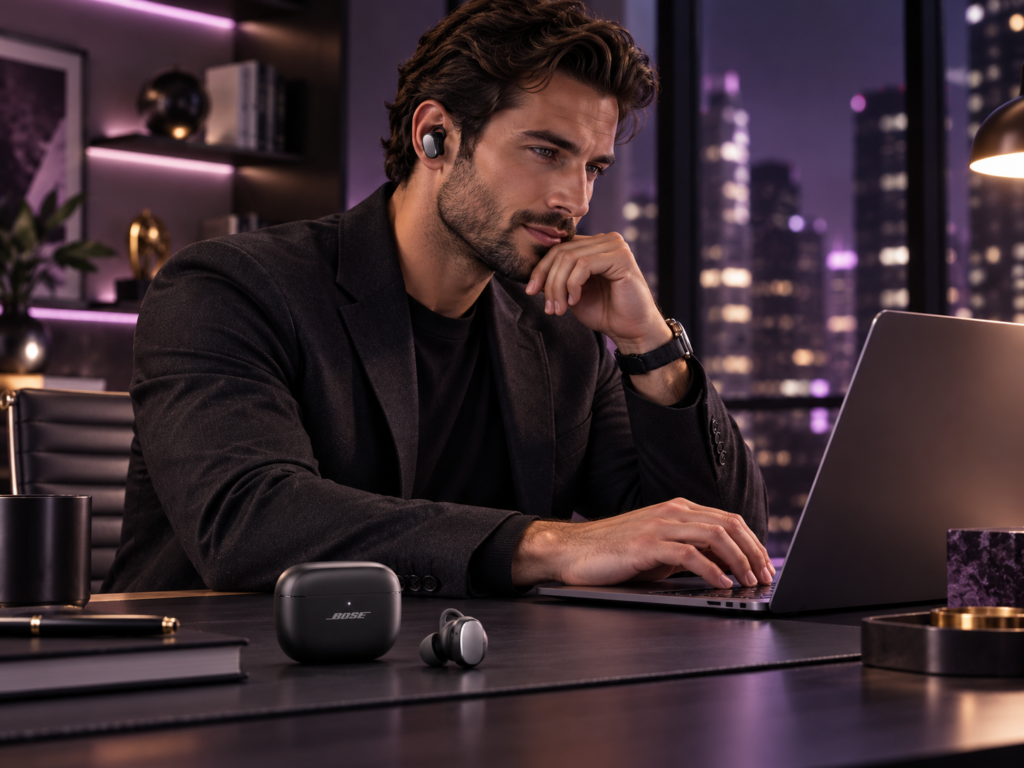
Affiliate Disclosure: To keep Earsbud.com running, we may earn a commission from qualifying purchases made through our links, as an Amazon Associate.
Research updated: October 17, 2026 | By Earsbud Editorial Team
The Bose QuietComfort Ultra Earbuds (2nd Gen) are among the strongest choices for people who want powerful active noise cancellation without wearing full-size headphones. Independent testing supports their excellent noise reduction, while Bose’s interchangeable ear tips and stability bands make them especially appealing for commuting, traveling, and extended listening.
But these premium earbuds are not without compromises. Battery life trails some similarly priced rivals, sound customization is limited, and outdoor wind can interfere with the otherwise impressive noise cancellation.
Our verdict: They are worth considering if silence, comfort, and secure fit are your priorities. Buyers wanting longer battery life, more audio controls, or deeper Apple integration should compare alternatives before spending $299.
For more individual product evaluations, visit our Earbuds Reviews section.
How this review was prepared: Earsbud examined Bose’s official technical documentation, firmware history, and published independent reviews and measurements. We have not personally tested this model. All external findings are attributed to their original sources.
Bose QuietComfort Ultra Earbuds (2nd Gen): Review Verdict
| Category | Earsbud assessment |
|---|---|
| Best for | Frequent travelers, commuters, and listeners who prioritize noise cancellation and secure fit |
| Not ideal for | Buyers wanting maximum battery endurance, precise equalization, or consistently quiet performance in windy conditions |
| Biggest advantage | Excellent noise isolation, with strong independent evidence supporting its performance |
| Biggest drawback | Relatively short continuous battery life and a documented ANC wind-noise limitation |
| Sound signature | Full-bodied, warm, and bass-forward, with good detail; not strictly neutral |
| Value for money | Convincing for ANC-focused buyers, less compelling for battery-first shoppers |
| Overall verdict | A premium noise-canceling choice with excellent core performance, but meaningful competition from Sony and Apple |
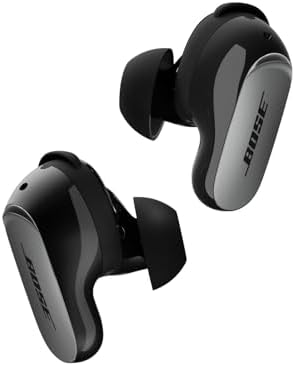
- WORLD-CLASS NOISE CANCELLATION: The best noise cancellation of any Bose wireless earbuds is now even better than before….
- CUSTOMTUNE TECHNOLOGY: CustomTune technology analyses your ears and adapts your in-ear headphones to their shape. The re…
- NOISE CONTROL: Quickly adjust the level of noise cancellation without using Modes, including turning it off completely t…
Price checked: $299 at Bose’s US store, based on its product page refreshed in October 2026. This is the displayed price, not a guarantee of the final checkout price.
Pros and cons
What works well
- Outstanding active noise cancellation according to independent testing.
- Interchangeable tips and stability bands provide more ways to adjust the fit.
- Rich, engaging sound with personalized CustomTune calibration.
- Improved calling technology and Bluetooth multipoint.
- Wireless charging included without purchasing an additional case.
- IPX4-rated earbuds for sweat and incidental splashes.
What could be better
- Six-hour manufacturer battery rating is behind several competitors.
- Immersive Audio reduces the advertised earbud runtime to four hours.
- ANC can produce distracting wind rumble outdoors.
- Three-band EQ limits fine-grained sound adjustment.
- Charging case is relatively substantial.
- aptX advantages depend on compatible hardware; LDAC and Bluetooth LE Audio playback are unsupported.
Bose QuietComfort Ultra Earbuds (2nd Gen) Specifications
The following specifications refer specifically to the second-generation earbuds introduced in 2025, rather than the original QuietComfort Ultra Earbuds or the separate QuietComfort Ultra Headphones.
| Specification | Bose QuietComfort Ultra Earbuds (2nd Gen) |
|---|---|
| Product type | True wireless, in-ear earbuds |
| Announced | June 12, 2025 |
| US launch price | $299 |
| Bluetooth | 5.3 |
| Audio codecs | SBC, AAC, aptX Adaptive |
| Bluetooth multipoint | Yes, two connected devices |
| Noise cancellation | Active ANC with Quiet, Aware, and adjustable listening modes |
| Sound personalization | Bose CustomTune |
| Spatial audio | Bose Immersive Audio; Still and Motion modes |
| Microphones | Four per earbud |
| Earbud battery life | Up to 6 hours with Immersive Audio off |
| Battery with Immersive Audio | Up to 4 hours |
| Case battery capacity | Up to 3 additional full earbud charges |
| Combined advertised endurance | Up to approximately 24 hours under the stated normal listening conditions |
| Fast charging | 20 minutes for up to 2 hours of playback |
| Charging | USB-C and wireless charging case |
| Water resistance | IPX4 earbuds; case not water-resistant |
| Ear tips | Small, medium, large |
| Stability bands | Three included sizes |
| Case dimensions | Approximately 2.61 × 2.35 × 1.06 inches |
| App compatibility | Bose app, iOS 16+ and Android 11+ |
| Limited warranty (US) | One year, subject to Bose’s terms |
| Listed colors | Black, White Smoke, Deep Plum, Desert Gold, Midnight Violet |
A crucial battery distinction: Bose’s three additional charges refer to energy stored in the case, not three extra charges on top of a stated 24-hour total. Under Bose’s normal playback estimate, that means approximately six hours from the earbuds plus another 18 hours from the case.
Sources: Bose’s official specifications, detailed technical documentation, and US product page.
Design and Comfort: A More Adjustable Fit Than Many Rivals
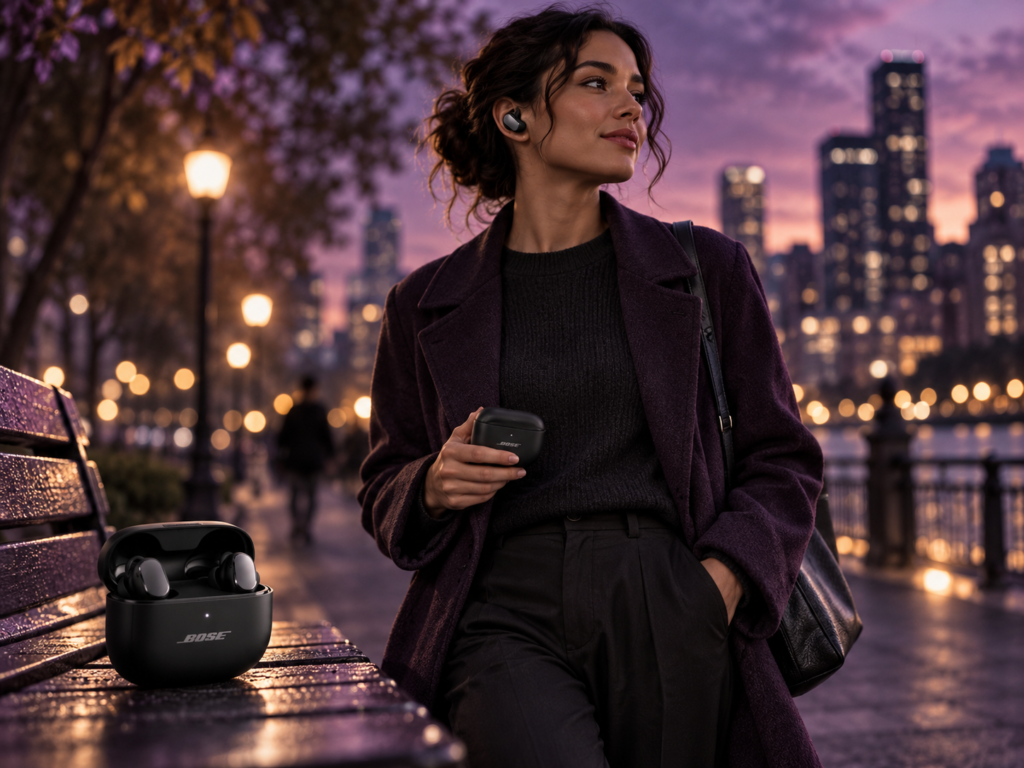
The QuietComfort Ultra Earbuds (2nd Gen) retain the recognizable design of their predecessors. Each earbud has a relatively substantial body, an oval-shaped silicone tip, and a separate stability band that rests against the outer ear.
They do not attempt to disappear into the ear canal. Instead, Bose distributes the job of securing each earbud between two components.
The silicone tip creates the acoustic seal, while the stability band helps prevent the earbud from shifting.
This separation matters more than it first appears.
With conventional earbuds, selecting a larger tip to improve stability can also increase pressure inside the ear canal. Bose’s approach allows users to select a comfortable tip and adjust the stability band separately.
Nine fit combinations provide a useful advantage
Bose includes three ear-tip sizes and three stability-band sizes, giving nine combinations without buying additional accessories.
Extra-small and extra-large tips, along with additional stability-band sizes, are also available separately through Bose.
The combinations help accommodate different ear shapes, but they do not guarantee universal comfort. Some listeners dislike silicone seals, and others may find the outer earbud body intrusive.
RTINGS and SoundGuys reported strong comfort and stability, while TechGearLab’s evaluation was less enthusiastic about long-session comfort. These differing experiences underline why fit should not be treated as a universal product characteristic.
Why the seal matters so much
Poorly fitting tips can cause three problems simultaneously:
- Bass loses some of its weight because low-frequency pressure escapes.
- Passive isolation weakens, allowing more environmental noise into the ear.
- The ANC system has a less favorable acoustic starting point.
Bose provides an Earbud Seal Test in its companion app. This is worth completing before judging sound quality or noise cancellation.
A useful fitting sequence is to choose the smallest tip that seals reliably, then select a stability band that keeps the earbud secure without creating uncomfortable pressure.
If the seal changes while walking, talking, or chewing, try a different combination rather than immediately assuming the noise cancellation is defective.
Readers still deciding which earbud design best suits them can consult our Wireless Earbuds guide for a broader understanding of fit, comfort, and listening needs.
Build quality and water resistance
Bose uses plastic, silicone, and metal components. The second generation also incorporates an earwax guard around the ear-tip area, intended to make wax accumulation easier to manage and reduce interference with the acoustic opening.
This is an incremental improvement rather than a substantial exterior redesign.
The earbuds have an IPX4 water-resistance rating, meaning they are designed to withstand splashing water. That makes them suitable for ordinary exercise and occasional light rain, but not for swimming, submersion, or washing under a tap.
The charging case is not water-resistant. Neither the earbuds nor their case should be treated as waterproof.
Charging case and portability
The case supports both USB-C and compatible wireless charging pads, removing a notable convenience limitation of the original model.
However, it remains larger than some slim competing cases. The more important question is where you carry your earbuds: the case may be unremarkable inside a backpack but less convenient in a small jeans pocket.
A wireless charger is not included. Bose supplies a USB charging cable.
Touch controls
Both earbuds feature touch-sensitive outer surfaces. Bose’s controls support single-tap playback, double-tap track skipping, triple-tap previous-track access, swipe volume adjustment, and long-press shortcuts.
The second generation also lets users disable touch controls through the app.
That is useful for anyone who frequently triggers playback or changes volume while readjusting an earbud. The tradeoff is losing those on-earbud interactions when the controls are disabled.
Bose also allows a single earbud to operate independently for listening or calls.
Sound Quality: Rich Bass, Clear Detail, and a Distinct Musical Character
The Bose QuietComfort Ultra Earbuds (2nd Gen) are tuned for an engaging, full-bodied presentation rather than completely neutral reproduction.
That distinction matters. A technically competent pair of earbuds can still be the wrong purchase if its sound balance does not suit the listener.
Independent reviewers broadly describe the Bose as warm, energetic, and satisfying, with prominent bass and a detailed presentation. SoundGuys found substantial bass and treble emphasis, while RTINGS characterized the response as warm with approximately 5 dB of bass emphasis in its sound-profile assessment.
Bass: Powerful without being purely about quantity
Bass performance has several separate components.
Extension describes how far an earbud reaches into very low frequencies, such as the deep electronic notes beneath a dance track. Control describes whether those notes remain distinct instead of blending into a broad, indistinct rumble.
The second-generation Bose delivers a bass-forward presentation that is likely to appeal to listeners who enjoy electronic music, pop, hip-hop, and cinematic soundtracks.
What Hi-Fi?’s comparative listening evaluation reported improvements in bass depth, definition, and overall texture over the original model. Its findings suggest that Bose has refined the sound rather than simply increasing low-frequency output.
For buyers who enjoy a warm sound signature, this is appealing. For buyers who prefer a strictly neutral balance, the elevated bass may be a reason to investigate alternatives.
The acoustic seal also affects perceived bass response. A loose-fitting ear tip can make an otherwise capable earbud sound thin.
Midrange: Vocals and instruments
The midrange contains much of the information that makes voices recognizable. It also carries major parts of guitars, keyboards, strings, and many acoustic instruments.
Excessive bass can sometimes mask lower-midrange detail, while uneven upper mids can make vocals sound unnaturally forward or distant.
RTINGS’ available characterization indicates a relatively even midrange alongside the Bose’s elevated bass. What Hi-Fi? also reported improved clarity and musical organization in its direct listening comparison.
The practical implication is that the Bose may satisfy listeners who want substantial bass without completely sacrificing vocal intelligibility.
However, listeners concentrating on natural instrumental timbre or the subtle dynamics of acoustic recordings should audition competing sound signatures rather than assume that expensive earbuds reproduce every genre equally well.
Treble: Detail versus sharpness
Treble carries many of the details associated with cymbals, string attacks, consonants, and the sense of air around instruments.
Too little treble can make music sound subdued. Too much emphasis can make certain recordings tiring.
SoundGuys describes the second-generation Bose as having an energetic high-frequency presentation. What Hi-Fi? found improved clarity compared with the previous generation.
These observations support a lively overall character, but they do not establish that the earbuds will sound equally smooth to everyone.
Listeners sensitive to sharp consonants or prominent cymbals should experiment with the treble control before deciding whether the tuning is comfortable.
Instrument separation, imaging, and soundstage
Instrument separation refers to how clearly listeners can distinguish simultaneous parts of a recording.
Imaging describes the perceived placement of sounds, while soundstage concerns the apparent width or space of the presentation.
Independent reviewers, including What Hi-Fi?, describe the Bose as capable of organized, detailed reproduction with convincing definition between musical elements.
There is an important distinction between that ordinary stereo presentation and Bose Immersive Audio.
The former depends on the stereo recording and the earbuds’ acoustic reproduction. The latter uses digital processing to create a different spatial impression.
A wider apparent stage is not automatically more accurate. Some listeners prefer the unprocessed stereo version because it better preserves the original balance and placement of sounds.
Bose CustomTune: Personalized sound without manual calibration
CustomTune is one of Bose’s most important audio features.
When the earbuds are inserted, Bose plays a calibration sound and analyzes how the listener’s ear and ear canal affect the acoustic response. The system then adjusts playback and noise cancellation.
The purpose is to account for physical differences between listeners.
This is useful because identical earbuds can produce slightly different results in different ears.
It does not mean every listener will hear identical sound, nor does it eliminate the need for a proper ear-tip seal.
An important practical detail is that the calibration takes place as the earbuds are inserted. SoundGuys noted that adjusting the fit immediately after calibration can sometimes interfere with obtaining the intended starting result.
Equalizer: Useful but limited
The Bose app provides bass, midrange, and treble adjustment, along with several presets.
For ordinary listeners, three controls may be enough to reduce booming bass or soften excessive brightness.
For enthusiasts, the limitation is substantial. A three-band EQ cannot independently adjust narrow problem areas or precise frequency ranges in the way a more extensive equalizer can.
SoundGuys specifically criticized Bose’s limited EQ flexibility, and the manufacturer’s own support documentation confirms the basic adjustment interface.
Our assessment: The QuietComfort Ultra Earbuds (2nd Gen) are a strong match for listeners who enjoy a rich, energetic sound without extensive customization. Buyers wanting highly precise tuning should consider Sony’s competing model.
Active Noise Cancellation: The Strongest Reason to Buy Them
Noise cancellation is where the Bose QuietComfort Ultra wireless noise cancelling earbuds make their most convincing argument.
Rather than relying only on the silicone tips to obstruct noise, they combine passive isolation with electronic cancellation.
Tiny microphones monitor sound around and inside the earbuds. Bose’s processing system generates a signal designed to counteract part of that incoming noise.
This is especially useful for lower-frequency sounds, which are otherwise difficult to block with lightweight ear tips.
How effective is the ANC?
SoundGuys measured an average 85% reduction in the loudness of external noise using its own testing procedure. That is an independent laboratory finding, not an Earsbud measurement or a Bose advertising claim.
RTINGS separately characterized the earbuds’ noise isolation as outstanding across common travel and office conditions.
These findings support Bose’s position as a highly competitive noise-canceling option.
They do not mean that every background sound becomes 85% quieter, or that all listeners will experience the same reduction. The figure is a test-specific summary across noise conditions and frequencies.
Airplane engines, buses, and trains
Low-frequency noise is a major strength of good ANC systems.
Airplane cabin drone, bus-engine rumble, and steady ventilation systems produce sustained sound that electronic cancellation can target effectively.
For frequent travelers, reducing this background noise can make podcasts and quieter sections of music easier to hear without continually increasing the playback volume.
The Bose is particularly attractive for this use case because its fit system also helps maintain passive isolation.
Voices and office conversations
Human speech is more complicated than steady engine noise.
Voices change frequency, intensity, and timing rapidly. ANC can reduce aspects of surrounding conversation, but it cannot reliably erase intelligible speech in every environment.
RTINGS found the Bose effective against office chatter and computer-fan noise, although those findings should not be interpreted as a guarantee of total silence.
A listener in a busy office should expect substantial reduction in distraction, not the complete disappearance of coworkers’ voices.
Sudden sounds and changing environments
Bose introduced improvements to its ActiveSense technology with the second generation.
ActiveSense operates in Aware Mode and selectively applies noise reduction when loud environmental events occur. Bose says its updated algorithm makes these adjustments smoother.
Examples include passing trains, machinery, and other sudden spikes in background noise.
This is a different feature from running maximum ANC continuously. Its purpose is to balance awareness with protection from disruptive sound.
The wind-noise problem
There is a meaningful exception to the otherwise impressive noise cancellation.
In a June 2026 follow-up, SoundGuys reported that wind hitting the earbuds’ microphones could produce distracting, muffled rumble while ANC was active. The issue occurred during outdoor use and remained noticeable after extended ownership.
The underlying problem is different from ordinary traffic noise. Air moving directly across microphone openings can create turbulence that the electronic system may reproduce as unwanted low-frequency sound.
This distinction matters to buyers.
A commuter traveling primarily inside trains or buses may find the Bose exceptionally effective. Someone walking along windy streets or cycling outdoors may encounter a frustrating weakness.
The issue should not be dismissed simply because the earbuds perform well in controlled ANC tests.
Our assessment: Bose’s cancellation is a compelling reason to purchase these earbuds, particularly for indoor environments and transportation. But buyers who regularly encounter strong wind should weigh the documented limitation carefully.
Transparency Mode: Hearing the World Without Removing Your Earbuds
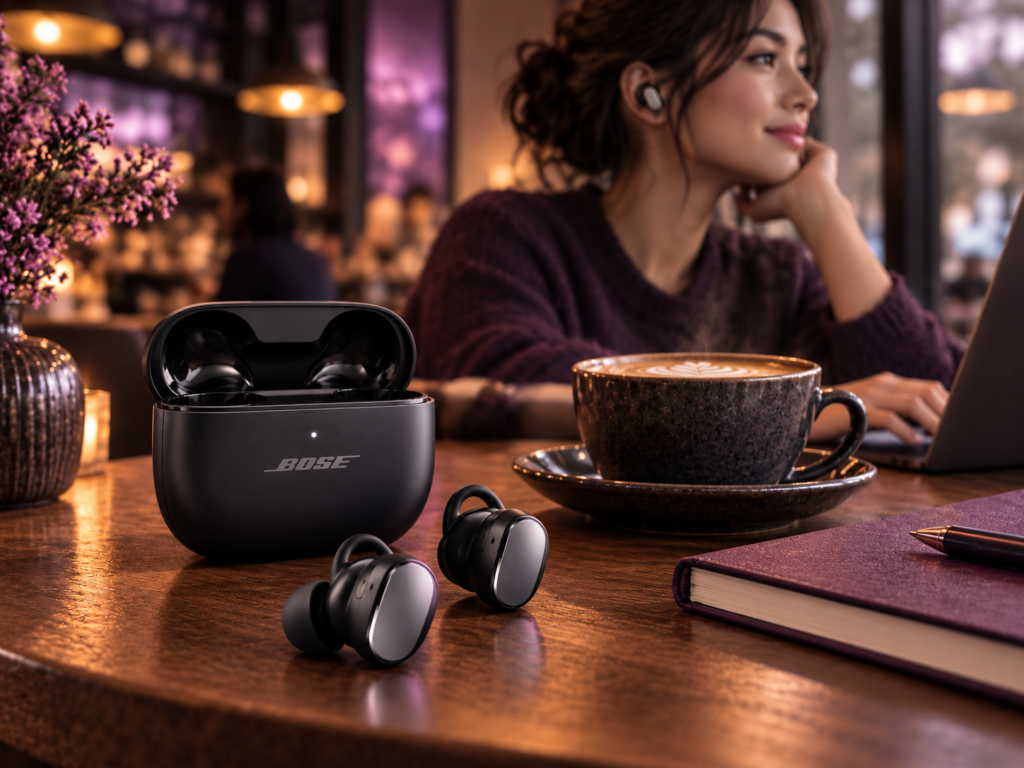
Bose calls its transparency feature Aware Mode.
Instead of trying to suppress surrounding noise, the earbuds use their microphones to feed external sound into the listener’s ears.
This helps when speaking to someone at a counter, hearing an announcement, or checking what is happening nearby.
Aware Mode also incorporates ActiveSense, which can reduce sudden loud sounds rather than keeping all exterior sound equally prominent.
A useful characteristic of the system is that users can switch between stronger noise cancellation and greater environmental awareness without removing the earbuds.
However, microphone-based transparency should not be mistaken for uncovered hearing. Environmental cues can change depending on processing, fit, wind, and the current listening mode.
Independent evidence supports the usefulness of Bose’s transparency implementation, but the available research does not establish that it reproduces environmental sounds more naturally than every competing model.
For walking near traffic, keep playback volume low enough to remain attentive, and never rely exclusively on transparency processing to detect hazards.
Call and Microphone Quality: Better Technology, but Not a Universal Winner
Bose made improved voice pickup a specific priority for the second generation.
The earbuds contain eight microphones in total and use a proprietary SpeechClarity system intended to separate the user’s voice from surrounding noise.
Bose describes its approach as combining microphone signals, adaptive filtering, and AI-based noise suppression.
Its official claims include improvements when speaking around office chatter and wind.
Quiet rooms and video meetings
In quieter conditions, the microphones are capable of clear, usable speech reproduction.
RTINGS reported generally natural voice reproduction, although its review considered the microphone performance adequate rather than exceptional.
For everyday calls, this is encouraging. It does not automatically establish the Bose as the strongest choice for professional meetings.
Offices and background conversations
Microphone noise suppression is most useful when the person receiving the call would otherwise hear competing voices and ambient sound.
Unlike ANC, which improves what you hear, microphone noise suppression improves what the other person hears.
Bose’s system attempts to identify the user’s speech and reduce competing noise before transmitting the call.
SoundGuys reported improvements to background-noise rejection following the 2025 voice-processing updates, although microphone evaluation methods and wearer conditions can influence the result.
Traffic and loud environments
Extremely loud or continuously changing background noise remains challenging.
RTINGS identified difficulty handling overwhelming sounds such as an approaching subway train. This is an important limitation for people who routinely take calls in loud stations or beside traffic.
The microphone system should be considered capable for general use, not guaranteed to preserve studio-quality speech in every location.
Wind during calls versus wind during listening
The distinction between the two wind-related problems is important.
Wind during a call concerns whether the other person can hear your voice clearly.
Wind during ANC playback concerns whether you hear unwanted turbulence or rumble through your own earbuds.
Bose’s voice-processing improvements may help the first problem without necessarily eliminating the second.
Buyers who make frequent calls outdoors should prioritize microphone demonstrations recorded in relevant conditions rather than relying on the manufacturer’s microphone count.
For comparisons based specifically on voice intelligibility and background-noise handling, see our Best Tws Earbuds for Calls guide.
Our assessment: The QuietComfort Ultra Earbuds (2nd Gen) are credible all-purpose calling earbuds, with useful voice-processing improvements, but we would not select them solely on microphone claims without comparing actual recordings from their closest rivals.
Battery Life: The Compromise That Matters on Long Days
Bose rates the second-generation QuietComfort Ultra Earbuds for up to six hours of playback per charge with Immersive Audio disabled.
Turning Immersive Audio on reduces that estimate to four hours.
The charging case provides up to three additional full charges.
| Battery condition | Reported endurance |
|---|---|
| Bose official estimate, Immersive Audio off | Up to 6 hours |
| Bose official estimate, Immersive Audio on | Up to 4 hours |
| Bose official additional case capacity | Up to 18 hours under normal playback conditions |
| Bose advertised combined normal playback | Up to 24 hours |
| SoundGuys independent test | 5 hours, 34 minutes |
| RTINGS independent test | Approximately 6.5 hours |
| Bose quick-charge estimate | 20 minutes charging for up to 2 hours playback |
Sources: Bose, SoundGuys, RTINGS.
The difference between independent tests is not necessarily a contradiction. Playback volume, content, test conditions, firmware, enabled features, and measurement methods can all affect battery endurance.
The safest planning assumption is that the Bose belongs in roughly the five-to-six-and-a-half-hour class for continuous playback, depending on usage.
Why continuous runtime matters more than case capacity
Charging-case endurance can make a product sound more capable than it is during a single uninterrupted session.
Imagine spending eight hours on a flight.
A case with enough energy for several extra charges will not prevent the earbuds from running out during that flight. You still have to remove them and recharge them.
For office use, an afternoon charging break might be unimportant. For frequent long-haul travelers or people who wear earbuds throughout a workday, the shorter continuous endurance matters considerably.
Immersive Audio has a substantial energy cost
Using Bose’s advertised figures, switching from six hours to four hours represents a one-third reduction in playback time.
That makes Immersive Audio an optional effect worth using selectively rather than an automatic setting for everyone.
For extended travel, ordinary stereo playback is the more practical choice.
Charging flexibility
Bose supports USB-C charging and Qi-compatible wireless charging for the included case.
Wireless charging improves everyday convenience, particularly for people who already have a charging pad at their desk or bedside.
A depleted pair can also recover up to two hours of advertised listening after 20 minutes in the charged case.
That helps during breaks, but it does not remove the fundamental continuous-runtime disadvantage against longer-lasting rivals.
Our assessment: Battery life is sufficient for typical commuting, workouts, and intermittent listening, but less convincing for uninterrupted all-day use. Buyers with demanding endurance requirements should give this specification more weight than secondary sound effects.
Bluetooth Connectivity, Codecs, and Everyday Features
The QuietComfort Ultra Earbuds (2nd Gen) use Bluetooth 5.3 and support SBC, AAC, and aptX Adaptive.
That combination provides broad compatibility, but the experience depends on the device supplying the audio.
iPhone compatibility
The Bose earbuds work with iPhones, including access to Bose’s companion app and standard Bluetooth audio.
However, iPhones do not provide aptX Adaptive transmission, so users should not purchase these earbuds expecting to benefit from that codec.
AAC is the relevant codec for ordinary iPhone listening.
For many people, this is sufficient. A reliable acoustic seal, enjoyable tuning, and strong ANC can make a greater practical difference than access to a particular high-bitrate codec.
Android compatibility
Android compatibility is one of the Bose’s advantages over platform-dependent competitors.
The Bose app works on supported Android devices, and some phones with Snapdragon Sound certification can enable additional aptX Adaptive capabilities.
These may include higher-quality transmission and lower-latency processing under supported conditions.
However, owning an Android phone does not automatically guarantee every aptX feature. The phone, chipset, software implementation, and Bluetooth connection must all support the relevant capability.
Bose does not list LDAC among its supported audio codecs. Although the earbuds use Bluetooth Low Energy for control-related functions, Bose specifically states that they do not receive audio through Bluetooth LE Audio.
Bluetooth multipoint
Multipoint lets the Bose remain connected to two source devices simultaneously.
A common example is listening to music on a laptop while remaining connected to a smartphone for incoming calls.
This is considerably more convenient than repeatedly disconnecting and repairing Bluetooth connections.
The Bose app also provides device-management functions.
Keep in mind that multipoint concerns connectivity rather than simultaneous playback of independent audio streams. It does not imply that audio from two devices will be mixed together.
Gaming and latency
The Bose earbuds can be used for casual mobile gaming, but they are not primarily gaming headphones.
Bluetooth audio introduces delay because the signal must be transmitted, decoded, and processed before reaching the listener.
For music, this delay is usually irrelevant. For competitive games, it can affect the relationship between an onscreen event and its sound.
Bose documents aptX Adaptive low-latency capabilities with appropriately compatible Snapdragon Sound hardware. That support should not be interpreted as guaranteed low latency on every Android phone or computer.
No independently verified Earsbud latency measurement is available.
Players who need consistently low delay should consider earbuds with a dedicated low-latency connection system or a wired gaming headset.
Bose app, Immersive Audio, and Cinema Mode
The Bose app allows users to manage listening modes, EQ, Bluetooth connections, firmware updates, and shortcuts.
Immersive Audio uses processing to position the sound beyond the usual in-ear presentation.
Bose provides two spatial settings:
Still Mode is designed for relatively stationary listening. Motion Mode adjusts the spatial presentation for movement.
These effects are distinct from ordinary stereo listening and will not appeal equally to everyone.
Bose also documents Cinema Mode, which uses spatial processing intended to create a more theater-like presentation for video content.
The practical tradeoff is battery consumption. A more spacious audio effect is less attractive when it reduces earbud runtime from the manufacturer’s six-hour estimate to four hours.
Firmware updates: What changed after launch?
The firmware history is relevant because some functionality improved after the initial release.
| Firmware version | Official release date | Documented change |
|---|---|---|
| 4.9.30 | July 24, 2025 | SpeechClarity voice enhancement and stability improvements |
| 8.3.12 | March 31, 2026 | Updated voice prompts and additional noise-cancellation controls |
| 8.4.8 | June 10, 2026 | Connection-stability fixes and performance enhancements |
These are the latest entries identified in Bose’s available second-generation firmware history as of this review’s research date.
The March 2026 changes are especially relevant to owners who previously found noise-cancellation settings restrictive.
Firmware updates are handled through the Bose app. Bose also provides a separate computer-based updater for charging-case firmware.
Because reviews may have been conducted with older software, buyers should pay attention to which version was installed when a particular finding was recorded.
However, the existence of later updates does not prove that every reported issue, particularly outdoor wind behavior, has been resolved.
Real-World Use: Where the Bose Makes Sense
A premium earbud purchase is easier to evaluate when its features are connected to the environments in which they will be used.
| Listening situation | Suitability | Main reason |
|---|---|---|
| Air travel | Excellent for noise reduction | Strong ANC against steady cabin noise |
| Train and bus commuting | Excellent | Strong isolation and comfortable fit potential |
| Office concentration | Very good | ANC, multipoint, and Aware Mode |
| Everyday music | Very good | Full-bodied tuning and CustomTune |
| Phone and video calls | Good | Capable microphones, though noisy conditions remain challenging |
| Gym sessions | Good | Stability bands and IPX4 protection |
| Windy outdoor use | Mixed | Documented ANC turbulence problem |
| Long uninterrupted listening | Mixed | Limited single-charge endurance |
| Competitive gaming | Not the first choice | Device-dependent Bluetooth latency |
These are editorial suitability judgments drawn from documented capabilities and independent findings, not firsthand field-test results.
Commuting and travel
This is arguably the best reason to own the Bose.
The combination of strong noise cancellation, interchangeable fit components, and portability provides clear everyday benefits.
A train commuter may appreciate being able to follow a quiet podcast despite engine noise. An airline passenger may find music more comfortable to listen to without continuously increasing volume.
A long flight introduces the battery limitation, while a windy walk to the station introduces the wind-noise concern.
Office work and studying
For individual work, the Bose offers a useful mix of strong noise reduction and laptop-phone connectivity.
Aware Mode makes it easier to respond to coworkers without removing the earbuds, while multipoint reduces the effort of managing two devices.
For an entire workday of continuous use, expect to need a charging break.
Exercise and walking
The stability-band design makes the Bose a plausible choice for running and fitness training.
The IPX4 rating provides protection against sweat and minor splashes, but the earbuds are not designed for swimming or underwater use.
Outdoor runners should also consider the wind limitation and the importance of remaining aware of nearby traffic.
Problems and Limitations Buyers Should Understand
The Bose QuietComfort Ultra Earbuds (2nd Gen) have several meaningful limitations that cannot be captured by a feature checklist.
1. Strong ANC does not guarantee good wind handling
SoundGuys’ extended-use reporting identifies a specific problem with wind turbulence when cancellation is active.
The concern is most relevant to walkers, runners, and commuters who spend substantial time outdoors.
2. Battery capacity is behind competing flagships
Sony and Apple offer longer advertised continuous runtime in their current premium models.
The Bose’s wireless charging case makes replenishment convenient, but it cannot extend a single uninterrupted session.
3. Sound adjustment lacks precision
Three-band equalization is suitable for broad changes but offers little control over individual narrow frequency regions.
Listeners who frequently fine-tune audio profiles may find this restrictive.
4. Fit is individual, despite multiple included sizes
The design offers numerous combinations, but some ears will still be uncomfortable with the outer body or silicone seal.
A return policy is particularly valuable when purchasing expensive earbuds that cannot be assessed through specifications alone.
5. Water resistance has limits
IPX4 should not be interpreted as waterproofing, and the charging case has no stated water-resistance protection.
The earbuds also have non-removable lithium batteries, creating a long-term ownership limitation as battery capacity inevitably declines with use.
Bose’s documented standard US limited warranty is one year. Accidental damage generally requires separate protection or another applicable form of coverage.
6. Connectivity experiences can vary
Some customer reviews at retailers describe occasional connection-related frustrations, but those complaints do not establish a universal hardware defect.
They should be weighed against the exact device, firmware, environment, and troubleshooting steps involved.
Bose’s June 2026 firmware release specifically addressed connection stability, indicating continued software maintenance without proving that every possible problem has disappeared.
Bose vs Sony WF-1000XM6 vs Apple AirPods Pro 3
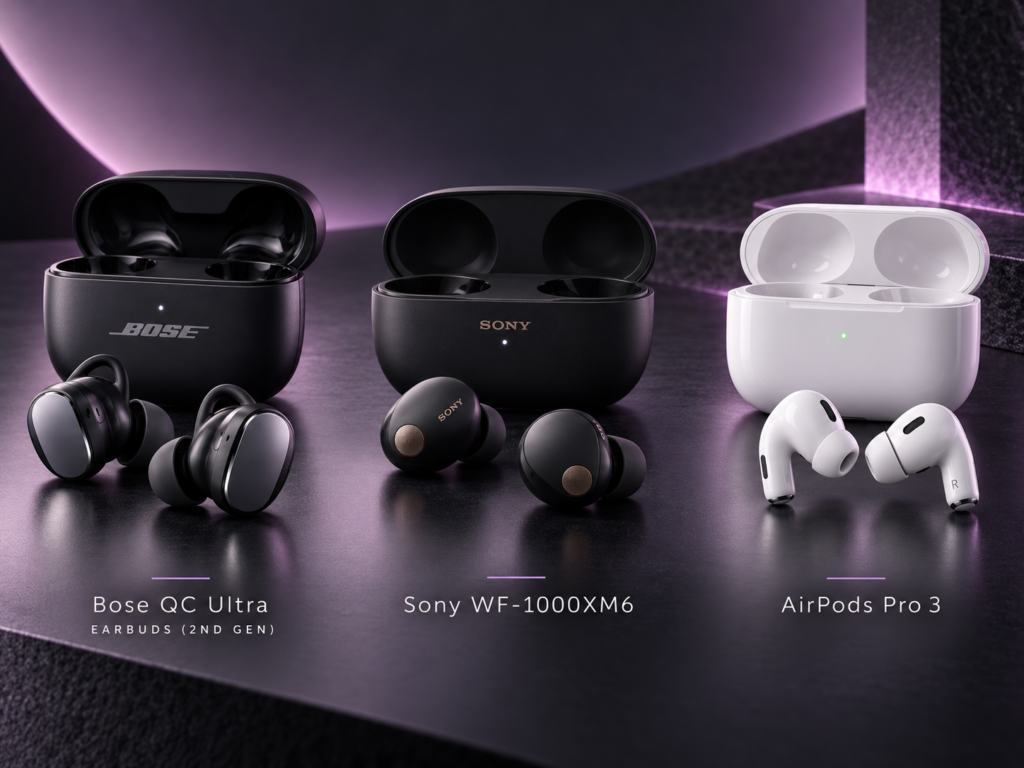
These are among the most relevant current alternatives because all three compete for buyers seeking flagship-level true wireless noise cancellation.
| Feature | Bose QC Ultra 2 | Sony WF-1000XM6 | AirPods Pro 3 |
|---|---|---|---|
| US reference price | $299 | $329.99 | $249 |
| Advertised continuous battery | Up to 6 hours | Up to 8 hours, ANC on with AAC/SBC | Up to 8 hours, ANC on |
| Active noise cancellation | Yes | Yes | Yes |
| Bluetooth multipoint | Yes | Yes | Apple ecosystem-specific switching |
| Key supported codecs | SBC, AAC, aptX Adaptive | SBC, AAC, LDAC, LC3 | Apple Bluetooth audio implementation |
| Water resistance | IPX4 earbuds | IPX4 earbuds | IP57 earbuds and case |
| Distinctive advantage | Secure-fit options and excellent ANC | Broader codecs, long battery life | iOS integration, hearing features, improved durability rating |
| Main purchasing concern | Battery and wind performance | Higher list price and individual fit | Reduced functionality outside Apple’s ecosystem |
Sources: Bose, Sony, Apple, RTINGS. These are official/reference US prices rather than a synchronized live-retailer price comparison. Sony’s eight-hour estimate also depends on codec choice; Sony specifies shorter ANC-on runtime when using LDAC.
Bose vs Sony WF-1000XM6: Which should you buy?
Sony WF-1000XM6 presents one of the hardest purchasing decisions for Bose.
Sony offers longer advertised battery life, broader codec compatibility, and extensive sound customization.
Independent assessments also support its high-quality audio and excellent noise cancellation.
However, Bose has a particularly convincing fit system, and some independent comparisons have favored its wearing comfort and stability.
RTINGS’ comparison identified broadly similar feature sets, with Sony ahead in battery endurance and Bose preferable for comfort and stability in its evaluation. It also found nuanced differences in microphones and frequency-dependent isolation rather than an uncontested winner across every test.
Choose Bose when comfort, fit flexibility, and powerful ANC are the highest priorities.
Choose Sony when battery endurance, LDAC or LC3 support, and detailed sound adjustments matter more.
Bose vs AirPods Pro 3: Which is better for iPhone users?
Apple AirPods Pro 3 has a stronger argument for users deeply invested in Apple’s devices.
Apple offers automatic ecosystem features, personalized spatial audio, hearing-health functionality where supported, longer advertised continuous battery life, and IP57 protection for both the earbuds and case.
The AirPods Pro 3 also have an official $249 US reference price, below Bose’s $299 listing.
RTINGS’ comparison found Apple’s noise isolation slightly stronger overall within its testing methodology, while noting Bose’s advantages in cross-platform app functionality and adjustable EQ.
For someone using an iPhone, Mac, and other Apple devices, the AirPods Pro 3 will often be the more practical purchase.
Bose remains worth considering when its fit and sound signature are more appealing, or when cross-platform support is particularly important.
Does Bose have the best noise cancellation?
It belongs among the strongest options, but naming a universal winner would oversimplify the evidence.
Different review laboratories measure different noise conditions and use different evaluation methods. Fit, tip selection, and individual anatomy also influence results.
SoundGuys’ measurements strongly support Bose’s cancellation performance, while RTINGS’ comparisons show that current Apple and Sony products can be competitive or superior in particular conditions.
For most buyers, a small laboratory difference matters less than whether the earbuds remain comfortable and seal correctly for hours.
Bose QuietComfort Ultra Earbuds 2nd Gen vs 1st Gen
The original QuietComfort Ultra Earbuds arrived in 2023, and the second generation was announced in June 2025.
Bose retained the original design philosophy and much of the underlying feature set.
| Feature | 1st Gen | 2nd Gen |
|---|---|---|
| Bose CustomTune | Yes | Yes |
| Bose Immersive Audio | Yes | Yes |
| Active noise cancellation | Yes | Yes, refined ActiveSense |
| Standard battery rating | Up to 6 hours | Up to 6 hours |
| Wireless charging case included | No | Yes |
| Improved earwax guard | No equivalent new design | Yes |
| Voice processing | Earlier implementation | Updated SpeechClarity system |
| Touch-control disabling | Software availability depends on updates | Supported |
| Case battery reporting in app | Generation/software-dependent | Supported |
| Exterior design | Original Ultra design | Largely retained |
Bose’s original launch documentation identifies the main second-generation additions, while later firmware changes mean some software-based differences between generations may narrow over time.
Is upgrading from the original worthwhile?
For most satisfied first-generation owners, an immediate upgrade is difficult to justify at full price.
Both generations offer strong ANC, CustomTune, and similar advertised battery life.
The second generation’s greatest practical advantages are improved voice processing, the included wireless charging case, and refinements to ActiveSense.
These may justify upgrading if they solve an existing frustration.
But if the original earbuds are comfortable, functioning reliably, and already meet your listening needs, the improvement may be too incremental to justify replacing them.
Should new buyers consider the first generation?
Yes, provided the older model is genuinely less expensive, new or in satisfactory condition, and supported by an appropriate warranty.
The relevant question is the actual price difference.
When the gap is small, the second-generation charging and microphone improvements are appealing.
When the first-generation model is substantially discounted, its still-capable underlying sound and noise cancellation may offer better value.
Do not assume that every original-generation software feature remains permanently different: check the model’s current firmware documentation.
Price and Value for Money
The Bose QuietComfort Ultra Earbuds (2nd Gen) launched at $299 in the United States. Bose’s current product page displays $299, while discounts may appear through other retailers.
A lower historical or search-cached price should never be presented as a currently available promotion without checking the retailer again.
Are they worth paying $299 for?
At this price, Bose is selling a particular combination rather than the longest list of features.
Its strongest reasons to justify the price are effective noise cancellation, adjustable fit, personalized sound, and a useful wireless charging case.
For regular travelers or commuters, those benefits can be worth paying for every day.
The value proposition is less convincing for people who rarely use ANC, already own capable earbuds, or care primarily about uninterrupted battery life.
There are also credible cheaper choices for everyday listening where premium noise cancellation is unnecessary.
What price makes them especially attractive?
A discount that places the Bose meaningfully below its $299 listing improves its competitiveness, particularly against Sony’s higher reference price.
However, there is no universal threshold at which it becomes the correct choice.
For an iPhone owner, AirPods Pro 3 may be attractive even without a discount because of their platform-specific advantages.
For an Android user dissatisfied with earbud fit, Bose may remain worthwhile even at full price.
Value depends on which limitations you are willing to accept, not simply the size of a discount.
Who Should Buy the Bose QuietComfort Ultra Earbuds (2nd Gen)?
Buy them if:
- You commute or travel frequently and want excellent noise reduction without over-ear headphones.
- Earbuds commonly loosen during walking, and separate tip and stability-band adjustments appeal to you.
- You like rich, bass-forward sound and do not need advanced EQ.
- You move between a computer and smartphone and want multipoint connectivity.
- You value wireless charging and improved voice processing over maximum single-charge endurance.
Skip them if:
- You regularly require eight or more hours of uninterrupted playback.
- You spend substantial time listening outdoors in windy conditions.
- You want precise frequency-by-frequency EQ adjustment.
- You use Apple devices extensively and prefer their integrated features.
- You already own first-generation Bose Ultra earbuds that perform satisfactorily.
- The $299 price would require sacrificing features that matter more to you than ANC.
Bose QuietComfort Ultra Earbuds (2nd Gen): Frequently Asked Questions
Are the Bose QuietComfort Ultra Earbuds 2nd Gen worth buying?
Yes, particularly for buyers who prioritize noise cancellation, comfort, and fit flexibility. Independent testing supports their strong isolation performance. However, battery life and limited EQ make them less attractive to some buyers.
Do they work with iPhones and Android phones?
Yes. The Bose app supports compatible iOS and Android devices. The earbuds provide standard Bluetooth connectivity across both platforms, but aptX Adaptive capabilities require supported source hardware and are not available through ordinary iPhone Bluetooth transmission.
How long does the battery last?
Bose advertises up to six hours with Immersive Audio off and four hours with it enabled. The charging case holds up to three additional full charges. Independent tests have returned different results depending on methodology and conditions.
Are they waterproof?
No. The earbuds are IPX4-rated for splashes and sweat, but they are not waterproof or designed for submersion. The charging case is not water-resistant.
Can they connect to two devices simultaneously?
Yes. Bluetooth multipoint allows connections to two source devices, making it useful for smartphone and computer use.
Are they good for phone calls?
They are capable for everyday calling. Bose’s SpeechClarity system is designed to reduce background noise, but independent testing indicates that very loud environments can still interfere with intelligibility.
Is noise cancellation better than the first generation?
Bose introduced refinements to adaptive ANC, and independent reviews have generally reported excellent second-generation performance. However, the improvement is not necessarily substantial enough to justify upgrading from a well-functioning first-generation pair.
Do the Bose earbuds support lossless audio?
Bose supports aptX Adaptive with advanced capabilities on compatible Snapdragon Sound-certified source devices. Such capabilities require specific hardware and conditions; they are not available universally and should not be confused with guaranteed lossless playback from every phone or streaming service.
Final Verdict: Excellent at What Matters Most to ANC-Focused Buyers
The Bose QuietComfort Ultra Earbuds (2nd Gen) have a clear identity: they are premium wireless earbuds built around exceptional noise cancellation, a flexible fit system, and engaging everyday sound.
Their strengths are supported by meaningful independent evidence rather than specifications alone.
The compromises are also clear. Battery life is relatively modest, audio customization is limited, and wind can interfere with ANC during outdoor listening.
For commuters, frequent travelers, and people who struggle to find secure-fitting earbuds, the Bose deserves serious consideration.
For battery-focused Android users, the Sony WF-1000XM6 may be the better investment. For iPhone owners, AirPods Pro 3 may provide more relevant convenience and better overall value.
The Bose is a strong purchase when the quality of quiet matters more than the quantity of features. It is not the best choice for every listener, but its combination of ANC performance and fit adjustment gives it a well-supported place among premium wireless earbuds.
For broader audio buying advice and related reviews, continue exploring the Earsbud Homepage.
Fact-Checking and Source Register
The following register identifies consequential facts, their evidence, and the limits of the conclusions drawn.
| Factual claim | Evidence source | Classification |
|---|---|---|
| Second generation announced June 12, 2025 | Bose announcement | Verified manufacturer fact |
| Original US price of $299 | Bose press release | Verified manufacturer fact |
| US store displaying $299 in October 2026 | Bose product page, refreshed approximately October 15 | Observed listed price; checkout not verified |
| Bluetooth 5.3, SBC, AAC, aptX Adaptive | Bose technical specifications | Verified manufacturer specification |
| Six hours battery, four with Immersive Audio | Bose documentation | Manufacturer-rated performance |
| Three additional case charges | Bose documentation | Manufacturer-rated performance |
| SoundGuys’ 85% average noise reduction | SoundGuys laboratory review | Independent measurement |
| SoundGuys’ 5-hour 34-minute runtime | SoundGuys standardized review | Independent measurement |
| RTINGS’ approximately 6.5-hour runtime | RTINGS review | Independent measurement |
| Warm, bass-forward presentation | RTINGS and SoundGuys | Independent findings |
| Improved musical detail relative to first generation | What Hi-Fi? | Independent listening assessment |
| Outdoor ANC wind rumble | SoundGuys June 2026 follow-up | Independent long-term observation |
| Strong fit flexibility | Bose fit specifications and multiple independent reviews | Manufacturer fact plus external evaluations |
| Firmware version 8.4.8 released June 10, 2026 | Bose firmware history | Verified manufacturer fact |
| One-year US limited warranty | Bose US product documentation | Verified warranty information |
| Bose offers better value for ANC-prioritizing buyers | Earsbud reasoning from available findings | Editorial analysis |
Original Earsbud testing: None was supplied. No original battery figures, ANC graphs, acoustic measurements, microphone recordings, or subjective wearing observations are claimed.
Unresolved uncertainties
1. Exact price at checkout on October 17, 2026. Bose’s recently refreshed page displays $299, but checkout was not independently completed. Some older search records and retailer listings show lower promotional prices that should not be assumed current.
2. Post-firmware wind-noise performance. A documented wind issue exists, but no controlled Earsbud test establishes its severity with the latest firmware.
3. Individual comfort and fit. External reviewers reached somewhat different conclusions. The included fitting options improve flexibility without guaranteeing comfort for every listener.
4. Long-term battery degradation and repair costs. The battery is non-removable, but an independently verified model-specific battery-replacement price was not established.
5. Exact performance of all codec and latency combinations. Hardware-dependent aptX capabilities are documented, but comprehensive verified latency measurements for common source devices were not available for this review.
Editorial interpretation
The review’s most consequential recommendation rests on converging evidence: exceptional reported noise isolation, a flexible fit design, and shorter battery endurance than key competitors.
The recommendation remains conditional because use case, anatomy, phone compatibility, and price can legitimately change the correct purchasing decision.